By Joshua McElwee
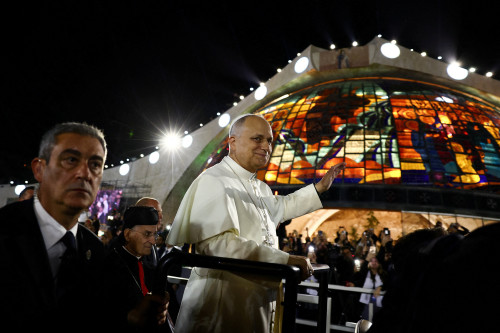
BEIRUT, Dec 1 (Reuters) – Pope Leo urged leaders from Lebanon’s many diverse religious sects on Monday to unite to heal the country after years of conflict, political paralysis and economic crisis that have prompted waves of migration abroad.
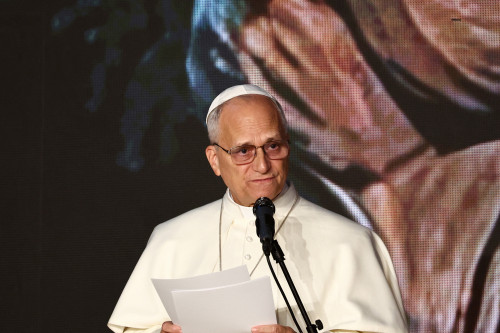
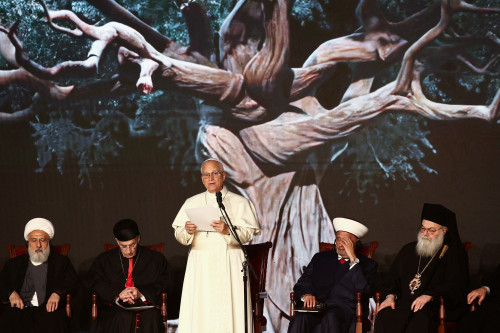
Leo, the first U.S. pope, met members of Christian, Sunni and Shi’ite Muslim, and Druze communities, and called on them to show that people of different traditions “can live together and build a country united by respect and dialogue”.
The pope, who is on what he has described as a mission of peace, has urged Lebanon’s leaders to persevere with peace efforts in the aftermath of last year’s devastating war between Israel and Iran-backed Hezbollah, and continued Israeli strikes.
LEO’S FIRST OVERSEAS TRIP
The 70-year-old pontiff, elected in May, is visiting Lebanon until Tuesday on the second leg of his first overseas trip, which started in Turkey.
At Beirut’s central Martyrs’ Square near its large, blue-domed mosque, the pope told religious leaders they must be “builders of peace”, working to confront intolerance and overcome violence.
Lebanese representatives of the Alawite and Druze communities, which have suffered through bouts of sectarian violence in neighbouring Syria this year, spoke at the event.
In the crowd, Alawite Mohammed Saleh said his community needed peace, protection and dignity. “We ask him humbly to remember in his prayer the Alawite community in the Middle East,” Saleh said.
VISIT TO CATHOLIC SHRINE
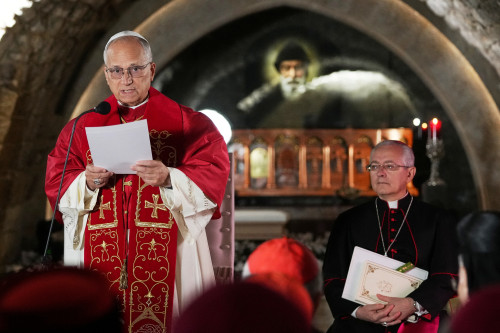
Leo also visited the tomb of St. Charbel, a Catholic saint revered across the region, before heading to Harissa, a Catholic shrine on a mountaintop overlooking the Mediterranean just north of Beirut.
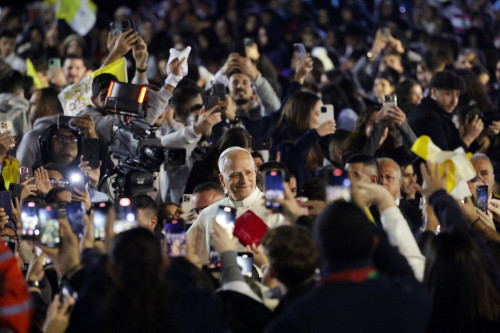
People at the shrine, known for its towering statue of the Virgin Mary looking out towards Beirut, ululated as the pope arrived, pressing in to greet him with shouts of “Viva il Papa” (Long live the pope).
“We have really been waiting for the pope’s visit because it is raising our hope now,” said Rev. Toni Elias, a Maronite priest from Rmeich, a Christian town close to the Israeli border. The Maronites are an eastern-rite Catholic community and the largest Christian sect in Lebanon.
“We believe that he brings with him the message of peace, which we really need.”
Before speaking at the shrine, Leo heard testimonies from people living in Lebanon. Loren Capobres, a Filipina migrant in the country for 17 years, told Leo about her experience living through war.
The pope said stories like hers show the need to “take a stand to ensure that no one else will have to flee from his or her country due to senseless and cruel conflicts”.
POPE TO VISIT PORT EXPLOSION SITE
Lebanon, which has the largest share of Christians in the Middle East, has been rocked by the spillover of the Gaza conflict, as Israel and the Lebanese Shi’ite Muslim militant group Hezbollah went to war, culminating in a devastating Israeli offensive.
The country, which hosts 1 million Syrian and Palestinian refugees, also is struggling to emerge from a severe economic crisis following decades of profligate spending that sent the economy into a tailspin in late 2019.
About 15,000 young people gathered for an event with the pope on Monday evening outside the Maronite Catholic headquarters.
The deputy head of the Supreme Shi’ite Islamic Council, Sheikh Ali al-Khatib, thanked Leo for his visit during the interfaith meeting and said the country was riddled with wounds “as a result of Israel’s continued attacks”.
Israel says its continued strikes since last year’s ceasefire agreement are to prevent Hezbollah from re-establishing military capabilities and posing a renewed threat to communities in northern Israel.
Leo’s schedule for Tuesday includes a prayer at the site of a 2020 chemical explosion at the Beirut port that killed 200 people, an outdoor Mass on the Beirut waterfront and a visit to one of Lebanon’s few mental health facilities.
(Reporting by Joshua McElweeAdditional reporting by Maya GebeilyEditing by Sharon Singleton and Frances Kerry)
About the Author