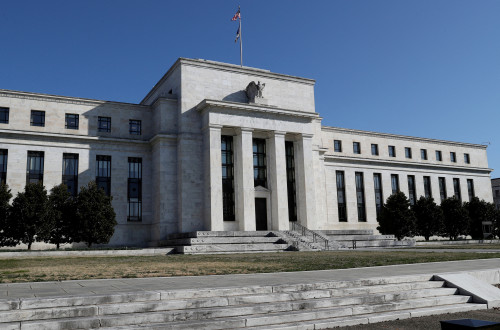
Jan 14 (Reuters) – Economic activity increased in most parts of the U.S. and employment was mostly unchanged in recent weeks, the Federal Reserve said on Wednesday in a report that may do little to sway policymakers’ interest rate views ahead of the central bank’s meeting in two weeks.
“Outlooks for future activity were mildly optimistic with most expecting slight to modest growth in coming months,” the Fed said in its latest “Beige Book” report, a compendium of survey results, interviews, and other qualitative data from its 12 regional banks that is meant to help central bankers assess the economy’s health in the run-up to each of the eight yearly rate-setting meetings.
Eight of the 12 Fed banks reported increased economic activity, and eight reported mostly no change in hiring, the report said. Prices grew at a “moderate rate” across all but two districts, which reported just “slight” price growth.
The report overall appeared to be a modest upgrade compared with the last one.
Fed policymakers cut rates by three quarters of a percentage point last year in a bid to keep the labor market from deteriorating further, but in December signaled they are inclined to leave the policy rate in its current 3.50%-3.75% range for a bit while they wait for improvement on inflation.
Financial markets expect the central bank to leave rates unchanged at its January 27-28 meeting.
Since the rate cut last month, the U.S. unemployment rate has ticked down, to 4.4% in the latest reading, while a government report earlier this week showed consumer prices rose 2.7% in December from the year-earlier period.
The Fed targets 2% inflation.
Interest rate futures markets reflect expectations policymakers will wait until June – after Fed Chair Jerome Powell’s term as head of the central bank ends – to cut rates. President Donald Trump has vowed to install a Fed chief who aligns with his own view that short-term borrowing costs should be sharply lower.
Fed policymakers themselves have been sharply divided. Their decision in December to cut rates passed by a 9-3 vote, with the majority feeling that the weakening labor market needed support from lower rates.
Several of the seven non-voting Fed bank presidents have since indicated they sided with the “no” voters in seeing inflation as the bigger risk and supported holding the policy rate steady.
(Reporting by Ann Saphir; Editing by Paul Simao)
About the Author