

By Siddharth Cavale
NEW YORK (Reuters) -President Donald Trump’s tariffs are widening the gap between market-leader Walmart and Target, the companies’ latest quarterly reports show, underscoring missteps at the smaller U.S. retailer amid economic uncertainty.
Walmart, considered a proxy for U.S. consumer health, said last week that it would have to raise prices to deal with tariffs even as it maintained its full-year forecast. Trump castigated the company, saying it should “eat the tariffs.”
Target, by contrast, slashed its annual outlook to account for “the expected impact of tariffs and heightened uncertainty regarding the economy and consumer spending.” The company opted not to raise prices, calling it “the very last resort.”
Target’s annual sales, down for two years, are expected to fall again this year.
“If tariffs remain at the levels today, (Target is) going to have higher costs this year. As an investor it is hard to see how this can play out positively through the year, without increasing prices,” said Steven Shemesh, RBC Capital Markets analyst.
SHARES & SUPPLIES
Target said it was negotiating with vendors, reevaluating assortment decisions, changing country of production where possible, adjusting order timing and prices, measures it believes will largely offset exposure to tariffs.
Investors were unconvinced. Target’s stock slumped on Wednesday and has lost nearly a third of its value this year – while Walmart’s has risen 7%.
Target’s problems are long-running.
Its “cheap chic” merchandise did not resonate with buyers in a post-pandemic inflationary environment, where groceries became a priority. Walmart’s Everyday Low Price model, which focuses on consistently low prices rather than temporary discounts, has been a strong draw.
Analysts warn 30% tariffs imposed on goods from China would make it difficult for Target to absorb increased costs without raising prices.
“Target should have been more aggressive and quicker in diversifying. They needed a more radical surgery, which didn’t happen. They are catching up now but this could have been deeper and earlier,” said Craig Johnson, founder of retail consultancy Customer Growth Partners.
Walmart generates a third of sales from merchandise like clothing, electronics and toys – sourced primarily from China, India, Vietnam and others. It has been reducing its reliance on China, where it sources 60% of its discretionary merchandise, but the country still remains its top origin for importing goods.
The sheer scale of Walmart’s U.S. business – $442 billion in net sales last year, following a surge since the pandemic – gives it more negotiating power with suppliers. Record memberships at Sam’s Club and booming sales in India and China have also insulated it from recent weakness in the U.S. economy.
Walmart’s stock has nearly doubled since 2022, far outpacing the S&P 500’s gains, boosting market value to $772 billion. Target’s stock has halved during the same period.
SALES & MARGIN
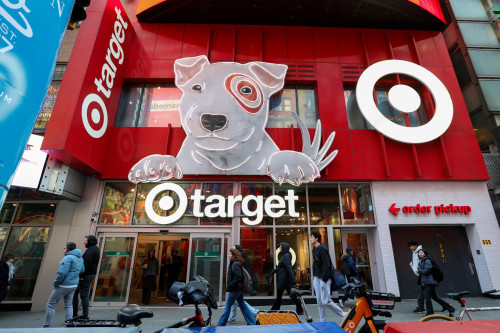
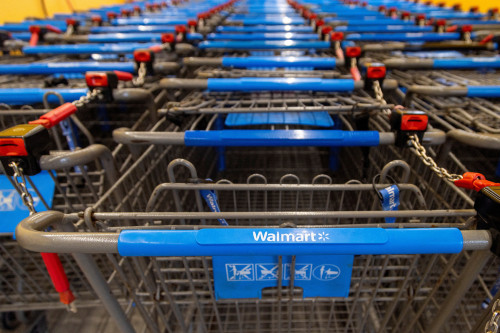
Same-store sales at Target, which operates nearly 2,000 U.S. stores, have consistently lagged Walmart’s, which operates 4,600 stores. Target has also grappled with boycotts and lawsuits related to its diversity practices.
Walmart rolled back many DEI initiatives but avoided the intense backlash Target faced when it did the same, largely due to Target’s previous reputation for inclusiveness. Target on Wednesday blamed some of the first-quarter declines in sales and traffic on the backlash.
In the latest quarter, Target’s store traffic and average transaction sizes dropped. In contrast, Walmart’s traffic and average tickets both increased.
Target historically sold more higher margin but non-essential merchandise such as clothing, and home furnishings, many sourced from China and other Asian countries. It has in recent years emphasized food and household essentials, which have lower profit margins.
Higher shrink rates – losses from theft and other inventory tracking issues – have also slammed Target’s operating margin. Target margins were also hurt by heavy markdowns to clear excess inventory and higher costs related to online deliveries.
Walmart has diversified into high-margin businesses: selling advertising space to vendors through Walmart Connect, gaining loyalty through its Walmart+ membership program, and its third-party marketplace services. Walmart’s advertising business and memberships alone made up a quarter of annual profits last year.
Target’s ad business Roundel is much smaller, and its Target Plus online marketplace has only a few hundred sellers compared to hundreds of thousands at Walmart. This restricts Target’s ability to generate additional revenue from sources like listing fees.
(Reporting by Siddharth Cavale in New York; Editing by Sayantani Ghosh and Nick Zieminski)

About the Author