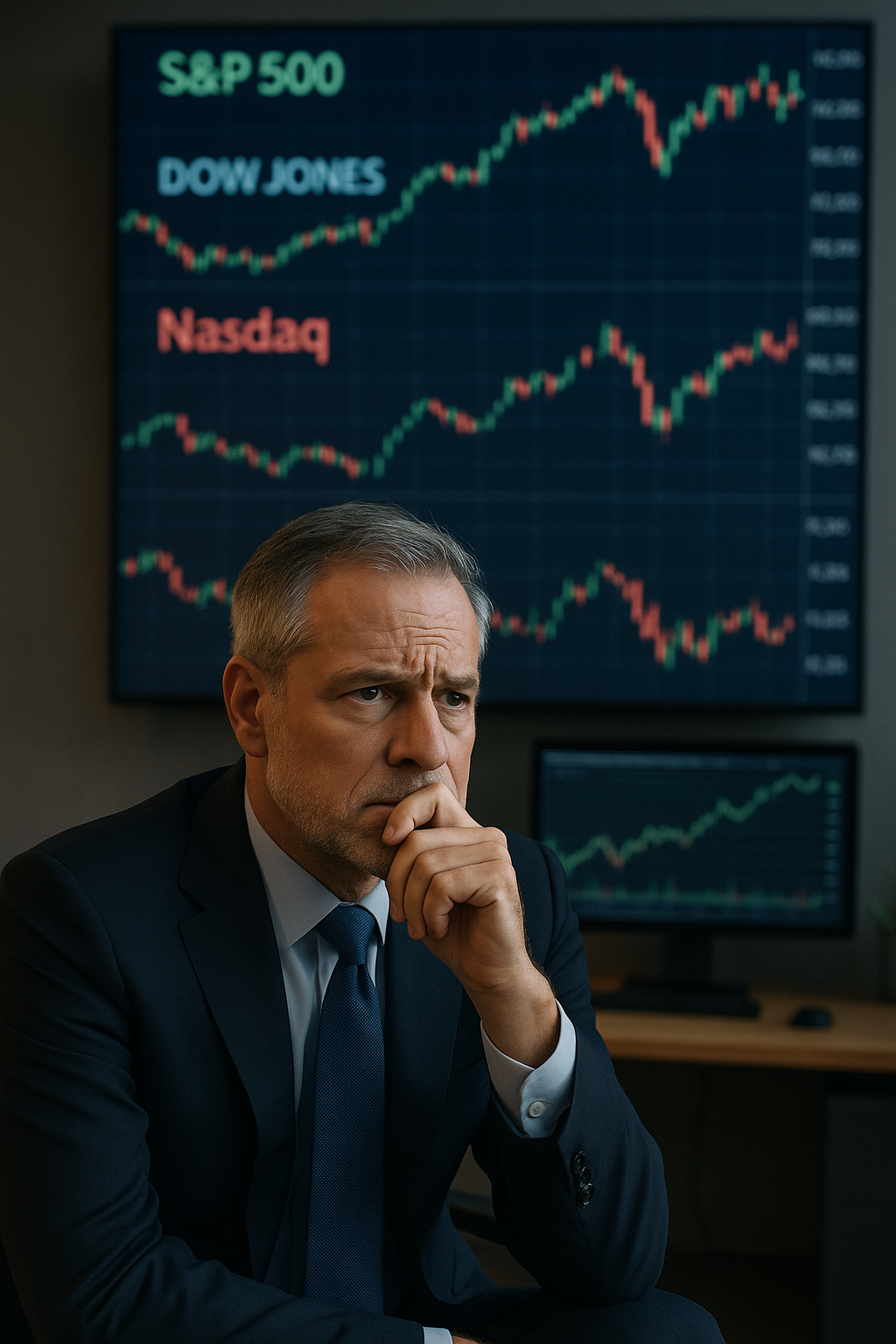
As November closed, it was all about the indexes. The Fed’s’day of reckoning is quickly approaching. After an apprehensive first half of November, signs of a rate cut and the taming of inflation, to a degree, sparked the markets. The almost certain rate cut along with the stabilization of the artificial intelligence sector is giving investors and traders needed reasons to re-enter the market. Friday’s shortened session opened as trading was heavy, with nearly all techs, artificial intelligence and market favorites adding value in the S&P 500 and the Dow Jones and Nasdaq Composite indexes. Oddly, the Nasdaq Composite struggled but finished up 0.7% Friday, however negative for the month, the first ‘down’ month since last March. “Lingering fears of an ongoing artificial-intelligence bubble” according to the Wall Street Journal, has for several weeks pressured investors and traders to be overly cautious, and has somewhat dissipated. Even Friday’s ‘bull market’ could not avert a down month. For the month the Mag 7 stocks, chips and market favorites were off 1.8%, as both the Dow Jones and S&P 500 lost 0.1% and 0.3% respectively. “That was a healthy correction that burst a bubble and taught some investors that earnings, cash flow and valuation actually do matter,” said Jay Hatfield, chief executive at Infrastructure Capital Advisors. Silver highlighted Friday, reaching a new high of $56 per troy ounce–a new high record. The precious metal has doubled in value this year. Gold was stronger also for the week moving higher on Friday.
Monday’s announcement by Japan’s BOD governor Kazuo Udea, blurred the U.S.Bond Market. He indicated a possible interest rate increase was coming shortly. The Japanese 10-year government bond jumped to 1.879% while the U.S. 10-year Treasury note was steady at 4.095%. While worldwide competition for government bonds is keen, U.S. bonds still are the most competitive and sought after. “You see a lot of comfort with the idea that U.S. yields are just moving lower in this predetermined path,” said Zack Griffiths, head of investment grade and macro strategy at the research firm CreditSights. “Today is a reminder that there are a lot of factors that could challenge that.” Market reaction Monday was negative, as the Dow Jones started sinking at open, finishing the day off 427 points or down 0.9%, while the Nasdaq lost 0.4%. A general feeling on the street amongst some investors and traders is the notion that stock prices, after a November fall-back, are nearing a more attractive buying stage.
Tuesday’s session was positive with the indexes all up slightly, the Dow Jones added 185 points, while the S&P 500 was up just above flatline, while the Nasdaq Composite was up 0.6% aided by a surge by Intel the chipmaker. Bitcoin rebounded to the $91,000 area, off over 17% in the past 30 days. According to Dow Jones Market Data, “incremental weakness in the labor market now looks like a bigger issue than the risk of accelerating inflation.” Wednesday’s market opened strong as volume was heavier early on. The value-laden smaller-cap Russell 2000 index jumped 1.9% as stocks across the board were gainers. Fresh labor numbers from ADP indicate that “private hiring sank in November, as the sector lost 32,000 jobs.” The indexes were all up, evidently boosted by falling labor numbers. The Dow Jones Industrial Average surged up 408 points, while the S&P 500 added 0.3%, reaching a near all time October high. Bitcoin is hovering near $92,000, while Silver is trading in the $56.00 range.
RUMBLINGS ON THE STREET
Terry Sandven, chief equity strategist at U.S. Bank Asset Management, WSJ – “Inflation is benign, interest rates are trending lower and earnings are inching higher. That’s Goldilocks for stocks.”
Nancy Tengler, chief investment officer at Laffer Tengler Investments, WSJ – “It’s always healthy to get some air out of the balloon.”
Osman Ali, Global Co-head of Goldman Sachs Asset Management’s quantitative investment strategies, WSJ – “There should be more winners than not. But at the same time, it’s very clear there are going to be companies that can not compete in this new world.”
About the Author