Big Surprise, Big Numbers… After losing 130,000 jobs in February, the Labor Department released March numbers of gaining 178,000 new jobs and announced the unemployment rate dropped to 4.3% in March down from 4.4% in February. Naysayers including the Wall Street Journal, had predicted a gain of 50,000 to 60,000 new jobs added. Henry McVey, head of global macro and asset allocation at private-equity firm KKR said: “you’re in a solid, but not spectacular, growth environment.” U.S. financial markets were closed Good Friday as were many European exchanges, with investors and traders unable to react to much ‘hot-news.’ The bond markets were stronger as the very positive jobs report boosted prospects of a good reason for the Fed to cut interest rates to blunt creeping inflation. Federal Reserve Chief Jerome Powell suggested with the lingering war, “The Central Bank will have to choose between ‘fighting inflation and shoring up the Labor Market’ in the near future.”
Stocks were uneasy at Monday’s opening as President Trump’s strong ultimatum was near expiring Tuesday evening [to bomb Iran’s energy infrastructure if a cease fire was not accepted]. Oil crept higher, settling near $112.41 a barrel, near its highest level since February. Markets finished higher at Monday’s close with the Dow Jones up 165 points while both the S&P 500 and Nasdaq were up 0.4% after a sluggish opening. “There’s more that can go wrong than can go right,” said Justin Bergner, portfolio manager at Gambelli Funds. He adds: “I think we have a tough period to get through in the market.” The positive labor data helped to off-set negative ‘war news’ as the 178,000 new jobs bested the past year’s additions. Gasoline prices are continuing to appreciate with present pump prices averaging $4.12 a gallon, with diesel fuel at $5.62 a gallon.
Tuesday’s market opened indecisive, with investors confused at President Trump’s threat to severely bomb Iran if conditions were not met by evening time. The indexes floundered most of the day with the Dow Jones Industrial Average slipping 0.2%, while both the S&P 500 and Nasdaq were up 0.1%, just above flatline. Oil reacted, jumping to $117.00 a barrel, then retracted as a possible ceasefire emerged.
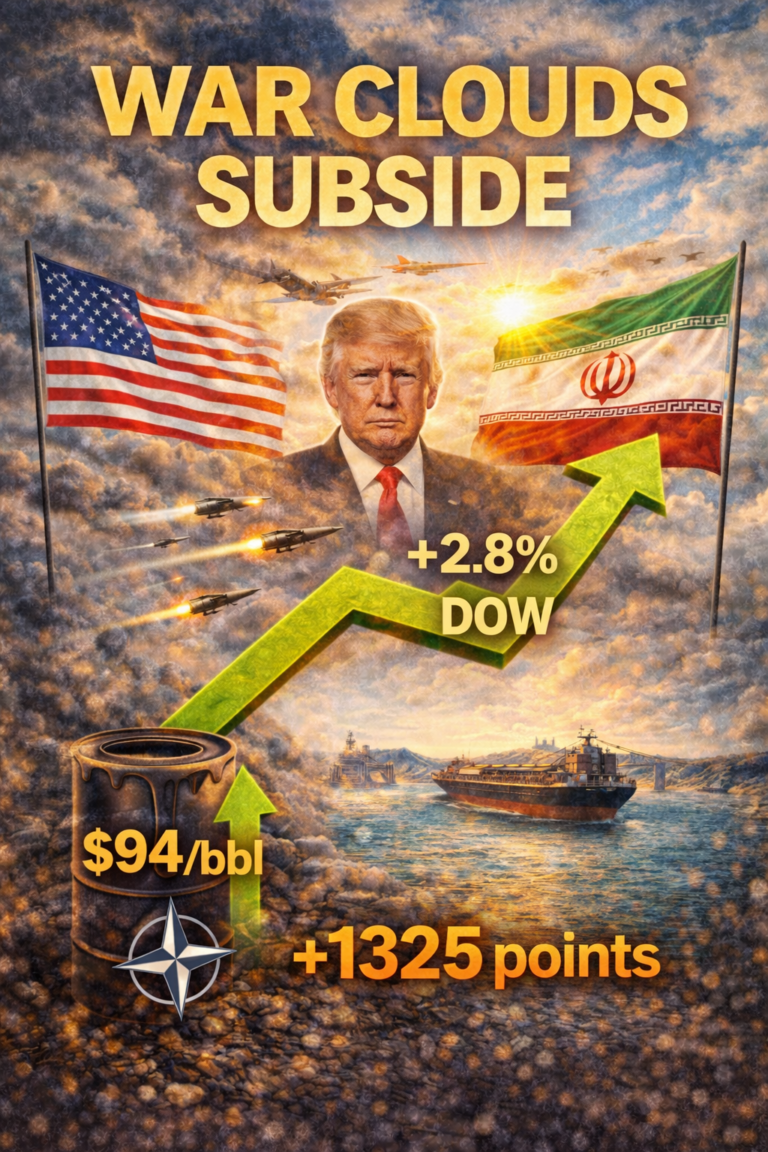
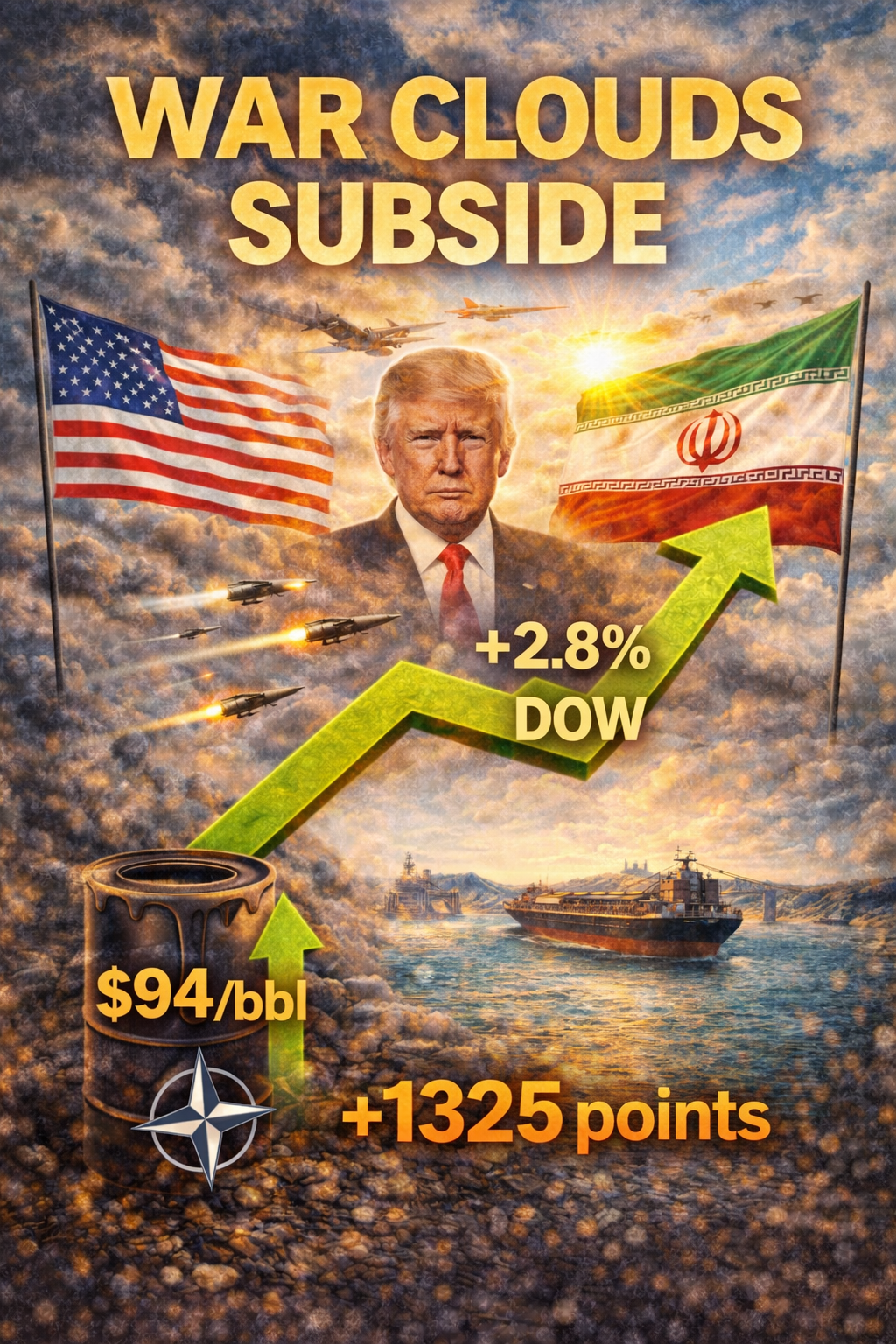
As President Trump’s ultimatum approached he pivoted and announced a 2 week cease-fire, urged on by Pakistan’s request to give more time for negotiations with Iran. At once markets calmed, oil dropped significantly as investors flocked to the market. President Trump wrote on Social Media, “I agree to suspend the bombing attacks on Iran for a period of two weeks. This will be a double-sided ceasefire. Iran’s demands were a workable basis on which to negotiate.” Iran’s Minister of Foreign Affairs, Abbas Araghchi “confirmed acceptance of the terms.” He added that the Strait of Hormuz would be opened, but did specify exact conditions. Oil fell 18% to $93.00 a barrel, with analysts and economists expecting more dropping if the negotiations commence. Wednesday was a turn-around-day as optimism revived the marketplace. Stocks soared across the board, as the Dow Jones Industrial Average soared up 1325 points-up 2.8%. Both the S&P 500 and Nasdaq Composite were up substantially. Oil dropped to $94.41 a barrel. “It would be foolish to say we are out of the woods. But I think both parties have reasons to stay on the path toward a peaceful solution,” said Chris Grisanti, chief market strategist at MAI Capital Management. Thursday’s session was positive as the Dow Jones gained above flatline for 2026. The cease – fire gave investors good reason to get off the sidelines, as the indexes all finished higher.
RUMBLINGS ON THE STREET
Rob Thummel, a senior portfolio manager at Tortoise Capital, WSJ – “Seems like yet another weekend where there’s just a lot up in the air. It’s always the weekend.” [Referring to PresidentTrump’s timing]
Rob Long, chief investment officer at Wealthspire, WSJ – “Markets kind of took a step back and said, ‘OK, maybe we’re not on the off ramp as much as we thought we were.’”[Speaking as to where the U.S. is in a resolution to the war]
Gus Fancher, chief economist at PNC Financial Services, WSJ – “When you look at the broader picture, we’re adding jobs at a slower pace than a couple of years ago, but we are adding jobs and it’s enough to keep the unemployment rate steady.”
About the Author