June 10, 2026
June 12th is Almost Here
Featured – Traditional Energy: XOM and the Crude Reality
Dear Reader,
This may be your last chance to look at this before SpaceX hits the public market.
SpaceX is expected to IPO on June 12.
And right before the bell rings, IBTimes reported a stunning new development…
Google and Anthropic are set to pay SpaceX a combined $2.17 billion per month for compute capacity.
That’s about $26 billion a year.
From just two customers.
Think about what that means.
The market has been obsessed with rockets.
Then it became obsessed with Starlink.
Now the real money may be coming from AI infrastructure.
Google needs capacity.
Anthropic needs capacity.
And SpaceX is getting paid like a critical supplier to the biggest technology arms race on Earth.
Once this IPO goes live, millions of investors may finally understand what’s happening.
But by then, they’ll all be chasing the same ticker.
Not after.
The window is tight now.
June 12 is almost here.
Click here to learn more about my FREE “SpaceX” pre–IPO recommendation now.
Yours for peace, prosperity, and liberty, AEIOU,
Dr. Mark Skousen
Macroeconomic Strategist, The Oxford Club
P.S. I repeat, IBTimes reports Google and Anthropic could pay SpaceX a combined $26 billion a year for AI compute capacity.
If SpaceX has become the AI boom’s landlord, you do not want to wait until Wall Street lets everyone else in.
Click here to learn more about my FREE “SpaceX” pre–IPO play.
Traditional Energy: XOM and the Crude Reality
Oil is not a trade right now. It is a condition.
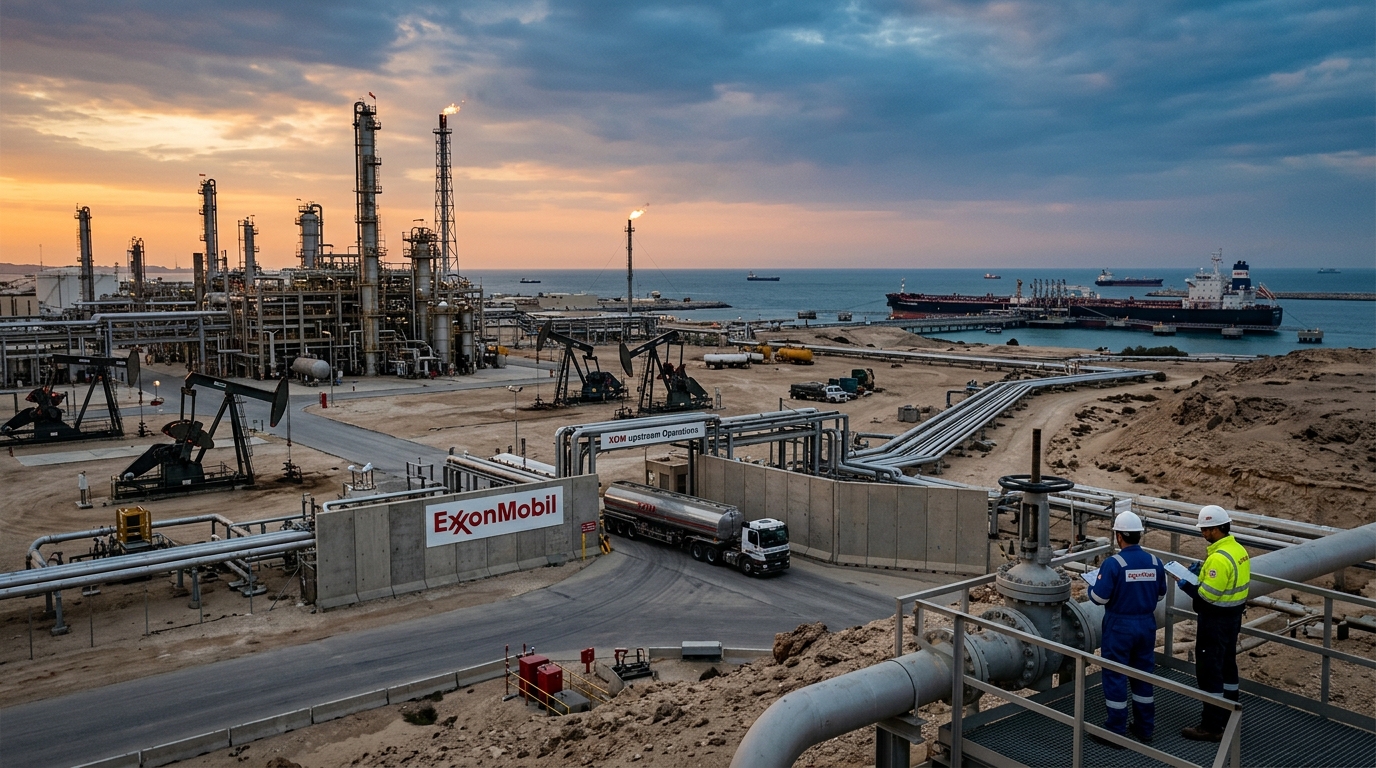
WTI crude opened this session around $91 per barrel before pulling back toward the high $80s as ceasefire talk between the US and Iran generated some relief selling. But here is what matters: the Strait of Hormuz remains effectively closed under a dual blockade. Roughly one-fifth of global seaborne oil normally transits that chokepoint. That disruption is not a headline risk anymore. It is a structural supply constraint that has been in place since early March, and it is still not resolved.
The IEA has called this the largest supply disruption in the history of the global oil market. That framing is not hyperbole. It is a data point. And for upstream producers insulated from Middle East logistics, it translates directly into higher realized prices per barrel.
Dividend Expert Reveals His Biggest Income Secrets… Free of Charge
Marc Lichtenfeld – Author of the best-selling book Get Rich With Dividends – is giving away his Ultimate Dividend Package…
Free of charge!
What the XOM Numbers Actually Show
ExxonMobil reported Q1 2026 adjusted EPS of $1.16, beating consensus estimates of roughly $1.02 by nearly 14%. GAAP earnings came in at $4.2 billion, or $1.00 per diluted share. Strip out unfavorable timing effects tied to mark-to-market derivative requirements, and the underlying number was $8.8 billion, or $2.09 per share. That gap is large. It is also temporary by design.
Upstream earnings excluding identified items and timing effects hit $6.3 billion for the quarter. Net production reached 4.6 million barrels of oil equivalent per day. Guyana set a quarterly record above 900,000 gross barrels per day. The Permian continued its volume ramp. These are not flukes. They are the result of capital allocation decisions made years earlier, now producing cash in an environment where realized crude prices are elevated.
Slight tangent, but it is worth noting: ExxonMobil’s Golden Pass LNG Train 1 shipped its first cargo in Q1. That adds another revenue stream that is entirely domestic in origin and unaffected by Hormuz logistics. The diversification is real.
The Q2 2026 EPS estimate currently sits at $3.76 per share, with the next earnings call scheduled for July 31. The buyback authorization remains at $20 billion for the year. The Q2 dividend was declared at $1.03 per share, payable today. Cash flow from operations in Q1 was $8.7 billion.
THE FOURTH SIGNAL JUST FIRED
Three chokepoint calls. +568%. +1,754%. +724%. Three different decades. Three different industries. One pattern. The fourth signal just fired inside the S&P 500.
The Macro Case Is Simple
Rising energy input costs flow through to inflation broadly. Upstream producers capture that inflation as margin expansion rather than absorb it as cost pressure. That asymmetry is the core of the XOM hedge argument. Analysts have flagged that persistent Hormuz disruption could add roughly 0.8% to global inflation. If that plays out, the Fed’s rate path gets complicated. Equities with genuine commodity exposure become the natural beneficiary of that scenario.
This is not about geopolitical speculation. It is about where the cash flow goes when oil stays above $90.
For traders positioning around sustained elevated crude, a defined-risk structure on XOM with a bullish bias would be consistent with the current macro environment. If you believe the Strait remains constrained through Q2 and WTI holds above $85, the upstream earnings trajectory supports higher realized EPS estimates than the street currently models. If a ceasefire fully materializes and oil falls sharply, that thesis breaks. Size accordingly.
- WTI crude: ~$88-91 range today, 52-week high of $117.63
- XOM Q1 2026 adjusted EPS: $1.16 vs. $1.02 estimate (+13.7%)
- XOM upstream earnings ex-timing effects: $6.3 billion
- Net production: 4.6 million boe/d; Guyana record above 900K bpd
- Q2 2026 EPS consensus estimate: $3.76 (reports July 31)
- 2026 buyback program: $20 billion authorized and on pace
- Key risk: ceasefire resolution reopening Strait of Hormuz and oil price reversal
The situation in the Strait could shift fast. It almost did last weekend. Watch the diplomatic calendar as closely as the crude chart.