
June 26, 2026
Viking Therapeutics Has a Q3 Data Moment Coming
Two Phase 3 trials fully enrolled, and a readout due this quarter.
The GLP-1 space gets a lot of airtime. Eli Lilly, Novo Nordisk, oral pills, next-gen injectables, the next headline. Most investors already have a fixed view on the big names. What gets skipped is the company trying to walk in through a side door with cleaner Phase 2 data and a specific data window opening right now.
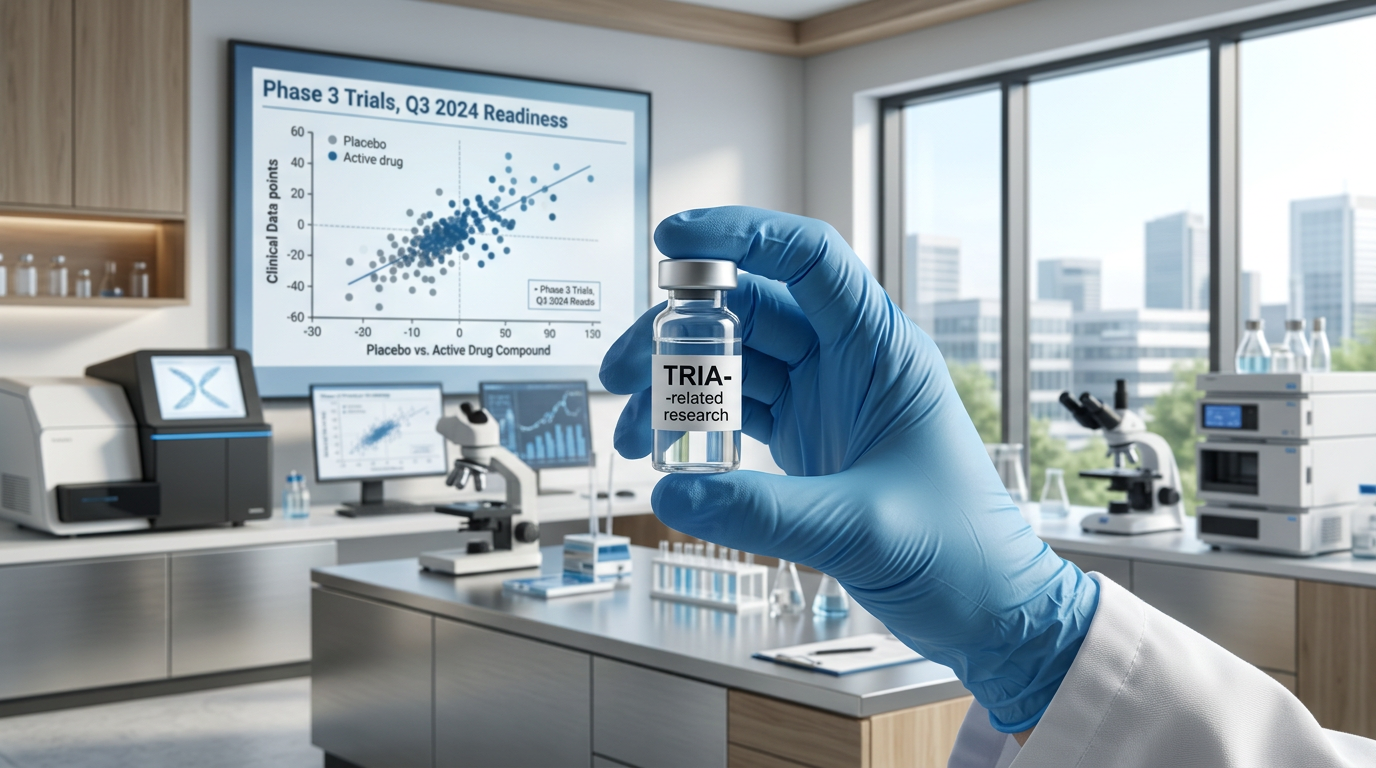
Viking Therapeutics (NASDAQ: VKTX) is not a household name. It has no commercialized drug. What it does have is something more concrete: two fully enrolled Phase 3 trials, a Phase 1 maintenance dosing readout expected in Q3 2026, and a Wall Street consensus price target that implies roughly 150% or more upside from current levels near $37.
The broader GLP-1 receptor agonist market was valued at approximately $66 to $78 billion in 2025, depending on the scope of the analysis, and multiple independent forecasts project growth toward $180 to $185 billion by the mid-2030s. That is the arena. Viking is trying to earn a seat at a table that keeps getting larger.
Washington Is Starting to Pay Attention
When lawmakers start asking questions, big money has often already moved.
Learn why AI infrastructure is attracting serious attention by clicking here.
The Drug and Where It Stands
VK2735 is a wholly owned, long-acting dual agonist of the GLP-1 and GIP receptors, in development for obesity and other metabolic disorders. Both formulations, injectable and oral, are advancing at the same time.
The Phase 3 VANQUISH program consists of two trials. VANQUISH-1 enrolled approximately 4,650 adults with obesity or who are overweight with at least one weight-related condition, with enrollment completing in November 2025. VANQUISH-2 enrolled approximately 1,000 adults with obesity and type 2 diabetes, completing enrollment in March 2026. Both are randomized, double-blind, placebo-controlled, multicenter trials evaluating once-weekly subcutaneous VK2735 over 78 weeks. Primary efficacy readouts from VANQUISH-1 and VANQUISH-2 are not expected until study completion in 2027.
What is expected in Q3 2026 is different. Viking is running a Phase 1 maintenance dosing study evaluating a range of potential dosing regimens for VK2735, including monthly dosing and a potential transition from injectable to oral administration for weight maintenance. Results from that study are expected this quarter. That is the near-term data event to watch.
The prior Phase 2 VENTURE study gave the market an early look. Patients achieved statistically significant reductions in mean body weight up to 14.7% after 13 weekly doses of the subcutaneous formulation. The drug was well-tolerated, with the majority of adverse events characterized as mild or moderate.
The stock reacts to data. Hard. When Phase 2 results for VK2735 first dropped in February 2024, shares surged 121% in a single trading session. A maintenance dosing readout this quarter will not necessarily move the stock at that scale, but the market will notice either way.
What Actually Differentiates This
The obvious pushback is simple: Lilly and Novo are already here. Why does another GLP-1 matter?
Slight tangent worth noting: the competitive field shifted in early 2026. Eli Lilly received FDA approval for orforglipron (Foundayo), an oral GLP-1 agonist, in April 2026. Novo Nordisk has a pill version of Wegovy on the market. The oral segment is growing fast. That is actually the opening Viking is aiming at.
Viking’s oral VK2735 is being positioned as potentially the first oral dual agonist of both the GLP-1 and GIP receptors. At the European Congress on Obesity in May 2026, Viking presented Phase 2 VENTURE-Oral data showing dose-dependent weight loss up to 12.2% over 13 weeks, with early progressive weight loss from Week 1 through Week 13 and no plateau observed at the highest doses. The company expects to advance oral VK2735 into Phase 3 testing in Q3 2026.
If oral data continue to strengthen alongside injectable Phase 3 progress, Viking could end up with something neither Lilly nor Novo currently offers from a single compound: both formulations of the same dual-agonist molecule, potentially allowing patients to start on the injectable and transition to a pill for long-term maintenance. That is a clinically interesting story, and one that is hard to fully value from today’s vantage point.
Are you a long-term investor? You’ll Want to Hear This…
The President of the United States once went to bat for an American energy company that’s merging energy and AI.
It’s wildly cheap, and one man believes it could be the long-term answer to our AI energy needs.
The Medicare Demand Shift
Starting July 1, 2026, Medicare will begin providing eligible Part D beneficiaries with access to certain GLP-1 weight-loss drugs through the Medicare GLP-1 Bridge program, at a $50 monthly copayment. The program runs through December 31, 2027. On the Medicaid side, the BALANCE model began offering coverage as early as May 2026, with state participation ongoing.
This is structural demand expansion. Millions of Medicare beneficiaries who were previously priced out now have a defined access pathway. That does not benefit Viking directly today, since VK2735 has no approval yet. But it confirms the long-term addressable market is getting larger in real time, just as Viking’s clinical program is moving toward potential approval in the 2028 to 2029 window.
The Honest Risk Picture
This is a clinical-stage company with no revenue. Phase 3 trials fail. Data can be positive and still not differentiated enough to move the commercial needle. Lilly and Novo have manufacturing scale, physician relationships, and brand recognition that Viking cannot replicate quickly from a standing start. That is not a minor gap.
The Q3 maintenance dosing readout is not a guaranteed win. It is a known data event with an uncertain outcome. The market will likely move on it, one direction or the other.
Cash reserves as of Q1 2026 stood at roughly $603 million, which the company says supports operations into 2028 and through the completion of the Phase 3 trials. That is meaningful runway. But no cash balance eliminates clinical risk.
According to 20 analysts tracked by multiple financial data providers, the current consensus rating on VKTX is Strong Buy, with a 12-month average price target near $92 to $94 per share. The stock is trading near $37 as of late June 2026. Whether that gap ever closes depends almost entirely on what the clinical data says over the next 12 to 18 months.
Predictive AI Opens New Way to Trade
It works by spotting the fewer than 1% of stocks on the verge of a massive potential jump at the start of each month. In a study we’ve found it could’ve tripled your money in the 16 months following its development – all by using a new form of AI to see exactly where to put your money each month for the biggest potential gains with the least amount of risk.
The bull case requires clean maintenance dosing data, strong oral Phase 3 initiation, and VANQUISH primary data in 2027 that actually differentiate VK2735 from what is already approved. All three need to go right. That is the bet. And right now, the market is pricing in a lot of uncertainty on each of those steps.