
June 30, 2026
MSFT Reports July 28. Down 33% From Its High With Azure Growing 40%.
Featured: MSFT Reports July 28. Down 33% From Its High With Azure Growing 40%.
Editor’s Note: For three decades, veteran analyst Eric Fry has built his track record by identifying what Wall Street’s biggest winners need before they need it. Today he’s issuing a rare public warning to every Mag 7 holder – and naming the one “mission-critical” company Nvidia just placed a multibillion-dollar bet on. Watch his full briefing here or read his open letter below.
Dear Reader,
If you own Nvidia, Microsoft, Amazon, Meta, Apple, Alphabet, or Tesla…
I’m urging you to take this warning seriously.
The AI boom is running into a problem that Wall Street has badly underestimated:
Physical reality.
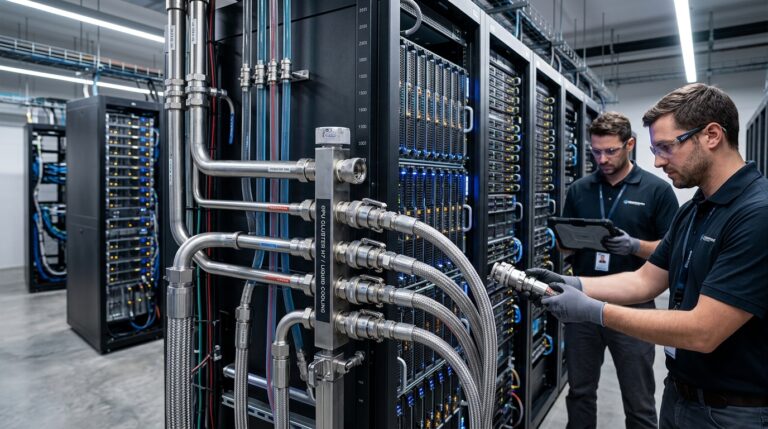
Bottlenecks like power… cooling… land… and raw materials.
These are the unglamorous constraints that can derail even the biggest AI winners.
When they do, they’ll punish investors who think the Mag 7 can keep rising forever.
Because when hyperscalers announce trillion-dollar AI ambitions, too many investors focus on the headline-making promises.
I focus on the reality standing in their way.
And right now, one bottleneck has become so important that Nvidia just opened its checkbook.
The AI giant struck a deal to buy 3 million shares of a “mission critical” hardware supplier.
The stock instantly surged.
But buried in the contract is the part I believe investors cannot afford to ignore…
A clause that could allow Nvidia to buy 15 million more shares.
At today’s prices, that could represent as much as $3.2 billion in potential buying power tied to this one company – an amount that could send this company’s stock soaring.
And that’s exactly why I’ve been telling readers for nearly a year:
Dump Nvidia. Buy this stock instead.
Sincerely,
Eric Fry
Senior Macro-Investment Analyst, InvestorPlace
FEATURED
MSFT Reports July 28. Down 33% From Its High With Azure Growing 40%.
Microsoft closed near $369 on June 29, 2026. Its 52-week high was $555.45, hit in late July 2025. That is a gap of roughly 33%. The gap between those two data points is the entire MSFT story right now.
Because the business itself has not slowed down. In Q3 FY2026, reported April 29, 2026, revenue hit $82.9 billion, up 18% year-over-year. Azure grew 40% (39% in constant currency). The annualized AI revenue run rate surpassed $37 billion, up 123% year-over-year. Microsoft 365 Copilot reached over 20 million paid commercial seats, up 250% year-over-year from 15 million the prior quarter. Commercial remaining performance obligations reached $627 billion, up 99% year-over-year. The backlog nearly doubled in twelve months. Operating income came in at $38.4 billion, up 20%, with an operating margin of 46.3%.
That is an extraordinary set of numbers for a company with a $2.74 trillion market cap.
And the stock still fell nearly 5% after-hours the night the results dropped.
The $190 Billion Problem
Here is where it gets complicated. CFO Amy Hood guided for $190 billion in capital expenditures for calendar 2026, a figure that was up 61% from 2025 and came in well ahead of the $154.6 billion Visible Alpha consensus. Hood disclosed that approximately $25 billion of that figure reflects higher component prices, including memory, rather than additional capacity being added. Gross margin compressed to 67.6% for the March 31, 2026 quarter, the narrowest level since 2022, as data center depreciation costs mounted. Q4 alone is guided to exceed $40 billion in capex. Free cash flow came in at $15.8 billion against $31.9 billion in capex spending that quarter. That gap is real, and it is widening.
The bulls argue this is a short-term cost problem with a long-term payoff. The bears argue you are paying today’s prices for 2028’s free cash flow. Both sides have a point. The real disagreement is the time horizon, not the quality of the business.
World’s Largest Investors Are Moving Their Money (Not Into AI)
While the media distracts you with stories about the next big AI IPO… The world’s largest investors are moving their money into one asset – at the fastest pace in a generation. This asset has crushed the S&P 500’s return over the past 12 months… More than TRIPLED the S&P 500’s return in 2025… and has outperformed the S&P 500 over the past 25 years by more than 1,100 percentage points. According to one Wall Street veteran, with over 40 years of professional investing experience… the biggest gains could be still ahead. That’s why he’s urging you to make one money move now.
Azure capacity remains constrained through 2026 per management guidance. That is actually a demand signal. Microsoft is selling more than it can currently build. Q4 FY2026 guidance calls for Azure growth between 39% and 40% at constant currency. Total Q4 revenue is guided between $86.7 billion and $87.8 billion, or 13% to 15% growth. Hood also flagged that Q4 operating margin is expected to tick down to roughly 44% from Q3’s 46.3%, reflecting one-time costs from a voluntary retirement program alongside continued AI infrastructure investment.
Analyst Coverage and Price Targets
Slight tangent, but it matters for sizing the opportunity. Across roughly 56 to 66 analysts covering MSFT as of late June 2026, the consensus rating is Strong Buy. The average price target sits around $561 to $577 depending on the aggregator, with Wedbush at $625, Morgan Stanley at $650, and Bernstein at $641. The lowest published target tracked by S&P Global is $400, which is above the current price but not by much. What is clear is that the analyst community broadly sees the drawdown as a valuation disconnect, not a business breakdown. Worth thinking about which side has the better read before July 28.
What the Q4 Report Needs to Do
The Q4 earnings date is estimated around July 28, 2026, though Microsoft has not officially confirmed the date as of this writing. Wall Street is forecasting Q4 revenue of approximately $87.6 billion to $89.4 billion and EPS of roughly $4.24 to $4.33. Azure guidance of 39% to 40% growth has already been given by management. So the bar is known.
What the market needs to see is one of three things: evidence that capex is peaking rather than rising further into FY2027, evidence that AI revenue monetization is accelerating faster than the cost curve, or a tangible signal that operating margins will re-expand in FY2027. Management already guided for full-year FY2026 operating margins to be up about one point year-over-year, and FY2027 commentary is expected to point toward another year of double-digit revenue and operating income growth with headcount declining. CEO Satya Nadella’s framing around what he calls the agentic computing era is compelling language. The Q4 call needs the numbers to back it up.
Options Market Analysis
With the stock trading near $369 and earnings approximately four weeks out, implied volatility is building in the July and August expirations. Microsoft typically sees an implied earnings move in the 4% to 6% range based on recent history. Q3’s reaction was close to a 5% decline despite a beat on revenue and EPS, which tells you the market was already positioned for better-than-good. That asymmetry matters when structuring trades into Q4.
The options term structure is in contango heading into late July, meaning the market is pricing a jump in implied volatility around the reporting date. That is normal pre-earnings behavior, but it signals that premium is elevated. Buying straight calls or puts into earnings here means paying for that elevated implied volatility. Defined-risk spreads are more structurally sound in this environment.
Trade Framework
Bull case: Q4 Azure growth meets or exceeds the 39% to 40% guidance range; capex commentary stabilizes or signals a FY2027 peak; Copilot seat growth continues sequentially; operating margin guidance for FY2027 points toward re-expansion above 45%. For traders expecting a recovery toward analyst consensus targets, a bull call spread in the $410 to $450 range through September expiration captures the move without full directional risk at current implied volatility levels.
Bear case: Capex guidance for FY2027 surprises to the upside again; Azure growth decelerates below 38%; gross margin compresses further below 67%; the stock retests the $349 to $360 range near its 52-week low. A put spread below current levels through August expiration defines the downside thesis cleanly.
Neutral case: If the expectation is a report in-line with guidance but no major positive surprise, the elevated pre-earnings implied volatility environment makes an iron condor around the expected move range structurally attractive. The risk here is a violent move in either direction if the capex story shifts materially. Size accordingly.
Not Your Typical $5 Stocks. These 5 Stand Apart
Most low-priced stocks are driven by hype, momentum, or speculation.
This list is different. These five Nasdaq companies are operating in real, growing industries like AI and autonomous tech. They are earlier-stage, but not random. That is exactly what makes them worth a closer look right now.
The Forward Outlook
FY2027 EPS consensus is currently around $19.09. At $369, that puts MSFT at roughly 19x forward earnings, near its cheapest multiple since 2023. Multiple aggregators peg the current trailing P/E around 22x. The bull argument is that you are buying one of the most durable compounders in the market at a discount created entirely by capex anxiety, not fundamental deterioration. EPS has grown at roughly 18% per year over the past three years while the stock has lagged that pace significantly.
The bear argument is that $190 billion in annual capex is real money leaving the balance sheet. Free cash flow is being compressed in real time. And the market has shown repeatedly this year that it will punish tech companies for spending aggressively, even when the spending is justified. Microsoft is facing its worst monthly performance since 2000, with a roughly 17% decline in June alone per Yahoo Finance data.
The part most traders are not focusing on: commercial remaining performance obligations of $627 billion, up 99% year-over-year. That is contracted demand supporting multi-period revenue visibility. It does not convert on a fixed schedule, but the direction is clear. July 28 is when the market decides how much of that future revenue it wants to price in today. And right now, it is pricing in very little of it.
Action Checklist
- Verify the official Q4 earnings date on Microsoft’s investor relations page closer to July 28
- Watch Azure constant-currency growth versus the guided 39% to 40% range as the primary metric
- Monitor Q4 capex disclosure for any signal that the $190B calendar 2026 figure is peaking
- Track gross margin direction: 67.6% in Q3; a move below 65% would challenge operating leverage assumptions
- Watch FY2027 operating margin guidance language for re-expansion signals above 45%
- Check Microsoft Cloud gross margin guidance versus the 64% Q4 target
- Size defined-risk options structures relative to the implied 4% to 6% earnings move range
- Track RPO conversion cadence as a leading indicator of multi-year revenue visibility