June 30, 2026
The Iran Deal Is Signed. Markets Haven’t Caught Up.
Featured: The Iran Deal Is Signed. Markets Haven’t Caught Up.
Editor’s Note: Jeff Brown and Marc Chaikin, two investment legends who picked Nvidia 10 years ago, are predicting that by the end of this month, Elon Musk’s new AI breakthrough will collide with a strange market pattern with a flawless 100% track record of massive market gains. Read more below because the last time this happened everyday folks had a chance to turn $10,000 into as much as $350,000 in just about 12 months.
Dear Reader,
If you missed Nvidia when I first recommended it back in 2016, before shares jumped as high as 36,000%…
I have good news.
Elon Musk is creating a second and perhaps last chance for you to profit from this AI boom.
You see, I believe by the end of this month…
Elon’s new AI breakthrough (click here to see his patent) will collide…
With a powerful market prophecy that’s been unbroken for generations…
One that has correctly predicted some of the biggest market booms going back to 1950.
And the collision of these two economic forces…
Will give Americans a rare and perhaps last chance to turn a small stake into potentially…
An entire six-figure nest egg in the next 12-18 months.
If that sounds too good to be true…
You should know the last time these two rare economic forces collided…
Investors had a chance to turn a small stake of $10,000 into as much as $366,000 in just 14 months.
But this new retirement window won’t remain open for much longer.
The Wall Street Journal even recently warned Americans that AI advancements like this could be…
“The last chance to amass generational wealth.”
So click here now because if you miss this window…
You’ll probably never see an explosive opportunity like this again in your lifetime.
We have so much to look forward to,
Jeff Brown
Founder & CEO, Brownstone Research
FEATURED
The Iran Deal Is Signed. Markets Haven’t Caught Up.
The war ended, technically. Or at least, the shooting mostly stopped. And yet the market still does not quite know what to do with it.
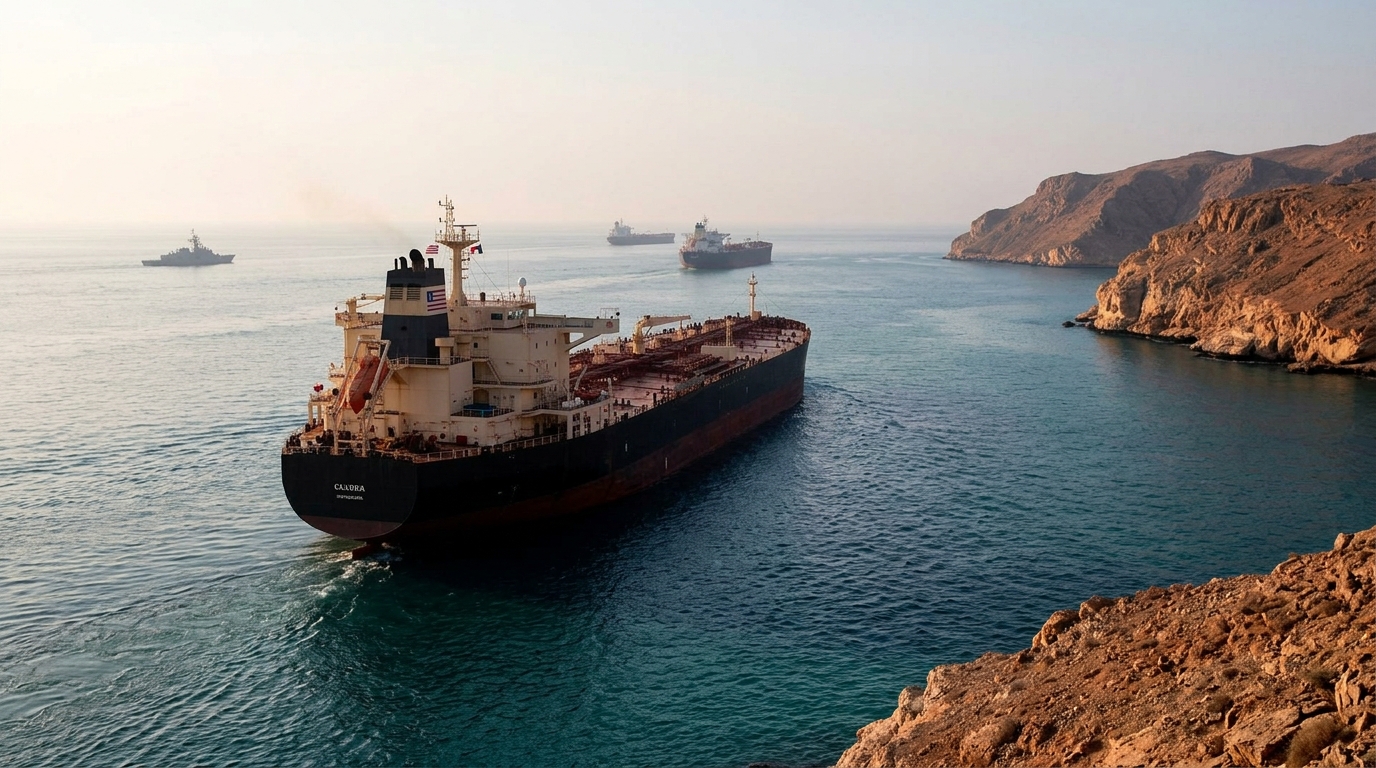
On June 18, 2026, Iranian President Masoud Pezeshkian signed a 14-point memorandum of understanding with the United States, halting hostilities, reopening the Strait of Hormuz to commercial traffic, and kicking off a 60-day window to negotiate the harder stuff. The Strait, which had been effectively shut since late February, is now officially open again. Traffic is recovering, though slowly and unevenly. Before the war, roughly 3,000 vessels transited the Strait each month and oil tankers alone carried an estimated 15 million barrels per day of crude exports. That number collapsed to near zero in the early weeks of the conflict.
The market’s reaction to the deal was telling. Crude oil actually fell on the day of the signing. Brent dropped more than 2% in Asian trading as investors moved quickly to price in a supply recovery. More recently, as weekend clashes threatened to derail the ceasefire, WTI bounced back to around $70.56 and Brent recovered to roughly $72.91. Neither level signals confidence in a clean resolution. Oil is essentially back to where it was the day before the war started.
That muted, choppy price action in crude is the first signal that something more complicated is happening here.
What the deal actually is, versus what markets are pricing.
The MOU is an initial framework, not a final peace agreement. It sets out a 60-day ceasefire period during which further talks are expected to address the genuinely unresolved issues: Iran’s nuclear program, uranium enrichment levels, the status of its highly enriched uranium stockpiles, IAEA inspection access, and sanctions relief. Iran still retains roughly 400 kilograms of 60%-enriched uranium, and the two sides continue to publicly disagree on whether IAEA inspectors have actually been invited back in. Trump says yes. Tehran says real nuclear negotiations have not even begun.
The word deferring is doing a lot of work in this agreement. The MOU does not resolve the core mechanics of Hormuz access, Iranian nuclear concessions, or the financial incentives and sanctions relief structure. Those are all supposed to be addressed in the second phase. And that second phase is already drawing domestic criticism in Washington, Israel, and Tehran for its yet-to-be-confirmed contents.
So what markets are treating as a resolution is actually a 60-day window to negotiate the actual resolution. Mid-August is the deadline. That is eight weeks away. And the parties still fundamentally disagree on the core issues.
The equity rally from ceasefire optimism has already happened. Tech stocks bounced hard. The S&P 500 and Nasdaq surged 14.9% and 21.4% respectively in Q2 2026, their strongest quarterly performance since the second quarter of 2020. The Dow gained 12.9% in the same span, its best quarter since Q4 2022.
That is the easy move. It is largely done.
The harder trade is the second-order stuff.
The war caused structural damage. Portions of the region’s downstream infrastructure and LNG export capacity, including facilities at Ras Laffan, will require extensive repairs. Qatar’s prime minister indicated recently that LNG production could return to normal within a few weeks, apart from the damaged facility. But even that optimistic timeline assumes no further escalation, no mine-related accidents in the Strait, and smooth implementation of an agreement that both sides are still publicly arguing about.
European energy markets are the clearest expression of this tension. TTF natural gas was trading around 40 to 43 euros per MWh as of late June, elevated relative to pre-conflict levels, reflecting real concern that the infrastructure damage outlasts the diplomatic language. European gas storage stood at roughly 46% of capacity as of late June, about 15 billion cubic meters below the five-year average for the same point in the year. That shortfall matters enormously as the market tries to rebuild inventories before winter. The window for injections is narrowing fast.
That is a tailwind for U.S. LNG exporters. Cheniere Energy and New Fortress Energy, whose contracted volumes look considerably more valuable in a world where Qatar and Iran cannot reliably ramp supply back to pre-conflict levels on any near-term timeline, are worth watching carefully through Q3.
The bond market is telling its own story. The 2-year Treasury yield spiked to a high of 4.23% on June 22, the highest since early 2025, following the Fed’s June meeting and the hawkish read of the new dot plot. It has since eased back to around 4.07% as oil prices fell and ceasefire optimism returned. But here is what matters: the direction of that move was driven by the Fed, not just by geopolitical risk. And the Fed is not changing direction because the Strait is open.
Slight tangent, but it matters. Kevin Warsh’s first meeting as Fed chair on June 17 was more consequential than it looked on the surface. The FOMC held rates steady at 3.5% to 3.75%, unanimously. But 9 of 18 officials penciled in at least one rate hike by year-end, the median dot plot shifted to 3.8% from 3.4% in March, and Warsh eliminated forward guidance language entirely. The Fed dropped all easing-leaning language and said flatly: “The committee will deliver price stability.” With CPI running at 4.2% annually in May, that is not an idle statement. The market was pricing in cuts a year ago. Now the base case is a hike by October, with traders assigning better than 60% probability to that outcome per CME FedWatch data.
Equity investors are celebrating the geopolitical resolution. Bond investors are staring at a central bank that just erased its entire 2026 easing path and is signaling the opposite direction. Those two stories are on a collision course at some point this summer.
The broadening market trend that predated the ceasefire is also worth watching. The S&P 500 closed Q2 near all-time highs, and the gains were not only in tech. Some of the late-quarter rotation out of technology names appears tied to quarter-end rebalancing by pensions and sovereign wealth funds. That flow reverses in early Q3. Watch whether tech leadership reasserts itself or whether the broadening into industrials, energy, and financials continues. The answer to that question determines whether the second half of 2026 looks like H1 2024 or H1 2022.
The deal is real. The uncertainty around it is equally real. Investors pricing a clean, durable resolution are probably running the wrong model. Iran retains enriched uranium, IAEA access remains disputed, Lebanon is still active, and the Strait is technically open but operationally fragile. The mid-August deadline for phase two of the nuclear negotiation is the next inflection point. Nobody seems to be trading around it yet.