July 5, 2026
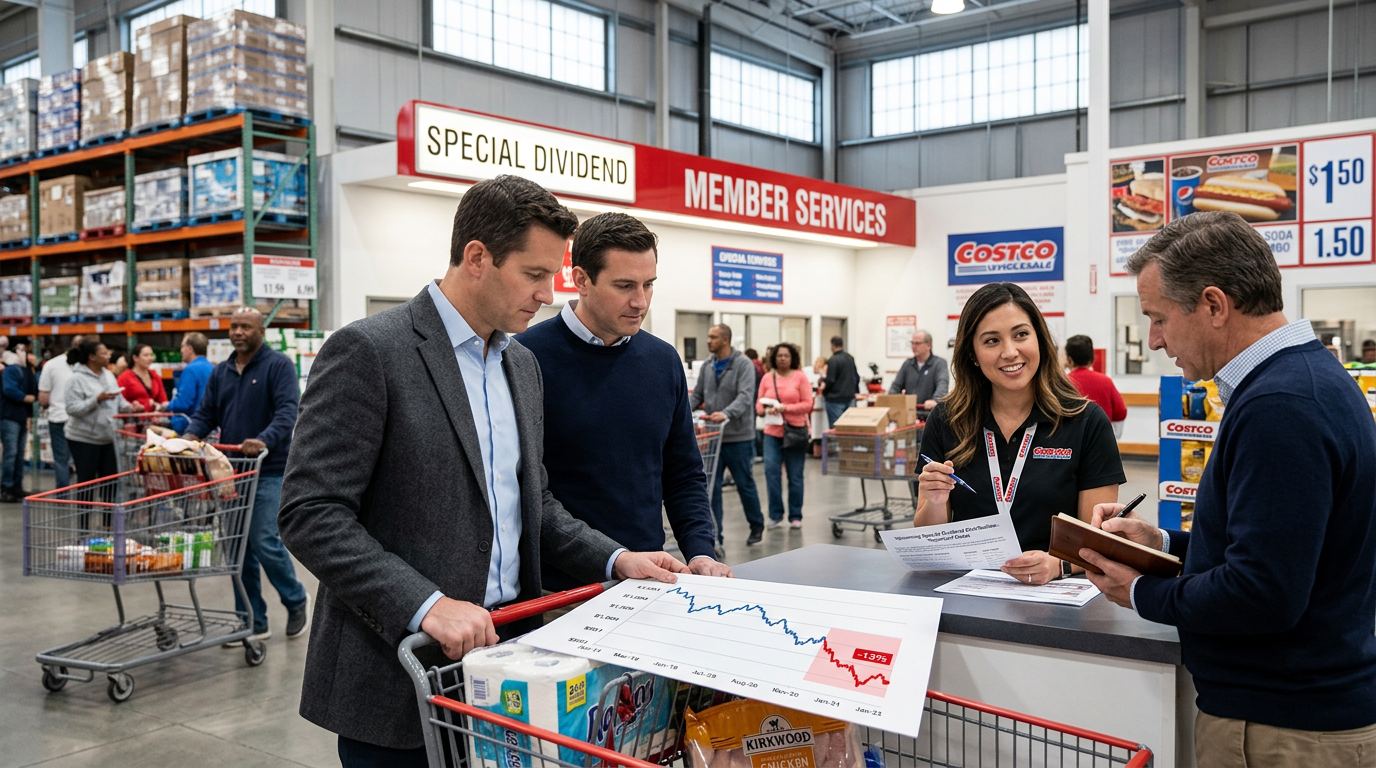
Costco Is Down 13% From Its High
The special dividend catalyst and the September 24 earnings date are more interesting than the slide suggests.
First a note from Stansberry Research
Editor’s note: Please see the following from Professor Joel Litman, a former consultant to the Pentagon and FBI, who just flew a small helicopter near one of the most secure sites in America to uncover what he says could soon become the biggest stock market story of 2026…
Potential $10 Trillion Breakthrough
I just traveled halfway around the world to one of the most remote and possibly dangerous sites in America… to witness a potential $10 trillion technology backed by Elon Musk and Sam Altman.
The site I visited is in an area marked as a “top 7 nuclear target” by Russia – alongside Camp David and the Pentagon.
And every morning, at 6 a.m., you may hear bombs going off.
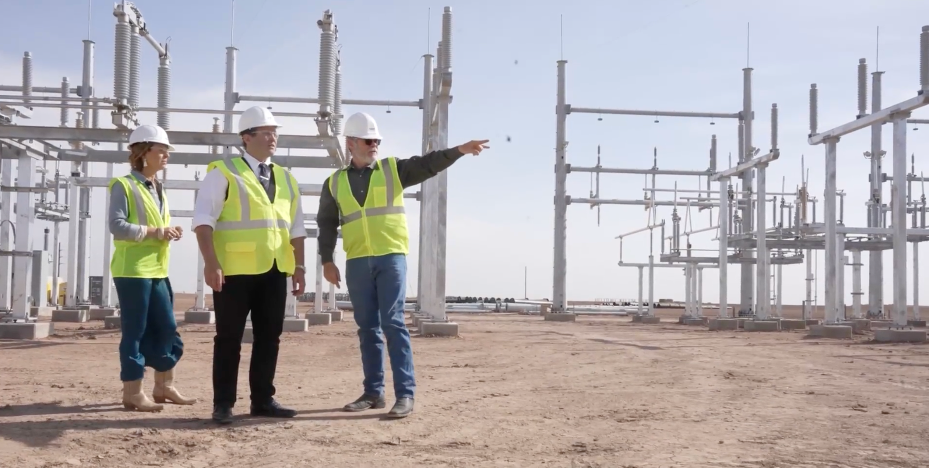
This is me flying in on a small helicopter…

You’d be arrested if you got too close to this place…
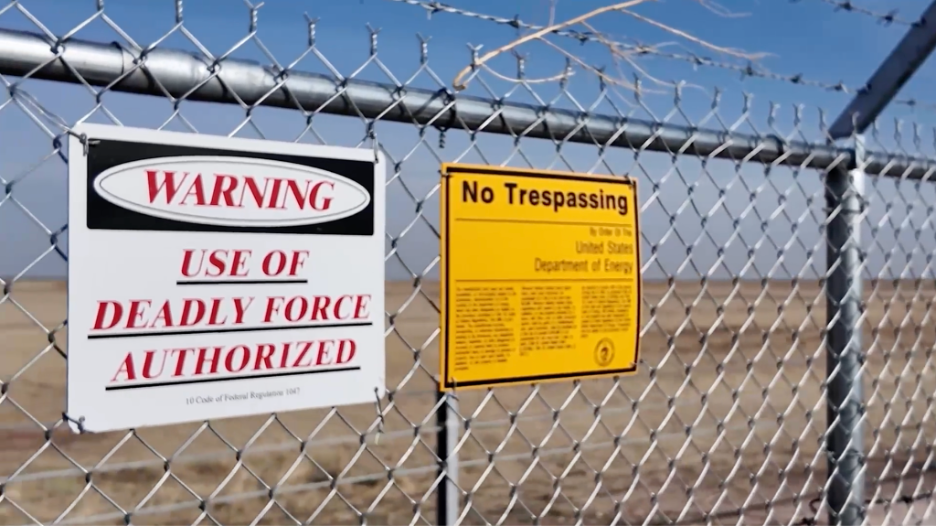
But I got special permission to enter… because I know what’s hiding in plain sight there…
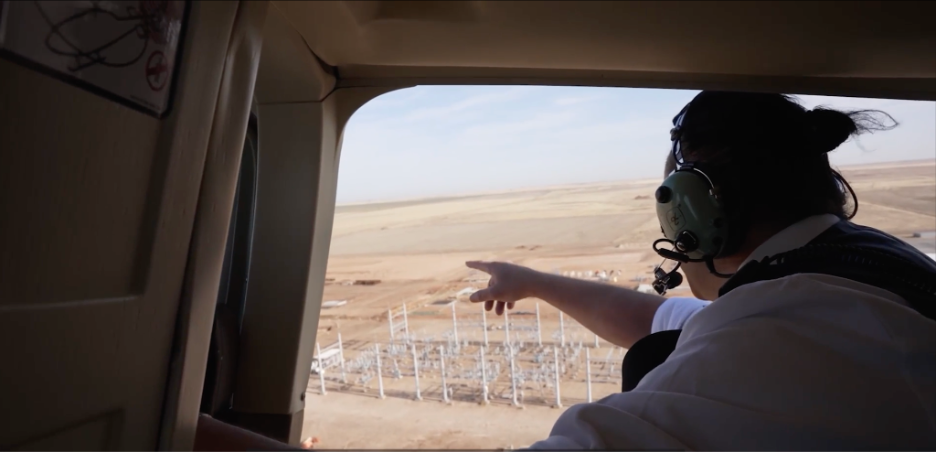
And it’s quickly becoming one of the most sought-after products in the world, with “years-long” backlogs already forming.
The Financial Times reports that Sam Altman has been begging a small company over the phone to build this for him.
This is supported by Meta, Google parent Alphabet, Amazon, and Nvidia CEO Jensen Huang…
And even President Trump has stepped in to greenlight this underlying technology with an emergency executive order.
But most importantly for you…
I believe the stocks involved in this could soar in the days ahead as this news breaks.
That’s because no one – not even Elon Musk – can get their hands on this without going through a small group of little-known companies that own the rights to this technology.
You could back these companies right now, in your regular brokerage account – before this goes mainstream.
I’m sharing all the details on the ground at this heavily secured site in West Texas, where this technology is about to go live…
Click here to see my full report.
Regards,
Joel Litman
Chief Investment Officer, Altimetry
P.S. I’m sharing the name of the company that Sam Altman has asked to build this tech for OpenAI – for free.
FEATURED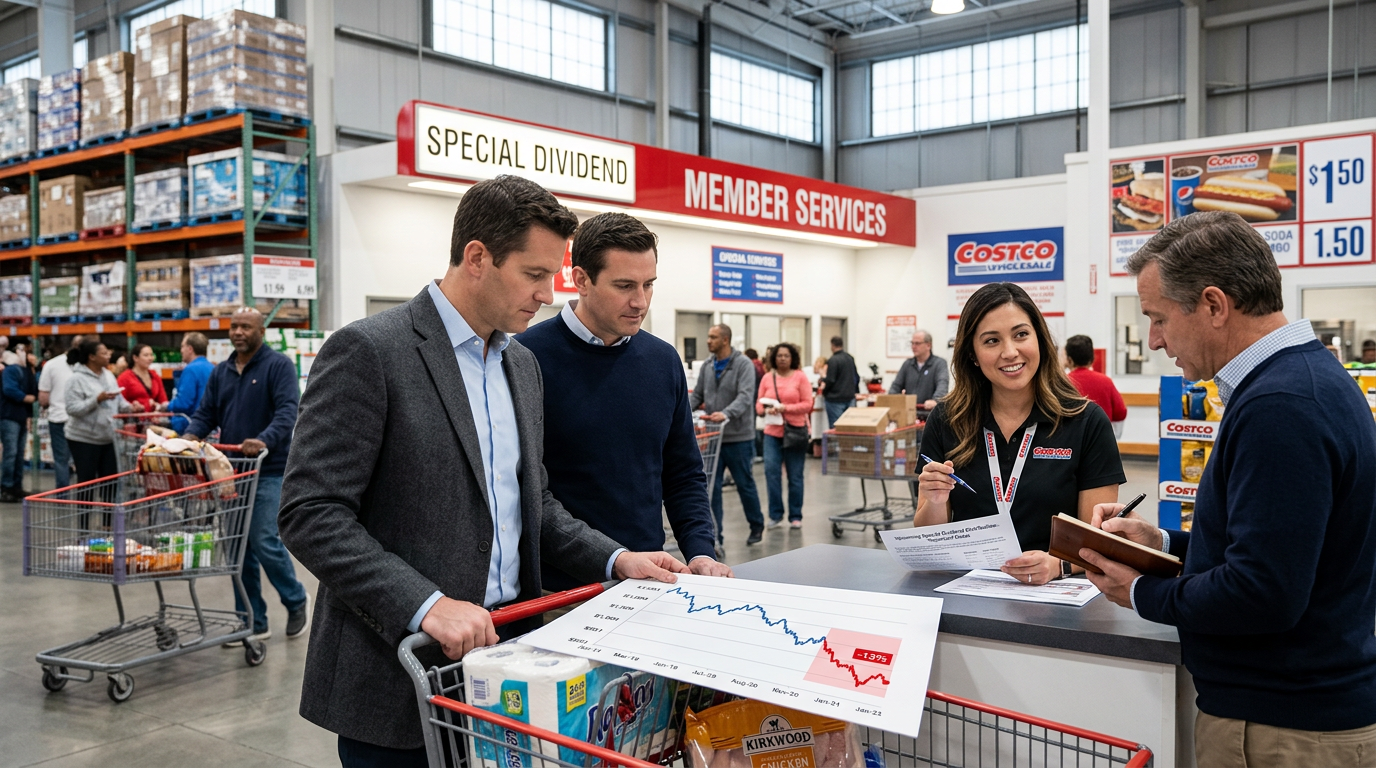
Costco Is Down 13% From Its High
At $948 a share, Costco feels cheap relative to where it was trading six weeks ago. That is not an obvious statement for a stock at 48 times earnings. But the pullback from Costco’s all-time high closing price of $1,094.32, reached on May 19, 2026, has created a specific kind of opportunity: a high-quality compounder temporarily discounted by rotation, not fundamentals.
Here is the investment question worth asking. The business just delivered one of the strongest quarters in its history. Traffic is growing. Digital sales are surging. The membership model just survived a fee hike with almost no churn. Bernstein analyst Zhihan Ma named Costco her top retail pick for the second half of 2026 and raised her price target to $1,194, well above the stock’s recent close near $951. So what exactly are investors waiting for?
The Q3 Numbers Were Not Normal
Net quarterly sales reached $69.15 billion, up 11.6%, while total revenue including membership fees rose to $70.53 billion, beating Wall Street estimates of $69.62 billion. Net income climbed to $2.19 billion, or $4.93 per diluted share, compared with $1.90 billion and $4.28 per diluted share in the same quarter last year.
The traffic number is the one that really matters here. Global traffic rose 2.4%, while average ticket increased 7.3%, reflecting higher spending levels and a favorable merchandise mix. Both moving in the right direction at the same time is unusual. The typical K-shaped retail dynamic has one going up while the other falls. Costco managed to grow visits and basket size simultaneously.
Digitally enabled comparable sales surged 21.5%, and ecommerce site and app traffic grew 37%. That is not a legacy retailer fighting digital disruption. That is a legacy retailer becoming a digital platform on top of a physical footprint.
The Membership Engine Nobody Respects
This is where the Costco thesis always sounds boring until you do the math.
Over the first 24 weeks of fiscal 2026, Costco generated $2.68 billion in membership fees, fees that are virtually all profit, which pushed total operating income to just over $5 billion. Without those fees, the company effectively cannot operate the way it does. The membership fees stir the drink and make Costco profitable.
The fee hike in 2024 was supposed to hurt renewals. It did not. U.S. and Canada membership renewal rates stood at 92.2%, up 10 basis points from the prior year, while worldwide renewal rates held at 89.7%. Raising prices and increasing retention. That is the definition of pricing power.
The data shows that Costco’s brand power and customer loyalty likely would enable management to raise fees sooner than in another seven years from now. If that happens earlier than consensus expects, the earnings math gets meaningfully better than current estimates suggest.
The Special Dividend and What It Signals
Bernstein’s H2 2026 call is not just about comparable sales. The analyst wrote that she expects Costco to generate about 6% to 7% comparable sales growth, excluding gas and foreign exchange, which, coupled with the prospect of a special dividend, should support the stock in the near term.
World’s Largest Investors Are Moving Their Money (Not Into AI)
While the media distracts you with stories about the next big AI IPO… The world’s largest investors are moving their money into one asset – at the fastest pace in a generation. This asset has crushed the S&P 500’s return over the past 12 months… More than TRIPLED the S&P 500’s return in 2025… and has outperformed the S&P 500 over the past 25 years by more than 1,100 percentage points. According to one Wall Street veteran, with over 40 years of professional investing experience… the biggest gains could be still ahead. That’s why he’s urging you to make one money move now.
Costco has paid special dividends before. The pattern tends to follow periods of strong cash generation. Costco ended Q3 fiscal 2026 with $18.95 billion in cash and cash equivalents, compared with $14.16 billion at the end of fiscal 2025. That is a $4.8 billion increase in cash in nine months. The balance sheet is building toward something.
Operating cash flow for the first 36 weeks of fiscal 2026 increased to $11.13 billion from $9.47 billion in the year-ago period. That cash generation rate, against a market cap near $421 billion, implies a cash flow yield that gives management significant optionality on capital return.
The Bear Case Is Real but Narrow
The honest counterargument: Costco’s trailing price-to-earnings ratio sits near 48x, and the forward multiple is approximately 44x. At those levels, any guidance miss or traffic deceleration will hit the stock hard. The Q3 EPS of $4.93 came in slightly below the $4.98 consensus estimate, and the stock fell nearly 5% on the day. That is what a near-50x multiple does to you when something goes sideways, even slightly.
Management itself noted that consumers remain focused on value amid macroeconomic uncertainty, elevated gasoline prices, and potential tariff-related impacts. The macro environment is not fully benign. If the consumer weakens more than expected heading into the fall, the ticket growth that has been masking softer traffic trends could reverse quickly.
Options Conditions Right Now
Here is where it gets interesting for traders. Implied volatility on COST is sitting at roughly 15.8% on a 30-day constant maturity basis. The IV Rank is approximately 3 out of 100, and the IV Percentile is near the 2nd percentile. Both figures are historically low. To put that plainly: options on Costco are about as cheap as they have been at any point in the last year.
That matters because of what is coming. Q4 earnings are confirmed for September 24, 2026 after market close. The last three major COST earnings events have produced actual moves that exceeded the implied move the options market was pricing in. In March 2025, shares dropped 6.6% against an implied move of 3.6%. In September 2025, the stock fell 4.9% against a 3.5% implied. Most recently, the May 28, 2026 Q3 release produced a 4.72% actual decline against a 3% implied move.
The options market has consistently underestimated COST’s post-earnings movement over the past year. With IV near its 52-week floor heading into a confirmed catalyst date, the asymmetry for defined-risk buyers tilts in their favor in a way it rarely does on a stock like this.
Slight tangent, but it matters: the open interest Put/Call ratio on COST currently sits near 1.10. That tells you there is more hedging activity than outright bullish speculation in the options market right now. Institutions are not loading up on upside calls. They are buying insurance. That is actually a constructive signal for a longer-dated bull position, not a bearish one.
Three Ways to Approach This in Options
Each of these is a defined-risk structure. None of them is a recommendation. They are analytical frameworks for traders with different views on where COST goes between now and late September.
Bull Case: Long Call Spread into September 24
For traders expecting COST to recover toward the $1,000 to $1,050 range before earnings, a call debit spread offers a defined-risk way to position. With IV near its 1-year low, buying calls outright is relatively inexpensive by historical standards. A structure such as a September 19 $960/$1,010 call spread would cost a fraction of the width, cap risk at the debit paid, and profit if the stock closes above the $960 short strike by expiration. The risk is the full premium if COST stalls or declines. The reward is the full width of the spread minus the debit paid if the stock clears $1,010.
Bear Case: Long Put or Put Spread for Earnings Reaction
For traders expecting a repeat of the May 28 post-earnings selloff pattern, a put structure tied to the September 26 weekly expiration (the first expiration after the September 24 earnings release) offers a defined way to position for a down move. Historical data shows COST has declined following five of its last eight earnings announcements. A September 26 $920/$880 put spread would cost less than outright puts and would benefit from a move toward the 52-week low of $844. Max risk is the debit paid. The risk to this structure is a positive earnings surprise or special dividend announcement that sends the stock higher.
Neutral/Income Case: Cash-Secured Put at Technical Support
For traders who want to own COST at a lower price or generate income while waiting, selling a cash-secured put at the $900 strike in the August or September cycle is a structure worth examining. With IV this low, the premium collected will be modest, but the strike would represent approximately a 5% further discount from current levels, near the midpoint of the 52-week range. If assigned, the effective cost basis would be $900 minus the premium received. If not assigned, the premium is the full return.
What September 24 Will Decide
The consensus EPS forecast for Q4 fiscal 2026 stands at $6.55, which would represent significant sequential and year-over-year growth. That is a high bar. Wall Street’s consensus price target across 24 analysts now sits at $1,103.66, implying about 17% upside from current levels. Sixteen analysts rate COST a buy. Seven say hold. One says sell.
The company remains optimistic about long-term growth opportunities across warehouse expansion, digital engagement, retail media, pharmacy, AI-enabled shopping experiences, and international markets, particularly China, Canada, Japan, Korea, and Spain.
What is worth watching is not whether Costco beats by a few cents. It is whether management comments on the special dividend, and whether the Q4 comparable sales number, ex-gas, holds the 6% to 7% corridor Bernstein is modeling. Those two data points will tell investors whether the 13% pullback from the all-time high was a discount or a warning. The options market, right now, is priced like nothing is going to happen. That is rarely the right assumption heading into a COST earnings date.