July 5, 2026
The Magnet Chokepoint Nobody Is Pricing
Featured: The Magnet Chokepoint Nobody Is Pricing
If you haven’t yet grabbed your free copy of the Ultimate Dividend Package, you’re missing out.
For starters: It’s FREE.
But more importantly…
90% of the stock market’s returns over the past century have come from dividends.
They’re the best way to stack the deck in your favor.
Because you get paid whether stocks go up, down or sideways.
Click here to see how to grab your copy now… before the download link expires.

>> Click Here to Get Your FREE Ultimate Dividend Package <<
Sincerely,
Rachel Gearhart
Associate Publisher, The Oxford Club
P.S. Yes, it’s really free.
FEATURED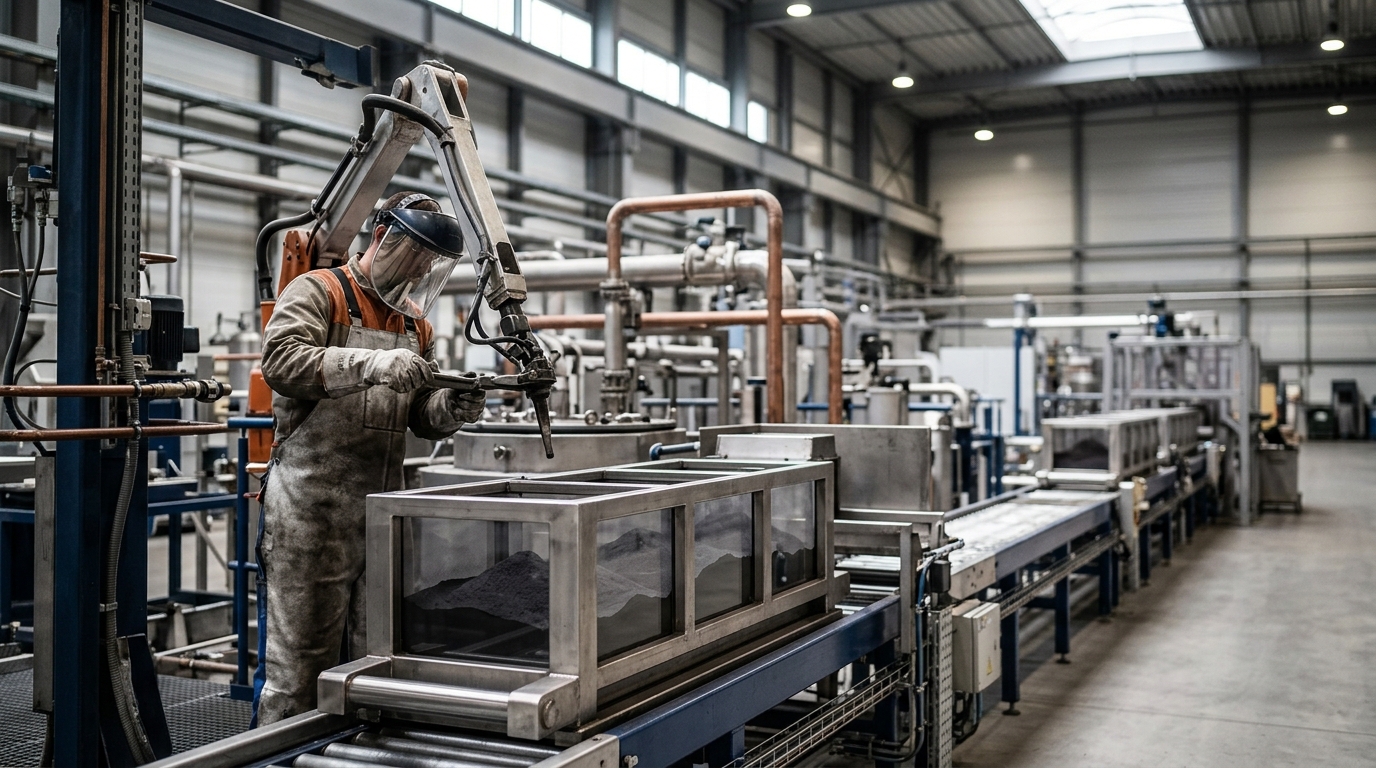
The Magnet Chokepoint Nobody Is Pricing
Start with a Ford plant. Not with a stock ticker, not with a trade headline. With a Ford assembly line that goes dark the moment Beijing tightens a licensing queue.
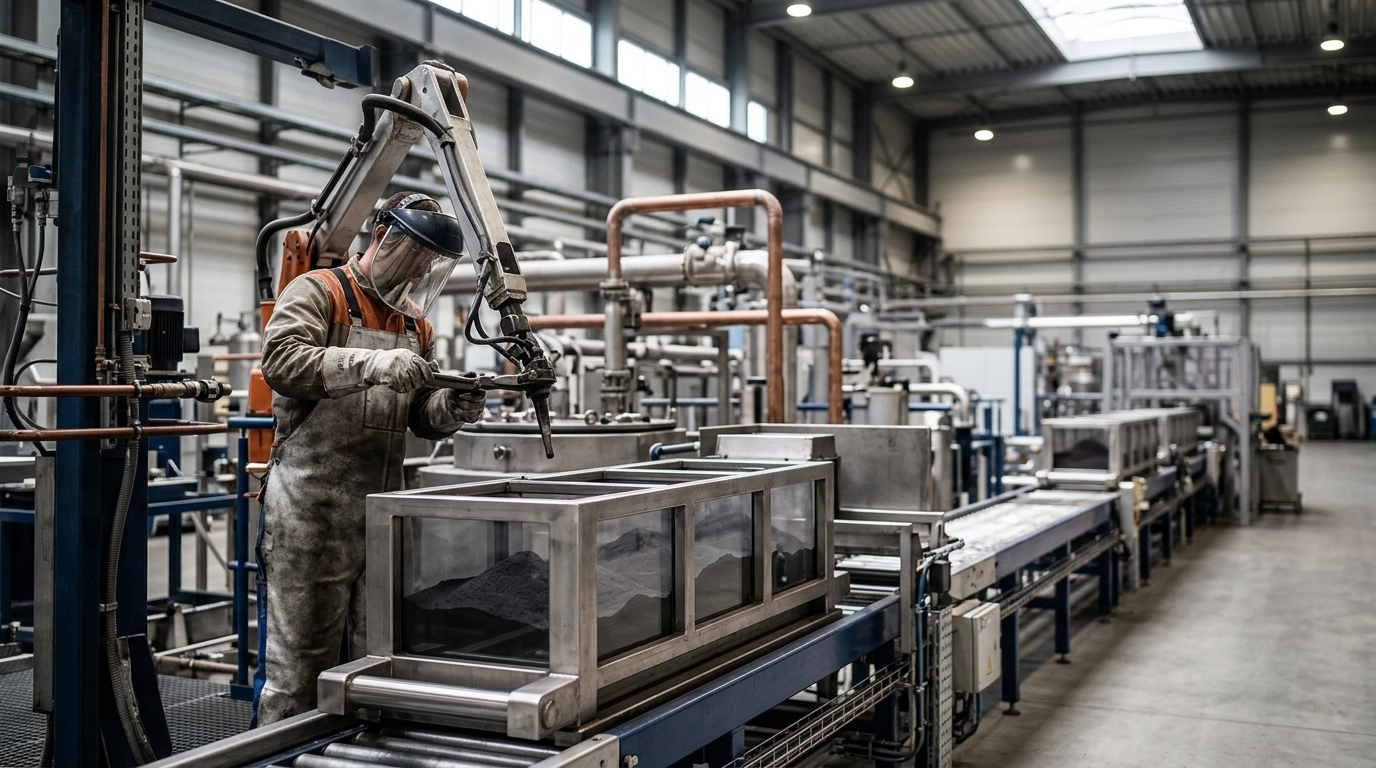
That happened. In 2025, when China applied its first wave of rare earth export controls, at least one major U.S. automaker had to pause production. Not because raw ore disappeared from the ground, but because the processing infrastructure that turns ore into usable material barely exists outside China. The mine is not the chokepoint. The refinery is.
Here is the structural problem most investors are still missing. China controls roughly 60-70% of global rare earth mining, but that number is almost irrelevant. Beijing controls roughly 90% of global rare earth processing, 80% of tungsten refining, and 60% of antimony production. Materials essential for everything from F-35 fighter jets and precision-guided munitions to electric vehicle motors and wind turbines. The ore is spread across the globe. The chemistry to make it usable is concentrated in one country. That asymmetry is the weapon.
And China has now made very clear it knows exactly how to use it.
The Escalation Nobody Took Seriously Until It Was Too Late
Think through the derivative chain here. AI drives demand for GPUs. GPUs require rare earth magnets for cooling systems, hard drives, and precision mechanisms. Electric vehicles require rare earth magnets for their motors. Defense systems require them embedded so deeply in their architecture that there is no easy substitution. Neodymium-iron-boron (NdFeB) permanent magnets are embedded in critical military systems including F-35 fighter aircraft, nuclear submarine propulsion systems, radar array components, and precision missile guidance mechanisms.
Follow the price action. From roughly $53 per kilogram at the January 2026 opening, NdPr alloy surged to a peak near $137-139/kg by late April 2026, a gain of approximately 160% in under four months. That is not a supply disruption. That is a deliberate pricing mechanism. Beijing is weaponizing control, not scarcity, by using temporary and reversible restrictions that maintain pricing leverage and extract strategic concessions while discouraging large-scale Western investment in alternatives. After a partial correction through May and June, the NdPr alloy benchmark has rebounded to roughly $133/kg as of July 1, 2026, well above the DoD price floor of $110/kg that backstops MP Materials.
The escalation pattern is documented. Beijing deployed rare earth export controls on U.S. companies in April 2025, October 2025, and again in June 2026, establishing a clear doctrine of calibrated, repeatable application. Not improvisation. Doctrine. Each move refines Beijing’s understanding of how much pressure the West can absorb before backing off. So far the answer has been: a lot.
Do NOT buy SpaceX until you read this
History shows…
Investing into the biggest IPO of our era is NEVER where the biggest money gets made.
Instead, as the man whose research has been sought out by over 500 institutions says…
The real fortunes are made in “The Aftershock.”
Japan figured this out a decade ago. After China’s rare earth embargo rattled its electronics industry in 2010, Japan did something the United States never did. The Japanese government built strategic stockpiles of processed rare earth materials. Individual Japanese companies quietly built their own reserves covering years of supply each. The U.S. response was, essentially, nothing. Until last year. And Japan is still paying for its entanglement in Chinese supply chains. A December 2025 estimate from Daiwa Institute of Research put the GDP cost of a one-year Chinese rare earth cutoff to Japan at roughly 7 trillion yen, or about $43 billion.
The Policy Shock That Changes the Math
Three things happened in rapid succession that most investors are still processing individually rather than as a compounding force.
First, the Pentagon stopped treating rare earths as a commodity problem and started treating it as a defense emergency. The Department of Defense established a public-private partnership with MP Materials, acquiring $400 million in company stock, extending a $150 million loan for heavy REE separation expansion, and committing to a price floor, offering direct payments if neodymium-praseodymium prices fall below $110 per kilogram. That is not a research grant. That is the U.S. government guaranteeing a floor price for a private company’s commodity output because the national security calculus demanded it.
Second, the January 2027 deadline arrived on the horizon with sudden clarity. Starting next year, Chinese-sourced rare earths will be banned from the U.S. defense supply chain. Not just the finished magnets, but every stage: mining, refining, separation, melting, and production. Every defense contractor in America has a clock running. The companies that cannot source domestically will face procurement delays, contract risk, or both.
Third, and this is the piece that accelerated everything: on June 22, 2026, China added 10 U.S. entities to its export control list, prohibiting exports of dual-use items with immediate effect. The list included rare earth mine operator MP Materials Corp and rare earth magnet maker USA Rare Earths, alongside U.S. defense contractors specializing in aerospace, drones, and shipbuilding. Beijing did not blacklist these companies as a gesture. It blacklisted the two companies most architecturally central to the U.S. attempt to build an independent supply chain. That is a message, not a sanction.
The Company Most People Still Think Is a Mining Stock
Here is what Wall Street is getting wrong about MP Materials (NYSE: MP). Most analysts still model it as a mining company with a speculative downstream bet attached. The framing is backwards. The mine is the commodity. The refinery and the magnet factory are the moat.
MP Materials is the only vertically integrated rare earth company in the United States. In Q1 2026, the company posted record NdPr production of 917 metric tons, up 63% year over year, and record NdPr sales of 1,006 metric tons, up 117% year over year. Revenue reached $90.6 million for the quarter, with Adjusted EBITDA swinging to positive $36.6 million from negative $2.7 million in Q1 2025. Total revenue including price protection agreement income reached $132.9 million, a 28% sequential increase. That revenue figure does not include the magnet business at scale. It is the pre-ramp number. The inflection is still ahead.
What changed structurally is the downstream buildout. The Magnetics segment operates a rare earth metal, alloy and magnet manufacturing facility in Fort Worth, Texas, known as Independence, where the company began production of neodymium-iron-boron permanent magnets in December 2025. That is a recent event. The market acknowledged the announcement but has not yet absorbed the ramp.
Elon Musk’s New Invention Will Blow You Away
Elon Musk did it again! After self-driving cars…
Reusable rockets that land themselves…
And brain chips that let paralyzed people control computers with their minds…
Elon just filed this patent (click here and see it for yourself) to protect his new invention…
A new form of AI so powerful he called it an “infinite money glitch.”
And it could help send shares of this little-known Elon Musk supplier to the moon.
The contracted demand profile is what makes the risk-reward asymmetric. Marquee partners include Apple and General Motors, with $32 million in Apple prepayments received in February, bringing total Apple prepayments to $72 million against a $500 million agreement to source American-made magnets. GM is in active product qualification for its electric vehicle program. And the Department of Defense backstops whatever commercial customers do not absorb, having guaranteed that 100% of the NdFeB magnets produced by the new 10X factory will be purchased, with the DoD committing to buy all production that commercial clients do not take for the first 10 years after the facility begins operation.
The capital plan is funded. The company ended Q1 2026 with $1.74 billion of cash and short-term investments, which management states fully funds the long-term capital plan.
The Derivative Nobody Is Counting
MP Materials is not a first-derivative AI play. It is not a first-derivative defense play. It is the fourth derivative of four simultaneously converging forces: AI hardware demand for permanent magnets, EV adoption requiring motors, defense procurement banning Chinese inputs, and China’s deliberate weaponization of the only processing infrastructure that converts raw ore into finished material.
The 10X facility in Northlake, Texas tells you everything about the scale the company is building toward. MP Materials selected a 120-acre site in Northlake for its planned rare earth magnet manufacturing campus, located less than 10 miles from its existing Independence facility in Fort Worth. The project, internally designated “MP 10X Development,” is targeting roughly 10,000 metric tons of annual NdFeB magnet output. Current Western magnet production capacity outside China is a rounding error. Ten thousand tons annually is not a rounding error.
Heavy rare earth separation covering dysprosium and terbium was described by management as “imminent” at Mountain Pass in the Q1 2026 earnings call. The heavy rare earth circuit will produce terbium, dysprosium, and intermediate feeds for later separation or sale. This would expand the midstream circuit beyond NdPr into higher-value elements. Dysprosium and terbium are the materials where the Western processing gap is most acute. China controls 99% of capacity for these elements. That figure is not an exaggeration.
What is interesting is the timeline compression. The January 2027 defense supply chain ban means procurement teams are not waiting for price discovery. They are signing contracts now, ahead of need. That is how you get a DoD floor price and a 10-year offtake guarantee before the factory is fully ramped. The urgency is not theoretical.
Options Market and Risk Framework
Q2 2026 earnings are confirmed for July 30, after market close. Near-term headwinds are known and largely anticipated: a planned Q2 production dip from maintenance and commissioning, diminishing price protection agreement income from stockpiles, and lumpiness in magnetics revenue as precursor prepayments roll off and PPAP validation continues. That means the July 30 report carries a known soft patch. The market likely absorbs that. The more important signal will be the heavy rare earth separation commissioning update and Independence magnet delivery volumes heading into the second half.
Across 18 analysts tracked by S&P Global, MP Materials carries a Strong Buy consensus with an average 12-month price target of roughly $80. The spread runs from approximately $62 on the low end to $90 at Wedbush, which initiated with an Outperform in April 2026. DA Davidson maintains a Buy with an $82 target. The current price near $53 implies the market is discounting execution risk and the temporary easing of geopolitical premiums that came when a partial U.S.-China trade truce was announced. That truce is fragile. The suspension of the October 2025 controls expires November 10, 2026. If it lapses, the extraterritorial provisions return, covering any product manufactured outside China that incorporates Chinese-origin rare earth materials. That scope encompasses a significant portion of the global magnet supply chain.
For traders expecting continued supply chain bifurcation and on-schedule magnet ramp execution: a defined-risk structure targeting a move toward the $70-$80 range into Q3 earnings could be framed around August calls, giving the July 30 report time to confirm H2 guidance. Implied volatility typically elevates into earnings. Worth evaluating debit spreads rather than naked long calls to manage premium cost given the event-driven nature of the catalyst.
For traders who believe the DoD partnership and contracted offtake provide a structural floor: the $400 million DoD equity stake and the price floor mechanism on NdPr effectively change the risk profile compared to a speculative miner. The bear case requires believing that Apple, GM, the DoD, and U.S. industrial policy all reverse simultaneously. That is a high bar.
The neutral case simply waits for the July 30 report to confirm or deny the H2 magnet ramp. If Independence shipment volumes disappoint and heavy rare earth commissioning slips, the stock moves toward the $45-$50 range. If execution holds, the rerating toward analyst targets becomes the path of least resistance.
The Part CNBC Is Not Running
Here is why this is not consensus yet. The China export control story was covered for 48 hours as a geopolitical headline and then replaced by the next trade war escalation. Most equity analysts still cover MP in the mining sector, not the defense sector or the advanced manufacturing sector. The word “magnet” barely appears in generalist financial media coverage of the company.
The assumption that is wrong: that the DoD partnership is a subsidy for a company that cannot compete commercially. The reality is the opposite. The DoD price floor exists precisely because commercial demand from Apple and GM already justifies the investment, and the government is guaranteeing the overflow. That is not dependency. That is a contractual moat on a captive market.
MP Materials operates Mountain Pass, the only active large-scale rare earth mine in the Western Hemisphere, and is building a vertically integrated mine-to-magnet supply chain for defense, EVs, AI hardware, and advanced manufacturing. The bull case rests on MP’s U.S. rare earth position, a DoD partnership with a $110/kg NdPr price floor, a $500 million Apple recycling partnership, secured offtake from Apple and General Motors, and the 10X Northlake magnet campus targeting nearly 10,000 metric tons of annual NdFeB magnet output.
The force acting on this company is not a policy cycle. It is structural decoupling. Securing independent rare earth supply chains would deny Beijing one of its most potent coercive levers, ensuring that U.S. and allied military capacity remains intact precisely when it is needed most. When think tanks and defense planners are writing that, the industrial policy behind the trade follows. The question here is not whether MP Materials wins its magnet ramp. The question is whether the United States is serious about supply chain sovereignty. Everything since April 2025 says it is.
July 30 is the first real checkpoint.
Interesting Gold Stories Rarely Start Where Everyone Is Looking
Most investors say they want to be early.
Early rarely feels comfortable.
It has missing pieces. It has surface samples instead of full confirmation. It has drilling underway, not final answers.
So many people wait.
They wait for the bigger headline. The institutional coverage. The cleaner story. The moment the financial media finally catches up.
By then, the setup has usually changed.
It has a large land package, high-grade surface samples, and a second drill now turning.
Still early.
Still uncertain.
That is exactly the phase many investors miss.
Look closer at the story before it becomes obvious…