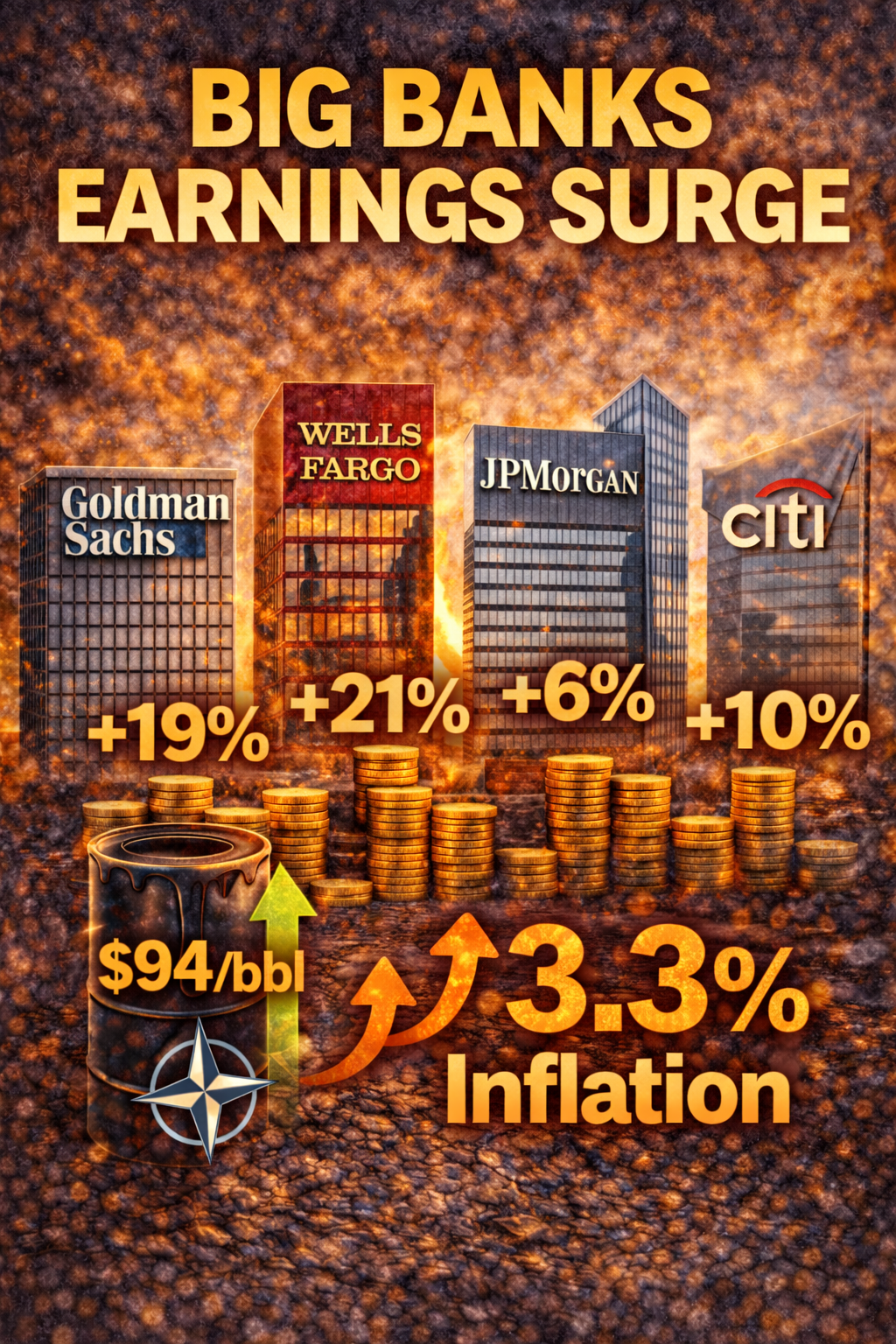
Inflation finally hit home… Rising to 3.3% in March. The consumer took the brunt, with gasoline, a main culprit. Most economists had predicted a slight upside from February’s 2.4%. The U.S./Israeli Iranian war has driven oil to extremely high levels not seen in years. “Energy prices jumped by 12.5% from a year earlier, with gasoline up 18.5%. The war in Iran is now clear in the economic data and it’s a brutal picture,” said Heather Long, Navy Credit Union’s chief economist. The University of Michigan’s Consumer Sentiment Index, out last Friday, “fell to its lowest level on record.” The index revealed an April reading of 47%, off over 10% from a down March. The report is very comprehensive, marking the latest consumer concerns and thinking, regarding the economy and short-term financial trends weighing buying habits.
Stocks finished higher last week as investors and traders had hoped that the war was nearing talks of a resolution. After President Trump’s announcement of a 2 week ceasefire, indexes turned positive, brushing aside a negative inflation report. Oil settled back, with West Texas Crude falling 13% to $96.57 a barrel. The blue-chip Dow Jones Industrial Average slid 269 points, noting that some investors were rotating out of established value stocks back into more cyclical issues and the Magnificent 7 collection.. The tech-heavy Nasdaq Composite gained 0.4%, while the S&P 500 finished just above flatline. The favored 10-year Treasury note was a bit stronger, rising to 4.316%. (“The bond rises when prices fall.”)
Software stocks roared back Monday, as investors are beginning to realize the interaction and importance their functions relate to Artificial Intelligence, coming to grips with the impact. “Software has a place finally, as investors have learned to differentiate differences between the winners and losers of the AI age,” said Scott Ladner of Horizon Investment. The Nasdaq Composite jumped 280 points as technology stocks were in demand… again. The Dow Jones added 301 points, “hitting positive territory this year.” Oil marched higher, prompted by President Trump’s comment that he would control the Strait of Hormuz. Vice President Vance’s 21 hour session with Iranian negotiators was fruitless as talks broke down. Benchmark Crude surged up 4.4% to $99.36 a barrel. As the week unfolds, big financials will begin to release earnings, with much anticipation.
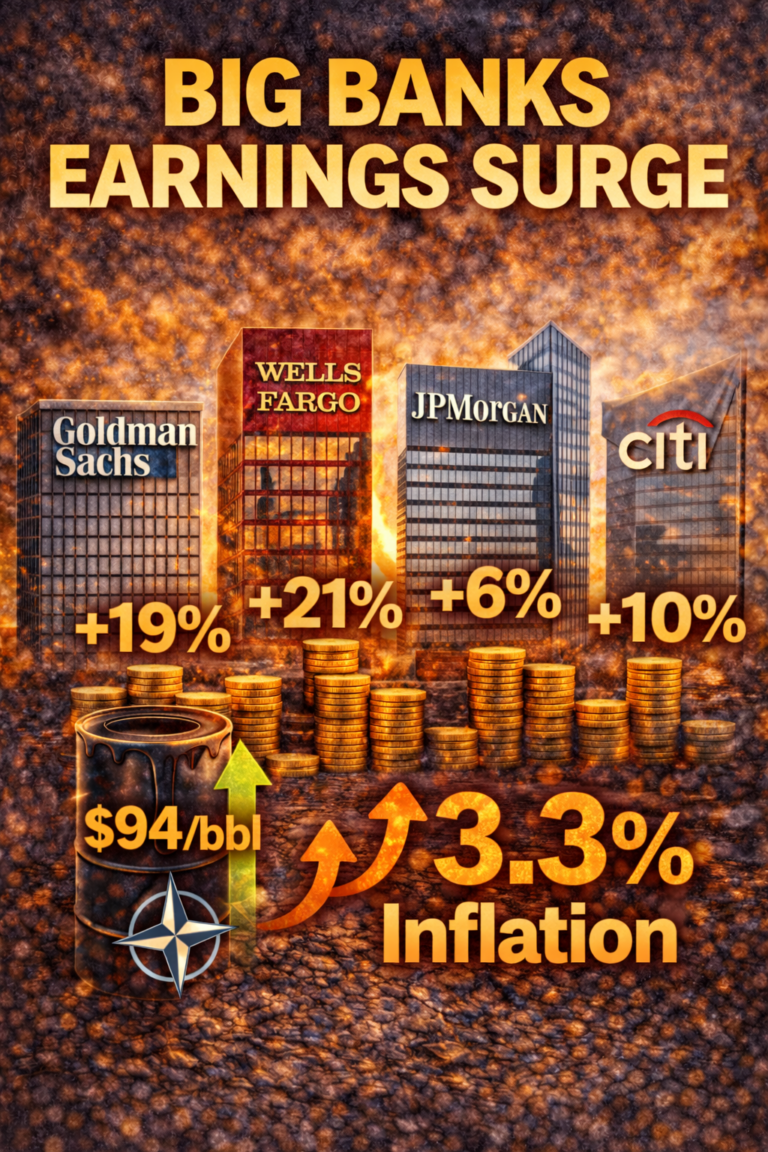
The Nasdaq Composite, according to The Wall Street Journal ”in the past 10 sessions has gained 14%, with much recent optimism about the Strait of Hormuz being controlled by the U.S. The market only seems to care that the Strait will be open in the future,” said Brad Conger, chief investment officer at Hirtle Callagan. He adds, “Because in the short run, the longer this extends, the greater the impact.” Goldman Sachs led off the week , reporting a 19% increase in earnings bolstered by major ‘deal–making and client services.’ Most every large financial institution, JPMorgan Chase, Bank of America, Wells Fargo, Morgan Stanley, and CitiGroup, all reported significant earnings gains. The Financial sector, a great pulse of the economy, is reassuring to investors and traders, and consumers.
Technology stocks on Wednesday pushed the indexes higher and to new records. The blue–chip Dow Jones Industrial Average slipped as value oriented stocks were out of favor. Investors looked back to techs, AI and even bargain software sticks. Tech stocks remained ‘hot’ Thursday with the indexes cresting new record highs. Positive news from the Middle East spurred the markets and gave investors renewed optimism.
RUMBLINGS ON THE STREET
Tom Porcelli, chief economist at Wells Fargo, WSJ – “Overall inflation numbers were better than feared in March. Now much depends on how long the shock lasts. I don’t think any one should be sounding all clear after this report.” (referring to the newest report on rising inflation)
Chris Zaccarelli, chief investment officer of Northlight Asset Management, WSJ – “We should expect, for the next couple of months, at least higher than normal inflation reports because there will be a backlog of ships and it will take time for prices to come back down to where they were prior to the war.”
Jeff Schulz, head of economic-market strategy at ClearBridge Investments, WSJ – “It’s going to be a drag overall to the low and lower-middle income consumer by paying the higher prices at the pump.”
About the Author