May 12, 2026
21 Banks Are Brokering the SpaceX IPO
Featured: Aurora Innovation – $14 Billion for a Truck That Just Started Hauling
Dear Reader,
JPMorgan. Goldman. Morgan Stanley. In total, 21 banks are brokering the SpaceX IPO.
They will collect billions in fees on a deal that was done before you heard about it.
By the time you can buy a single share, the people who built the system will have already made 30 times their money.
That’s not a surprise. That’s the plan.
But here’s what they’re not telling you…
While every financial newsletter in America is hyping SpaceX, the world’s central banks have been buying gold, 850 tonnes last year alone.
Not shares. Not funds. Not pie in the sky. Actual physical gold. The one asset that exists entirely outside the system.
Ask yourself why the institutions that created the paper money system keep moving their own reserves into the one thing that doesn’t depend on it.
Then ask yourself why your retirement is still 100% inside the system they’re quietly stepping away from.
We put together a free 2026 Gold Guide on exactly what they know and what you can do about it.
It costs nothing. Takes 30 seconds to request.
The insiders already made their move.
Now it’s your turn.


FEATURED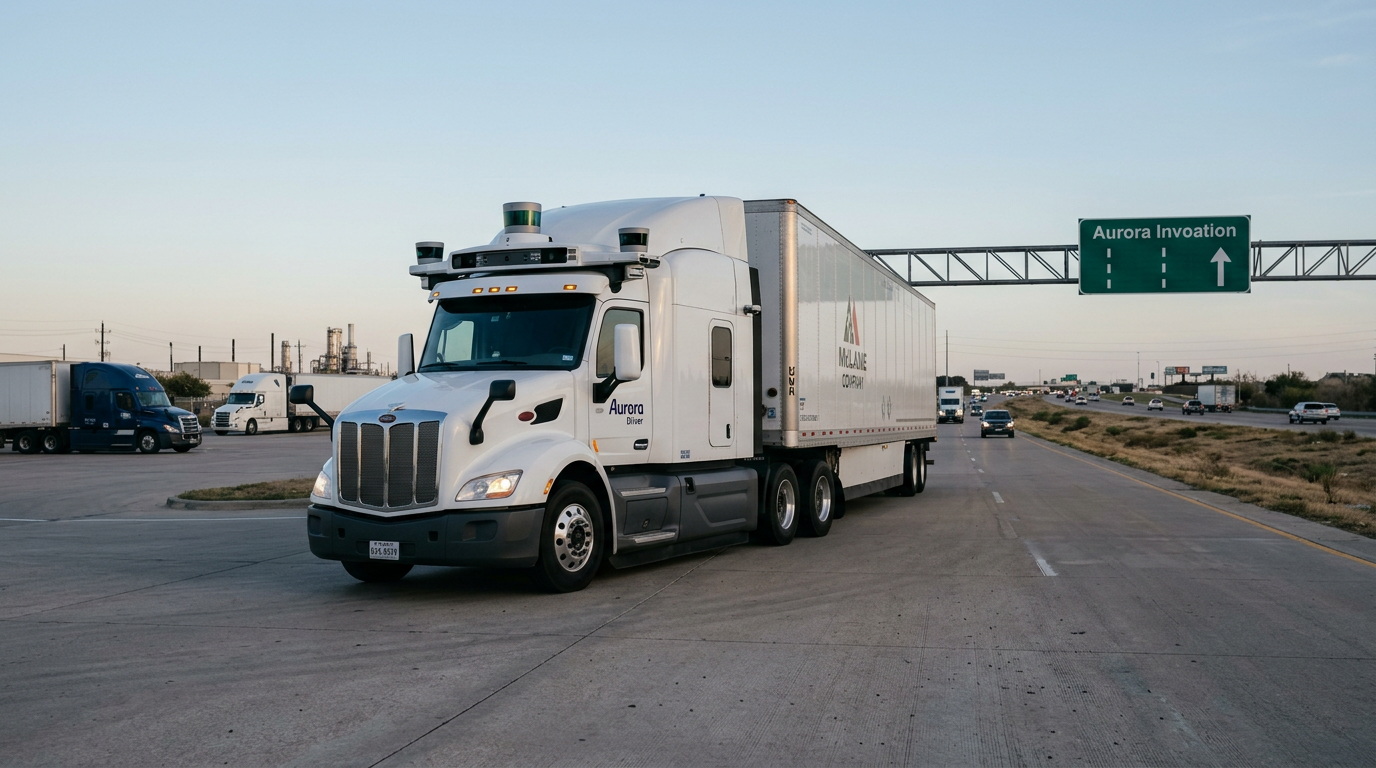
Aurora Innovation: $14 Billion for a Truck That Just Started Hauling
Autonomous trucking has had a long, noisy runway.
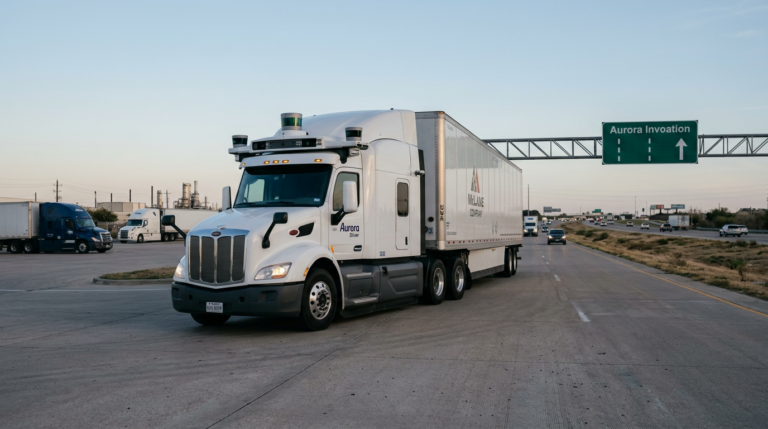
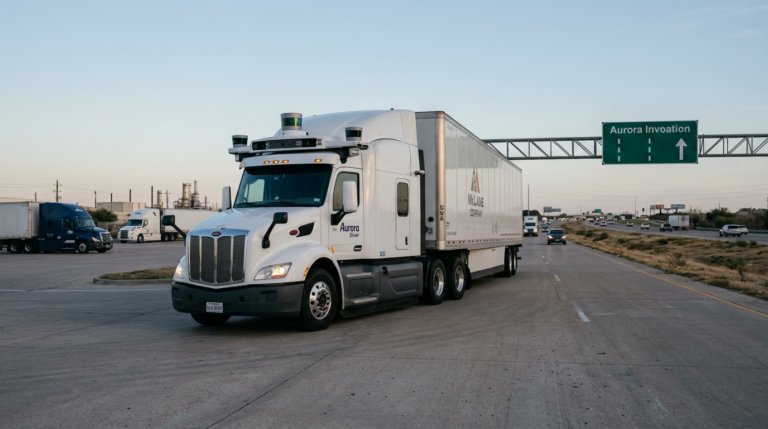
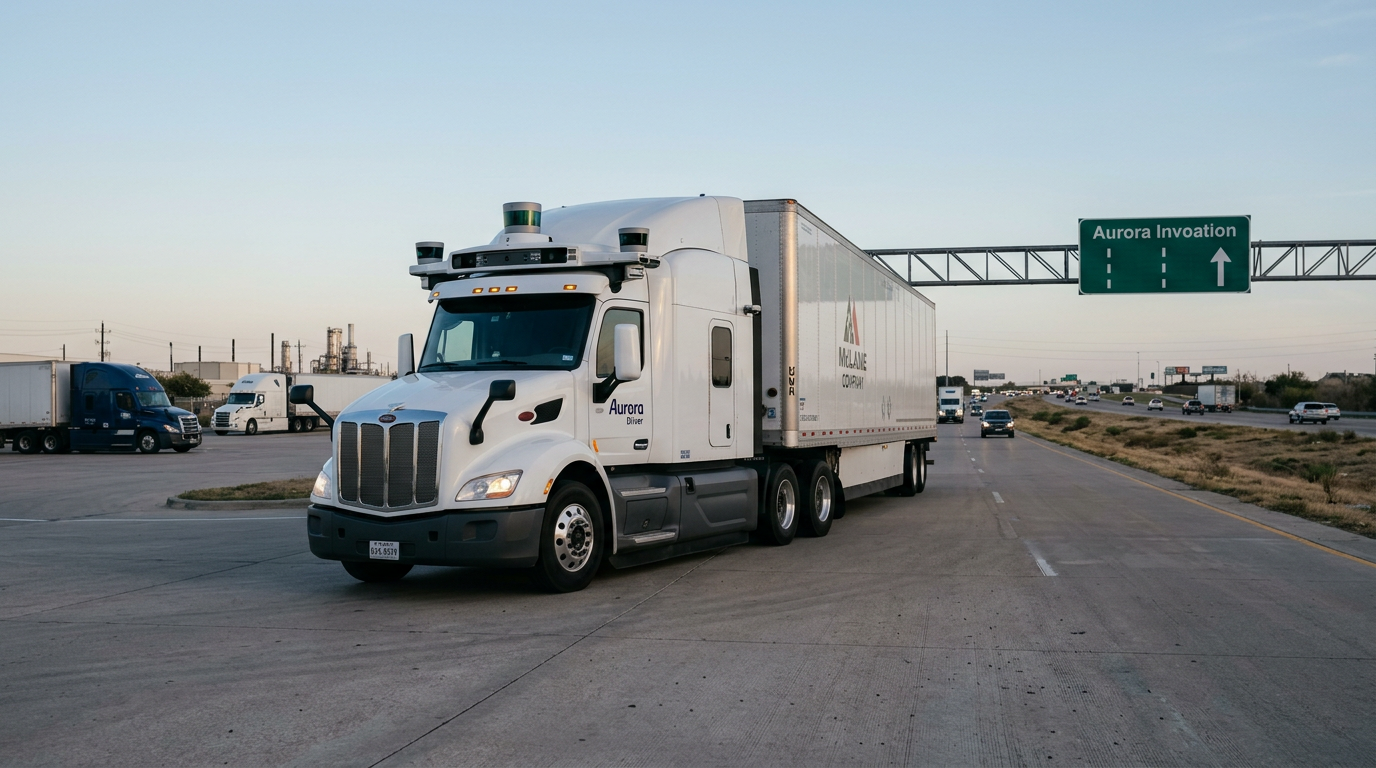
Last week it finally did the one thing markets pretend they don’t care about until it happens: it moved freight for a real customer on a real route, without a human in the cab as the backup plan.
McLane Company – a Berkshire Hathaway subsidiary and one of the largest U.S. supply chain distributors – said it will begin driverless hauls in Texas using Aurora Innovation’s system. No safety driver. No observer. That detail matters more than the headline. “Driverless” is where liability shifts, where unit economics start to resemble a business, and where skepticism gets harder to sustain.
It also explains the tape. Aurora (AUR) popped on the news, then gave some of it back, with volume exploding to 48.4 million shares in a session – about 136% above its 3-month average. That kind of churn usually shows you exactly where the split is: fundamental milestone buyers meeting valuation-sensitivity sellers in the same hour.
Your Free Options Guide May Not Stay Free
If you haven’t downloaded Simple Options Trading For Beginners yet, now may be a good time to grab a copy.
The guide breaks down the basics of options trading in a beginner-friendly format — and it’s currently still available at no cost.
That may not last forever.
The creator says he eventually plans to charge for the training, but for now, readers can still access it free while the current link remains active.
What Aurora is actually selling
Aurora doesn’t want to be a trucking company. It wants to be the operating system inside other people’s trucks.
The core product is the Aurora Driver, an SAE Level 4 autonomous driving system designed primarily for long-haul trucking. The go-to-market is meant to be capital-light relative to building and owning fleets: carriers pay per mile (think software-like economics if it scales), while OEM and partner relationships help with hardware integration.
Aurora frames its commercial efforts around two lanes:
- Aurora Horizon – trucking (the near-term focus)
- Aurora Connect – ride-hailing (longer-dated, harder-to-underwrite)
The trucking thesis is straightforward: the U.S. freight market runs on thin margins, high asset utilization, and a driver supply that doesn’t magically get easier from here. If you can run a truck longer hours, with fewer interruptions, and with a safety record that holds up under scrutiny, the per-mile price umbrella is large.
The problem isn’t the top-down TAM story. The problem is that scaling from “it works” to “it works in all the ugly edge cases, every day, at fleet utilization” is the hardest part of autonomy. It’s also the most expensive part.
The numbers that make AUR a fight
At roughly $13.9 billion in market cap, Aurora is being valued like the “post-proof” version of itself.
But the financial statements are still the “pre-scale” version of itself: trailing twelve-month revenue sits around $4 million, and operating cash burn in Q1 2026 was approximately $159 million. That spread between milestone credibility and economic reality is why the stock can be both compelling and uncomfortable at the same time.
One more point that matters: Aurora has talked about reaching 200+ driverless trucks in operation by year-end 2025. Even if the timeline holds, that’s still not a scale number. That’s a “prove durability, prove unit economics, prove safety case” number.
Here’s the snapshot as the market sees it right now:
- Market cap: ~$13.9B
- Trailing 12-month revenue: ~$4M
- Q1 2026 operating cash burn: ~$159M
- Volume spike on McLane news: 48.4M shares (about 136% above 3-month average)
- Target: 200+ driverless trucks in operation by year-end 2025
- Free cash flow positivity target: 2028
Analyst dispersion tells you how hard this is to underwrite. Needham has a Buy with a $13 target. Goldman Sachs sits Neutral with a $5 target. The spread isn’t just a difference of opinion on next quarter. It’s a difference of opinion on whether autonomy is about to compound like software, or dilute like a capital project.
Elon Musk: Buy Alert
The world’s richest man just launched a new $480 trillion disruption, which could make you massive gains this summer. It has nothing to do with space, robots or AI. It’s much, much bigger.
What the market is really pricing
The bull case is not “autonomy is coming.” That’s too vague and, frankly, too easy.
The bull case is that Aurora has now crossed into the phase where commercial partners will attach their own reputations to the product. A Berkshire-linked operator letting a computer drive trucks in Texas is a very different endorsement than a staged pilot with a safety driver sitting upright and ready to grab the wheel. If Aurora can string together a long run of uneventful miles, the credibility premium expands. And with credibility, capital becomes cheaper.
There’s also a structural tailwind: driver shortages in freight are not cyclical in the way people assume. Pay goes up, job quality doesn’t. Lifestyle doesn’t. The pipeline doesn’t magically refill. If autonomous systems can reduce the dependence on human drivers in certain corridors, carriers will adopt them even if the economics start “just okay.” They don’t need it to be perfect. They need it to be better than the alternative.
The bear case is equally clean. Cash burn at this level forces the company back to the market for capital unless the ramp accelerates dramatically. That capital can come as dilution, it can come as structured debt, it can come as partnerships – but it has to come. Meanwhile, the competitive set remains well-funded and persistent, and the gap between 200 trucks and 2,000 trucks is not linear. It’s operationally and regulatorily nonlinear. It’s “one incident changes your timeline by a year” nonlinear.
Here’s where I’m at: Aurora looks operationally ahead of where many skeptics place it, and the McLane milestone is legitimately important. But the equity is priced as if the next three years are mostly execution, not discovery. That is a very different risk profile than what most investors think they’re buying.
If you want a clean way to frame it, it’s this: AUR is not a value stock. It’s a scaling-and-liability stock. You are underwriting miles, incidents, regulatory posture, partner stickiness, and the ability to finance the journey without torching the cap table.
Driverless freight is here. The part the tape is still arguing about is whether Aurora deserves to be valued like the company that already won.
About the Author