May 18, 2026
Seagate Dropped 7.5% on One Comment
What the CEO said at JPMorgan and what investors are missing
A Note from Base Camp
In. Out. Done.
There’s a reason some traders are shifting toward same-day setups. It’s not about speed… It’s about efficiency. Instead of holding positions and managing risk over multiple days… This approach is simple… Get in. Execute the plan. Close out. All within the same session. No overnight uncertainty. No waking up to surprises. Just a clean start and finish.
Seagate Dropped 7.5% on One Comment
May 18 was a quiet Monday until it wasn’t.
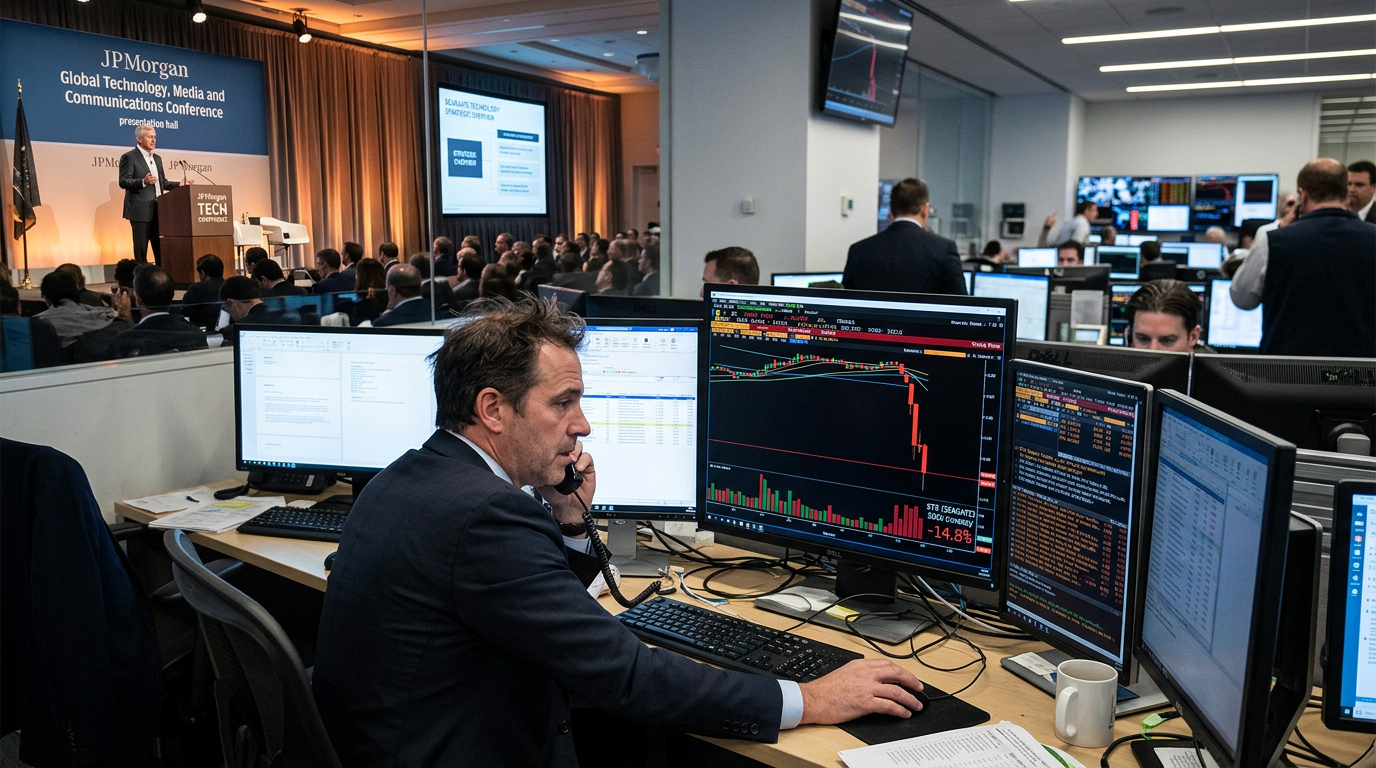
Seagate Technology (STX) — up 152% year-to-date even after Monday’s session, one of the strongest performers in the entire U.S. market in 2026 — gave back a meaningful chunk of that run in a single afternoon. CEO Dave Mosley took the stage at the JPMorgan Global Technology, Media and Communications Conference, and when asked whether Seagate would build new factories to meet surging AI-driven storage demand, his answer was short and direct: it would “take too long.” New facilities, he said, would risk leaving the company with more capacity than actual demand can absorb. Shares fell 7.5%, sliding from approximately $795 to around $736. No earnings release. No guidance revision. Just one exchange at a conference podium.
The reaction made sense, even if the magnitude is worth questioning.
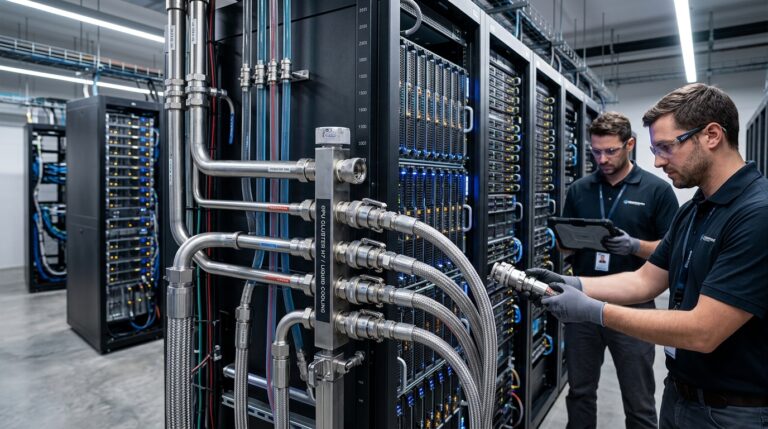
Investors had built a significant portion of their position sizing around the idea that Seagate would aggressively expand physical capacity to capture the AI storage wave. The logic wasn’t unfounded — demand for high-capacity hard drives is real, AI infrastructure spending continues pulling exabytes faster than supply chains can respond, and Seagate’s own management has described a demand environment where customers are actively seeking more exabytes than the company can ship. What Mosley clarified is that the answer to that gap is not new square footage. It’s areal density. Seagate is pushing growth through technology transitions — moving from 3TB per platter to 4 and eventually 5 terabytes per platter under its Mozaic 3 HAMR platform. The Mozaic 3 HAMR technology is now qualified at all planned cloud providers, with a 50% exabyte crossover expected in the second half of 2026. Recording head wafers carry lead times exceeding nine months, with completed drives taking an additional quarter. The company shifted to a build-to-order model that provides visibility four to five quarters out. That is a more capital-efficient path. It is also a narrower one.
Slight tangent, but it matters: the broader macro wasn’t helping Monday. The 10-year Treasury yield climbed to approximately 4.63% — its highest level since early 2025 — adding pressure across high-multiple growth stocks. STX didn’t fall in a vacuum.
The underlying numbers still hold up. Seagate posted Q3 fiscal 2026 revenue of $3.11 billion, up 44% year-over-year, with EPS of $3.39 compared to $1.60 in the same quarter a year ago and net income climbing 120%. Fiscal year 2025 full-year revenue hit $9.1 billion, up 39% from $6.55 billion the prior year, with earnings rising 338%. The company operates in a practical duopoly alongside Western Digital in the HDD market, with a market cap near $164.89 billion. Analyst consensus sits at 14 Buy and 3 Hold ratings across 17 covering analysts, with a 12-month average price target of roughly $815. Evercore raised its target to $1,000 last week, maintaining an Outperform rating and citing what it called a “robust” demand backdrop.
What’s interesting is how the insider picture complicates the read. Over the past three months, insiders sold $66.4 million in stock with zero purchases recorded in the same window. That alone doesn’t mean much — executives sell for any number of reasons. But layered on top of a valuation that GuruFocus flags as trading at $721 versus a GF intrinsic value of $153, and a valuation rank of 1 out of 10, the multiple is doing a lot of work. The fundamentals are real. The price already reflects a great deal of them.
The Pentagon just made SpaceX untouchable
Secretary of War Pete Hegseth just confessed…
That SpaceX is “strategically indispensable” to U.S. national security.
The company went from just another “crazy idea” from Musk to being worth more than Coca-Cola.
That’s why I’m claiming my stake right now – months before the IPO.
What matters is that Mosley didn’t say demand is cooling. He said the growth path looks different than some investors had assumed. The company is targeting mid-20s percent CAGR through density-led technology transitions rather than capacity volume additions. That is a deliberate, defensible strategy — and it’s one that Wall Street largely still supports. Whether Monday’s drop was a healthy reset or the beginning of a more serious recalibration depends almost entirely on how much of STX’s current valuation was built on a factory expansion story that just got taken off the table.
That answer isn’t obvious yet.