May 21, 2026
To Avoid 67 Million Blackouts, Trump Signs Emergency Backing of New Energy Tech
Featured: WDAY +14%: The Margin Signal Nobody Saw Coming
Dear Reader,
To avoid 67 million Americans losing power… President Trump is taking drastic action.
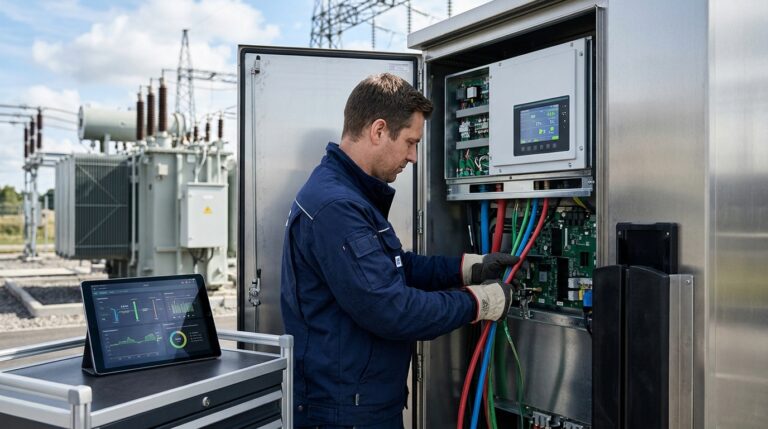
Using emergency executive powers, he has paved the way for a new technology 326 times more powerful than the most advanced power generators used by hospitals.
This tech could power the entire country without ever touching oil – and save our crumbling grid from collapse.
It’s now also backed by Nvidia CEO Jensen Huang, Elon Musk, and Sam Altman.
But the rights to this tech are cornered by companies most people have never heard of…
And virtually overnight, 3 little-known stocks could soar higher as the public learns how they’re involved.
Regards,
Joel Litman
Chief Investment Officer, Altimetry
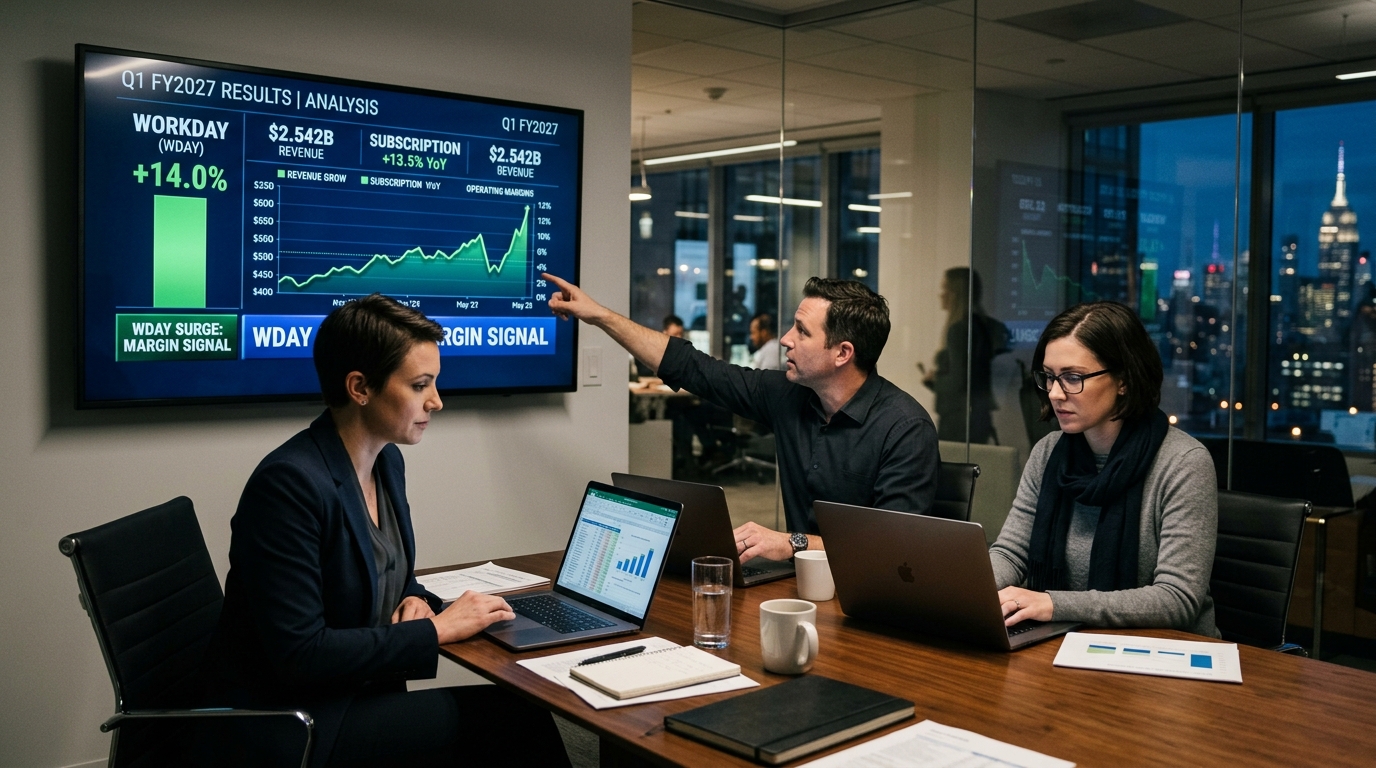
WDAY +14%: The Margin Signal Nobody Saw Coming
Workday does not typically move 14% in a session. That kind of reaction usually requires a surprise — not just a beat, but a signal that the underlying business model is changing shape. That is what happened tonight.
Q1 FY2027 results landed after the bell on May 21, 2026. Total revenue came in at $2.542 billion, up 13.5% year-over-year. Subscription revenue — the number that actually matters for forward visibility — grew 14.3% to $2.354 billion. Non-GAAP EPS of $2.66 cleared the $2.51 consensus by roughly 6%. Adjusted operating income hit $809 million against estimates of $769 million, a 5.2% beat on a 31.8% margin for the quarter. Those are clean numbers. But they are not what moved the stock.
The Number That Matters
What moved the stock was the guidance revision. Workday lifted its full-year FY2027 non-GAAP operating margin forecast to 30.5%, up from 30.0% set in February. CFO Zane Rowe was direct about the reason: operational efficiencies scaling alongside AI investment. That 50 basis points may seem small in isolation. In context, it means AI is beginning to self-fund — internal productivity gains from the company’s own agentic infrastructure are flowing through to the margin line faster than the Street expected.
The agentic adoption data reinforces that read. The number of customers using Workday’s organically developed agents more than doubled quarter-over-quarter, crossing 4,000 customers as of today. That is not a pilot program anymore. Subscription revenue backlog from the prior quarter stood at $28.1 billion total, up 12.2% year-over-year — locking in the revenue base that funds ongoing AI buildout.
Slight tangent worth noting: this is also the first earnings report under returning co-founder Aneel Bhusri, who came back as CEO in February after Carl Eschenbach stepped down. Bhusri framed it simply — “our AI strategy is working.” Whether that confidence is earned or premature will depend on Q2 execution, particularly as large enterprise deal closures in federal and healthcare have shown some elongation.
What Expectations Looked Like vs. What Arrived
The Street had priced in a company under pressure. Shares entered tonight down roughly 43% year-to-date — one of the worst performers in large-cap software — as investors debated whether generative AI would erode Workday’s pricing power or accelerate it. Tonight’s report did not answer that question completely. But it answered the margin question, which was the more immediate one. A 30.5% non-GAAP operating margin for a company investing aggressively in agentic AI infrastructure is not what a company in structural decline produces.
FY2027 subscription revenue guidance was reiterated at $9.925 billion to $9.950 billion, representing 12% to 13% growth. Q2 subscription guidance was set at $2.46 billion, roughly in line with the $2.45 billion consensus. Nothing heroic in the top-line guide — but the margin expansion does the heavy lifting here.
What to watch next: whether that 4,000-customer agentic base converts to measurable ACV expansion, and whether Q2 closes the large enterprise deal elongation that pressured net new ACV in Q4 FY2026. The margin story is real. The growth reacceleration still needs to prove itself.
– The Editorial Desk