May 15, 2026
TSM: 58% Profit Growth, $35.9B Revenue, Stock Barely Moved
Four consecutive record quarters. 66.2% gross margin. ~25x forward earnings. Here’s how to trade it.
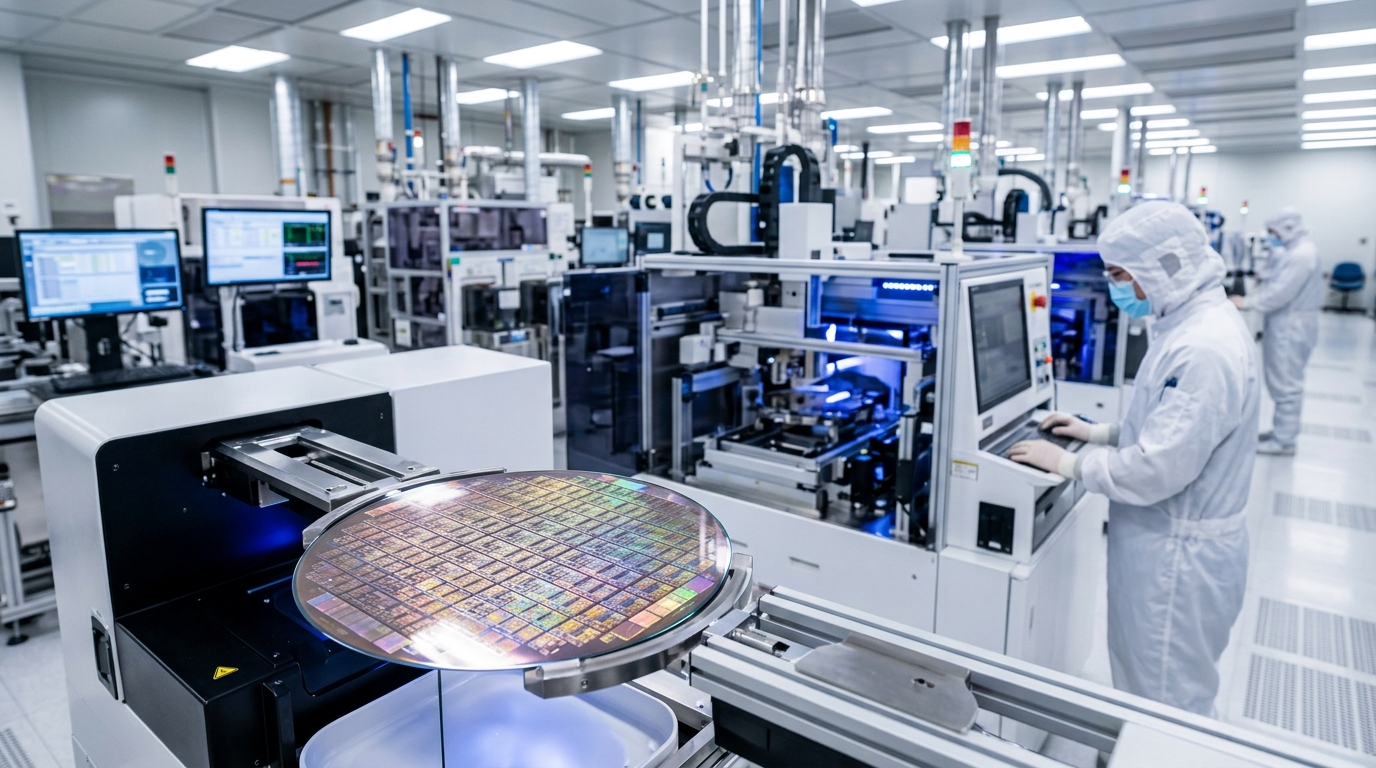
TSMC reported Q1 2026 revenue of $35.9 billion — up 40.6% year-over-year in USD terms — with net income surging 58.3% to beat analyst estimates for the eighth straight quarter. Gross margin came in at 66.2%, above the guided 63%–65% band. Four consecutive quarters of record profits. The stock slipped after the report. That gap between results and reaction is where the opportunity lives.
The Playbook Every Options Trader Should Have!
Do you dream of retirement but it seems like an impossibility? Wish you knew the best moves to get you there sooner?
It’s closer than you think and you won’t have to work overtime to get it!
Hi! I’m Dave Aquino, expert options trader and my e-book, “How To Master the Retirement Trade” has helped thousands reach their goals!
Follow the link to get your copy and see what you’ve been missing!
What the Numbers Say
EPS landed at $3.49 per ADR, topping the consensus of $3.31. Operating margin: 58.1%. Net margin: 50.5%. HPC — the segment where AI chips actually live — rose to 61% of total revenue, growing 20% sequentially. Advanced nodes at 7nm and below accounted for 74% of wafer revenue, with 3nm alone at 25%.
Q2 guidance: $39.0–$40.2 billion revenue, 65.5%–67.5% gross margin. Full-year 2026 revenue growth projected above 30% in USD terms. Capex skewed to the high end of the $52–$56 billion range — a signal management sees the order book and is spending accordingly. Next earnings: July 16, 2026.
Why It Sold Off
Capex at the high end of range spooked near-term free cash flow. The 2nm ramp will dilute gross margin 2%–3% for full-year 2026. Those are real concerns — not excuses to ignore them. But the stock is now trading around $418, with a 52-week range of $188.88–$421.90 and a forward P/E of roughly 25x. That’s a meaningful discount to the semiconductor industry median near 37x, for a company growing earnings at 58% year-over-year.
One setup. One 15-minute window. Done by 10 AM.
It’s called the “Opening Bell Breakout” – the same strategy behind moves like 113% on GOOGL and 240% on META. I put the full setup into a short, free guide you can start using Monday morning.
The Trade Structures
IV is post-earnings compressed — which matters. Lower IV means cheaper options premium, favoring debit structures over credit.
- Bull case (defined risk): For traders expecting continued momentum into Q2 results on July 16 — a July $420/$450 call spread offers defined upside exposure. Pay roughly $6–$8 debit, max risk is the premium paid, max gain around $22–$24 if TSM closes above $450 at expiration.
- Neutral-to-bull case: If you believe TSM holds above $390 through Q2 — a July $390 cash-secured put or a $380/$390 put spread lets you collect premium while defining risk below a key support level. A $380/$390 put spread could bring in roughly $3–$4 credit with $6–$7 max risk.
- Bear case (defined risk): If the 2nm margin dilution or a broader AI capex pause develops — a July $400/$380 put spread for $4–$5 debit targets a move back toward the $380 range. Max loss is the debit paid.
The core risk hasn’t changed: geopolitical exposure in Taiwan is real, HPC now representing 61% of revenue means any pause in AI infrastructure spending hits directly, and overseas fab costs are a known drag through year-end. None of that is new information — it was all on the table before earnings.
The question worth sitting with: at ~25x forward earnings with 30%+ revenue growth guided for the full year, how much of the risk is already in the price — and how much of the upside isn’t?
All options structures are illustrative examples for educational purposes only. This is not financial advice. Options involve risk and are not suitable for all investors. Always verify current pricing with your broker before placing any trade.
About the Author