June 9, 2026
Peace Dividends: How a Crude Oil Drop Just Recharted the Airline Sector
United Airlines (UAL) sits at the center of the most important cost shift in aviation this summer.
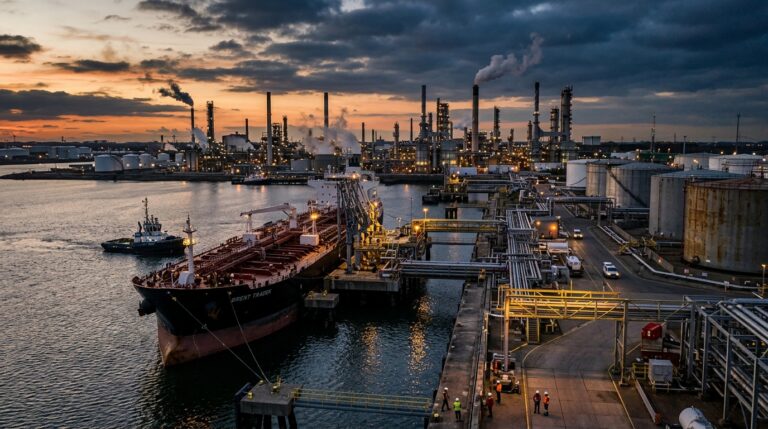
Something moved quietly on Tuesday that most equity desks haven’t fully absorbed yet. Crude oil fell below $90 per barrel, surrendering most of the previous session’s gains, as Iran and Israel agreed to halt attacks against each other, boosting hopes that peace negotiations could move forward. That’s not a small technical pullback. That’s geopolitical risk bleeding out of the price, in real time, right at the peak of summer travel demand.
Here’s the context. Brent crude hit a high of $138 per barrel on April 7 and averaged $117 per barrel for the month, as the de facto closure of the Strait of Hormuz tightened global oil supplies. From $138 to sub-$90 in roughly two months. That’s not a drift lower. That’s a structural shift in risk pricing. Oil prices fell after Secretary of State Marco Rubio said the U.S. will give talks with Iran every chance to succeed. WTI tumbled more than 5% to close at $88.68 per barrel. Brent also lost more than 5%, settling at $94.29.
Get Paid Every Time Oil Moves
Instead of guessing oil prices, some investors focus on the infrastructure behind it.
Pipelines act like toll roads – generating steady cash flow as energy moves.
The sudden de-escalation has effectively wiped out the war premium that had kept energy costs elevated for months. Analysts at major investment banks are now watching closely to see if OPEC+ will intervene with production cuts to floor the price decline, or if the cartel will allow the market to find its own level in this new diplomatic era. Slight tangent, but it matters: OPEC+ already approved another increase in July oil production quotas of 188,000 barrels per day despite the ongoing regional tensions. That adds supply pressure on top of the war premium unwind. Both vectors are pointing the same direction.
UAL: The Margin Math Right Now
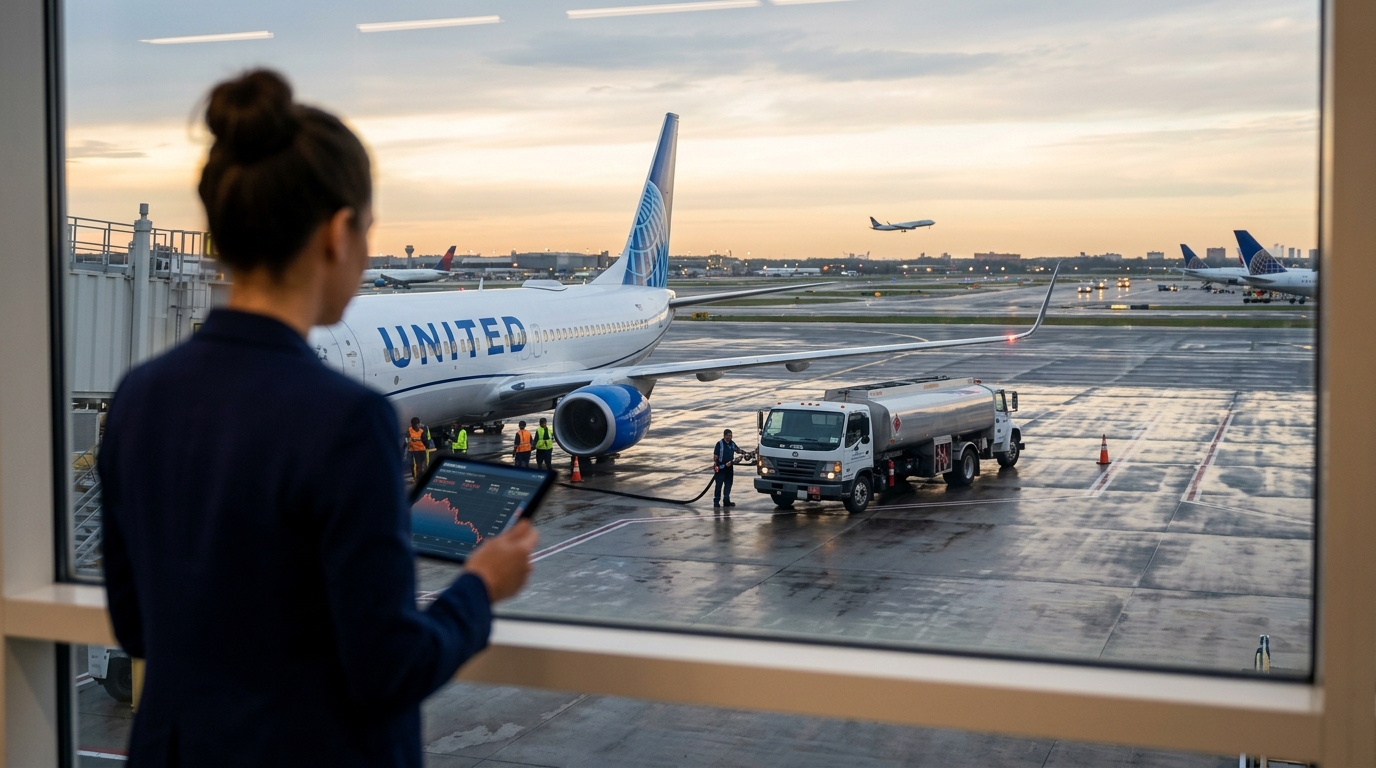
No carrier has more to gain from this move than United Airlines Holdings (UAL). The numbers tell the story without any embellishment needed.
United absorbed a $340 million higher fuel bill in Q1 2026, which CFO Mike Leskinen attributed to the run-up in jet fuel prices following the Iran conflict. Despite that headwind, total revenue reached $14.6 billion, up 10.6% year-over-year, and adjusted EPS came in at $1.19, up 31% year-over-year. That’s the base. Now consider what happens if the fuel bill deflates.
Jet fuel in the U.S. was going for $3.51 a gallon as of late April, down from the April 2 high of $4.78, but far above the $2.39 on February 27, the day before the first attacks on Iran. UAL guided for an average aircraft fuel price of approximately $4.30 per gallon in Q2 2026. That guidance was built on a conflict-era assumption. If the diplomatic trajectory holds and fuel continues falling toward the $3 range, the Q2 and Q3 cost structure looks materially different from what management modeled.
Aircraft fuel represents $11.4 billion, or roughly 21% of United’s total operating expenses. That is not a rounding error on the income statement. Every meaningful reduction in fuel cost per gallon flows almost directly into operating income. United expects to recover 40–50% of the fuel price increase in Q2, 70–80% in Q3, and 85–100% by Q4 2026 through its revenues. That recovery math was built assuming elevated prices persist. A sustained oil decline changes the denominator entirely.
And then there’s the full-year picture. For 2026, UAL now anticipates adjusted EPS between $7.00 and $11.00, compared with the prior guided view of $12.00 to $14.00. Management is targeting a pretax margin of at least 10% for 2027. The $4 EPS range in the 2026 guidance exists almost entirely because of fuel price uncertainty. That’s not a wide band due to demand ambiguity. It’s a fuel price option embedded in the guidance structure itself. Which means a sustained move lower in crude tightens that band from the top.
The “Sucker’s Bet” Most New Options Traders Fall For
Most people who try options lose money the same way.
They don’t know the rules. They don’t know what to avoid. And they hand their account to Wall Street on a silver platter.
This free guide pulls back the curtain.
You’ll see the single “sucker’s bet” to avoid at all costs… plus the pro move that protects your account before you place a single trade.
Normally $29.97. Free today.
What to Watch From Here
The question worth asking is not whether lower oil helps UAL. Obviously it does. The question is whether this diplomatic momentum is durable enough to sustain sub-$90 crude through July and August, which is when UAL’s highest-revenue flying occurs. President Trump has said negotiations are entering the final stage and that a clearer outcome could emerge within days. That’s either a catalyst or a head fake. Markets are treating it as the former, for now.
As Middle East oil production rises, the EIA expects crude prices to fall to an average of $89 per barrel in Q4 2026 and $79 per barrel in 2027. If that trajectory holds, UAL’s cost structure entering 2027 looks nothing like the one management described on the Q1 earnings call. The summer window, typically United’s highest-margin quarter, could end up being the turning point where the fuel headwind becomes a tailwind. That outcome isn’t priced into the current consensus. Not yet.
- WTI crude has fallen from $138 (April 7 peak) to below $90 as of June 9, 2026, driven by US-Iran diplomatic progress and Strait of Hormuz reopening expectations
- UAL Q1 2026: $14.6B revenue (+10.6% YoY), adjusted EPS $1.19 (+31% YoY), despite a $340M incremental fuel cost hit
- Q2 2026 fuel assumption: $4.30/gallon all-in; a sustained decline toward $3.00 would materially lift operating margin versus guidance
- Fuel accounts for approximately 21% of UAL total operating expenses; every $0.10/gallon reduction across full consumption = significant annual cost relief
- Full-year 2026 EPS guidance: $7.00–$11.00; the $4 range is almost entirely a function of fuel price uncertainty
- EIA projects crude at $89/barrel in Q4 2026 and $79/barrel in 2027 if Middle East production resumes
- UAL targets a pretax margin of at least 10% for 2027; lower fuel accelerates that path
Analysis is provided for informational purposes only. Not financial advice. All figures sourced from UAL SEC filings, earnings transcripts, EIA, and current market data as of June 9, 2026.