
June 8, 2026
The Ultimate “MAGA” Move
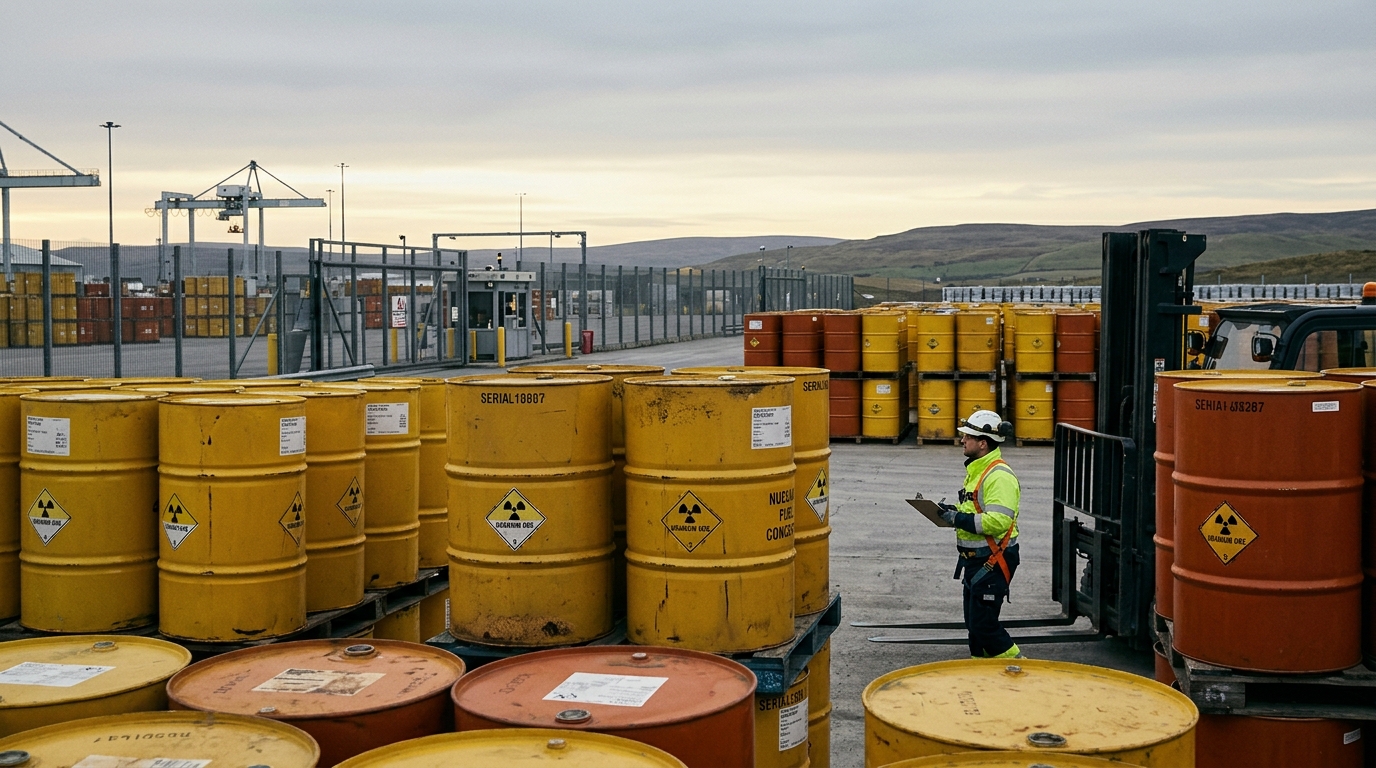
Featured: Nuclear Fuel Is Getting Harder to Find
Below is an important message from one of our highly valued sponsors. Please read it carefully as they have some special information to share with you.
Dear Reader,
I believe the Trump administration is about to take a direct stake in a tiny $2 stock.
A stock that controls the largest mineral reserve in the country.
This single site has enough gold to establish a new Fort Knox.
Enough silver to build 57 billion AI chips.
Enough copper to rebuild the U.S. electric grid – 25 times over.
Quite simply…
I believe it’s the ultimate “Make America Great Again” stock.
And right now…
You have a chance to learn how to stake your claim.
Before the U.S. government makes its next move.
The only catch is…
You need to act before June 30.
That’s when a landmark policy decision could reprice this stock, overnight.
Causing shares to quickly surge from $2 per share – to $20 or more over the next year alone.
Don’t delay.
Click here to get complete details on what I predict is “Trump’s next big buy”.
Regards,
Jim Rickards
P.S. The Trump administration has taken a direct stake in MP Materials, Lithium America, Trilogy Metals, and USA Rare Earth. Each time, shares sprinted higher. Click here to see why I believe this one is next.
Nuclear Fuel Is Getting Harder to Find
Uranium spot prices are sitting near $85.70 per pound as of this week. That’s roughly 21% higher than a year ago. And yet the market keeps behaving like something is still unresolved.
It is.
The supply-demand math in uranium is one of those slow-building problems that doesn’t announce itself until utilities are suddenly scrambling. According to the World Nuclear Association, global reactor requirements for 2025 are estimated at approximately 179 million pounds U3O8, while primary mine production is projected to reach only 140-150 million pounds annually. That gap doesn’t close with optimism. It closes with contracted production from companies that are already in the ground. In 2025, about 116 million pounds were placed under long-term contracts by utilities — well below replacement rate, which the industry benchmarks closer to 160 million pounds. That shortfall accumulates quietly until it doesn’t.
Goldman Sachs projects spot prices could reach $91 per pound by end of 2026. The long-term contract price already hit a 14-year high of $86.50 in December. Slight tangent here, but worth noting: the divergence between spot and term pricing in this market is unusual. Term prices anchored near $86-$87 while spot traded down to $63 in March 2025 before recovering. That kind of dislocation is a signal, not noise — producers are refusing to sell cheap, and utilities are buying time they may not have.
UEC: What Matters Tomorrow Morning
Uranium Energy Corp (NYSE American: UEC) releases its fiscal Q3 2026 operating and financial results before markets open on Tuesday, June 9. Management hosts a conference call at 11:00 a.m. ET.
The number traders are watching is inventory. As of last quarter, UEC held approximately 1,456,000 pounds of U3O8 valued at roughly $144 million — and the company sold 200,000 pounds in Q2 at $101 per pound, roughly 25% above the quarterly spot average. That’s not an accident. UEC runs a 100% unhedged uranium strategy, meaning every pound it sells captures full market pricing. No floors, no ceilings, no compromise. That structure creates direct leverage to wherever spot goes from here.
“This could make ChatGPT look like a rotary phone”
Louis Navellier, who bought Nvidia before it soared by 76,925%, says the AI industry is on the verge of a major breakthrough…
A game-changer that Forbes calls “humanity’s final invention.”
The company controls the largest uranium resource base and the most licensed production capacity in the United States — approximately 12 million pounds per year across Wyoming and South Texas platforms. Cash and liquidity stood at $818 million with no debt entering this quarter. Production cost per pound in Q2 came in at $44.14 total, $39.66 cash — leaving meaningful margin at current spot. The Q3 EPS consensus estimate sits at -$0.03, and the market’s focus is less on the per-share loss and more on whether inventory volumes held, sales were executed at a premium, and production guidance for the back half of fiscal 2026 holds up.
AI infrastructure is accelerating the electricity demand side of this. Meta signed agreements for up to 7.8 gigawatts of nuclear capacity. Microsoft signed contracts to restore reactors supplying over 800 megawatts for data center operations. These are not future-state considerations. They are contracted demand commitments landing in a market where primary supply already falls short of what reactors need today. The companies positioned closest to domestic, unhedged production — in a policy environment that just added uranium to the U.S. Critical Minerals list and launched Section 232 negotiations — are sitting at the intersection of that pressure.
The question for tomorrow isn’t whether uranium matters. It’s whether UEC’s Q3 inventory and guidance confirm they’re extracting full value from a market that’s tightening faster than new supply can answer.
Key figures heading into UEC’s Q3 report:
- Uranium spot price: ~$85.70/lb (June 5, 2026), up ~21.5% year-over-year
- Long-term contract price: peaked at $86.50/lb in December 2025, a 14-year high
- Goldman Sachs price target: $91/lb by end of 2026
- UEC inventory (last reported): ~1,456,000 lbs U3O8 at ~$144M
- UEC Q2 sales price: $101/lb on 200,000 lbs — ~25% above quarterly spot average
- UEC liquidity: $818M, zero debt
- UEC production cost (Q2): $44.14/lb total, $39.66/lb cash
- Global reactor requirement gap: ~179M lbs demanded vs. ~140-150M lbs primary supply
- 2025 utility contracting: 116M lbs — below replacement rate
Results hit before the open. The conference call follows at 11 a.m. ET. Full breakdown available at uraniumenergy.com.
This is analysis, not financial advice. All figures sourced from UEC SEC filings, Cameco, Trading Economics, and Goldman Sachs research. Past performance does not guarantee future results. Options and equity positions in uranium companies carry substantial risk.