June 22, 2026
Trump didn’t want this company taxed
Featured: Broke Consumers Are Your Best Investment Thesis Right Now
Dear Reader,
Donald Trump doesn’t usually go to bat for obscure American companies.
But recently he publicly blasted one of America’s biggest allies for targeting a little-known U.S. energy producer.
Why?
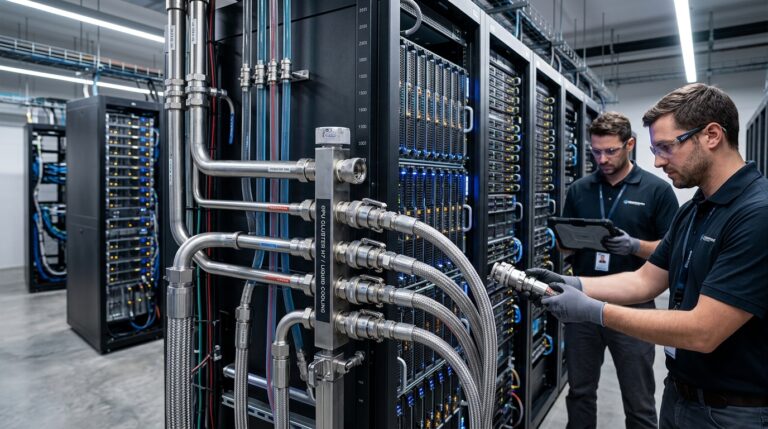
Because this company sits at the center of two industries Trump believes are critical to America’s future:
- Energy
- Artificial Intelligence
Most investors have never heard of it.
Yet it’s generating billions in operating income, trading at a fraction of the valuation of stocks like AMD, and recently signed a major AI agreement with Palantir.
Wall Street is quietly loading up.
The company itself is buying back millions of shares.
And if Trump keeps shining a spotlight on it, that won’t stay secret much longer.
Click here to see why I believe this could be the most undervalued stock in America right now.
Yours in smart speculation,
Karim Rahemtulla, Head Fundamental Tactician
Monument Traders Alliance
P.S. The company I’m talking about isn’t Exxon, Chevron, or any household name. That’s exactly why the opportunity may exist. Most investors have never heard of it – yet Wall Street already owns nearly 90% of the shares.
FEATURED
Broke Consumers Are Your Best Investment Thesis Right Now
Consumer sentiment just hit a record low. Gas is running near $4 a gallon nationally. The Iran conflict has baked a structural risk premium into everything from energy to groceries. And yet, somehow, a handful of retailers are putting up their best numbers in years.
That’s not a contradiction. That’s the off-price trade.
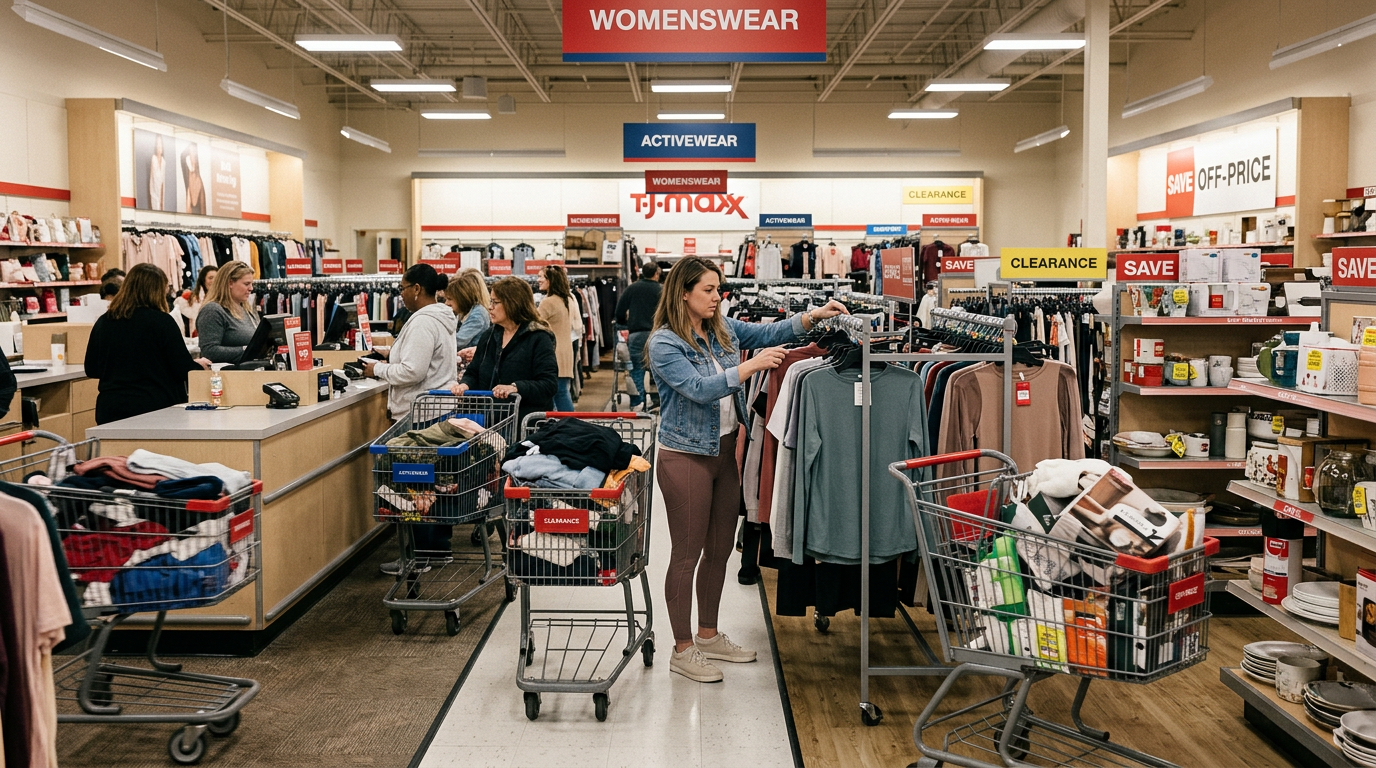
Here’s where I’m at: when the consumer gets squeezed, they don’t stop spending. They start hunting. And the names that benefit from that hunting instinct are TJX Companies (TJX), Ross Stores (ROST), and to a lesser extent Burlington (BURL). This isn’t a new idea. What’s new is how violent the numbers have gotten.
The Wealthy Moved First. Will You Be Next?
BlackRock, Blackstone and others are chasing AI infrastructure.
Discover more about the opportunity Alex Green believes could reshape retirement investing here.
What’s Actually Happening
Ross Stores just posted Q1 fiscal 2026 revenue of $6.01 billion, up 21% year-over-year. Comparable store sales were up 17%. Diluted EPS came in at $2.02, up 37% from the prior year. Operating margin widened to 13.4%.
TJX isn’t far behind. Q1 fiscal 2027 net sales hit $14.3 billion, up 9% year-over-year. Comparable sales increased 6% across all divisions. Diluted EPS of $1.19 was up 29% from the same quarter last year. Annual sales surpassed $60 billion for the first time in company history in fiscal 2026.
These aren’t flukes. They’re the result of a structural consumer shift that’s been building for three years and just hit an inflection point.
Why This Works Right Now (and Not Just Always)
Slight tangent, but it matters: the off-price model is inherently countercyclical, but it gets turbocharged in environments like this one. When full-price retailers over-order, cancel orders, or face tariff headwinds, they end up with excess inventory they need to move fast. TJX and Ross are sitting in the buy lane, acquiring that branded merchandise at steep discounts, then passing some of those savings to shoppers who are increasingly hunting for the same label at 20% to 60% less than what they’d pay at a department store.
Right now, that dynamic is hitting on every cylinder. Tariff uncertainty is creating inventory chaos at full-price chains. Middle-class consumers are trading down. Traditional department stores are closing or contracting. And AI-assisted referral traffic to physical off-price stores hasn’t disrupted the model the way everyone feared it would — because the treasure-hunt experience requires being there in person.
The Energy Stock Trump Once Called “A Big Mistake” to Mess With
When a U.S. ally tried to tax ONE American energy company…
Trump didn’t hesitate to issue a direct warning.
Now this same company is generating over $3 billion in operating income…
And partnering with the hottest AI stock on Wall Street.
Out of 23,281 publicly traded stocks, this is the ONLY one that meets all the “unicorn” criteria.
The Numbers Worth Knowing
- TJX Q1 FY27: $14.3B revenue, +9% YoY. Comps +6%. EPS $1.19, +29%. Updated full-year EPS guidance: $5.08 to $5.15. Share buyback range lifted to $2.75 to $3.0 billion.
- ROST Q1 FY26: $6.01B revenue, +21% YoY. Comps +17%. EPS $2.02, +37%. Full-year guidance raised to $7.50 to $7.74 EPS (13%–17% growth). 110 new store openings planned in fiscal 2026.
- TJX valuation: Trades around the mid-30s on trailing P/E — not cheap by absolute standards, but management has announced a 13% dividend increase and plans $2.75 billion to $3.0 billion in buybacks for fiscal 2027.
- ROST valuation: Trading near $235 in early June 2026. Zacks Rank: #1 (Strong Buy).
Is This Cheap? Honest Take.
No, not screaming cheap. TJX at roughly the mid-30s on trailing earnings and ROST around ~31x current fiscal-year EPS estimates (per Zacks) are pricing in a pretty optimistic growth path. The part people skip is that these companies have consistently earned that premium by beating estimates quarter after quarter. TJX has raised its payout repeatedly over the decades. ROST’s earnings have beaten consensus in multiple consecutive quarters.
The case isn’t that these are undiscovered bargains on a multiple basis. The case is that the macro environment is actively redirecting consumer dollars into their stores in a way that’s hard to reverse quickly — and the business model doesn’t need favorable macro to work, it just needs the consumer to exist.
What could go wrong: if inflation cools fast, oil drops, and consumers feel flush again, the trade-down impulse fades. If the broader manufacturing sector slows significantly, close-out inventory availability could tighten, squeezing margins. Burlington remains the laggard of the three — comps and execution haven’t matched TJX and Ross.
Action Framework
If you’re sizing into this theme, TJX is the safer seat — larger, more diversified internationally, and management is aggressively returning cash. ROST offers more torque if the value-shopper trend continues to accelerate. Burlington is the speculative leg — it’s cheaper on valuation but needs to prove it can keep up on execution.
Scale in on any macro-driven pullback. The thesis doesn’t require oil at $100 or sentiment at lows to keep working — but both are currently doing exactly that.
This 4-Letter Ticker Unlocks Pre-IPO Access to America’s Most Secretive Tech Company
This company already has $26 BILLION in contracts with the Pentagon…
But it’s still private. So it’s off limits for most investors…
However, there’s a little-known ticker symbol that could get you in before the IPO boom – starting with just $20.
Cheap Investor Checklist
- Comp sales growth sustained above 5%? TJX and ROST: yes.
- EPS beats on consecutive quarters? Both: yes.
- Balance sheet supporting buybacks and dividends? TJX: yes, ROST: yes.
- Store expansion on track? ROST targeting 110 new in fiscal 2026; TJX targeting 146 net new in fiscal 2027.
- Tariff exposure manageable? TJX specifically positioned as effectively tariff-neutral via vendor diversification.
- Consumer sentiment trend: still near record lows, which is a tailwind here, not a risk.
- Execution gap with Burlington: monitor — Burlington’s comps remain well below TJX and ROST.
The consumer is stressed. That stress is showing up directly in comp sales numbers for TJX and Ross. Whether that stress persists or eases, both companies have shown they can grow in either direction — just faster when times are tight.
That’s what cheap investors actually look for. Not a stock that only works in one scenario.