
July 20, 2026
AMC Options Are on Fire
A blowout quarter and Nolan’s Odyssey just lit the fuse.
The Signal
Something unusual happened in the AMC options market this morning. Not unusual for a meme stock on a volatile day. Unusual by any standard.
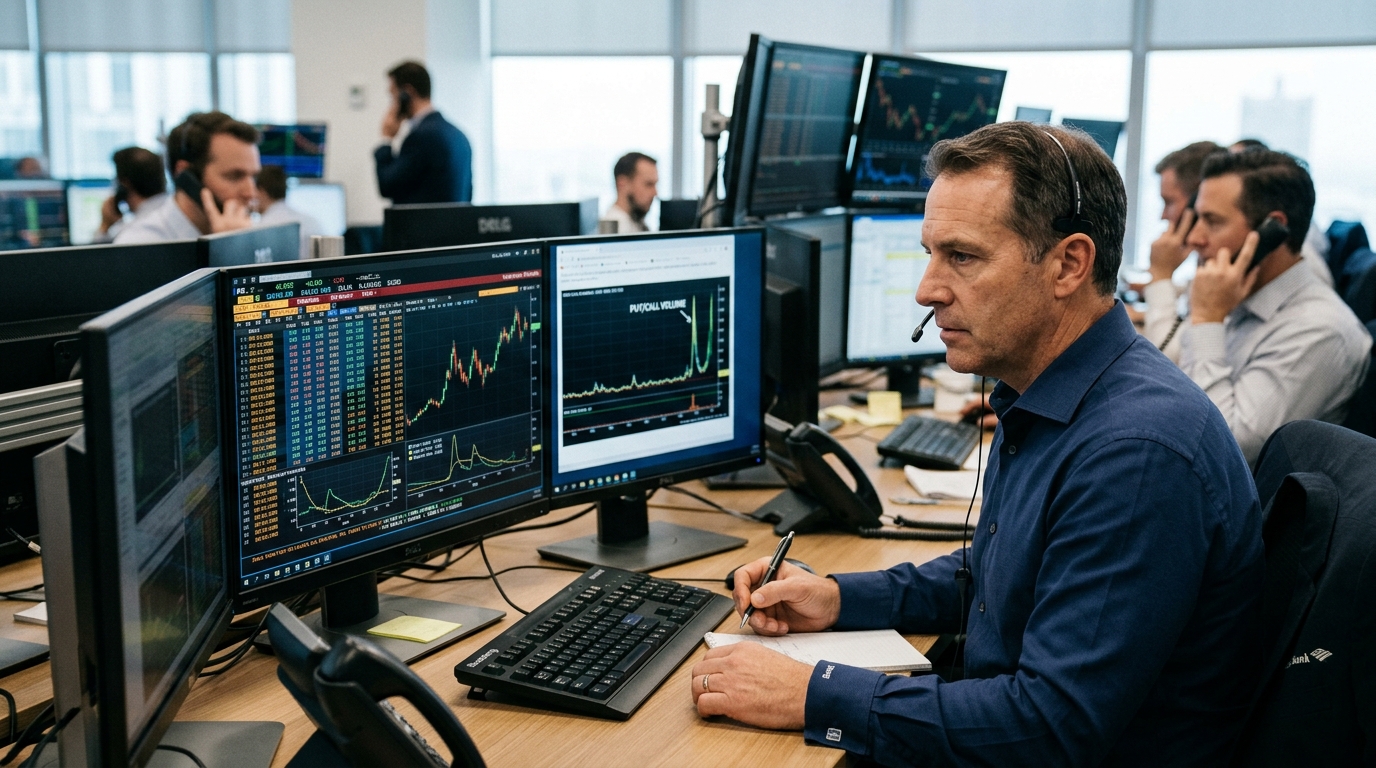
By mid-session on July 20, AMC Entertainment (NYSE: AMC) had already crossed 300,000 options contracts traded. That puts it at roughly five times its 30-day average daily volume, landing it in the top 20 stocks in the entire market by options volume for the day. The flow was lopsided and directional: nearly 100,000 calls bought against fewer than 10,000 puts purchased. The OI put/call ratio, which was already sitting at an extremely call-heavy 0.24 heading into today, got even more skewed as fresh premium flooded the call side.
This is not a balanced market. This is one-sided positioning, and it happened for a very specific reason.
The Playbook Every Options Trader Should Have!
Do you dream of retirement but it seems like an impossibility? Wish you knew the best moves to get you there sooner?
It’s closer than you think and you won’t have to work overtime to get it!
Hi! I’m Dave Aquino, expert options trader and my e-book, “How To Master the Retirement Trade” has helped thousands reach their goals!
Follow the link to get your copy and see what you’ve been missing!
Why It Matters
Two catalysts collided this morning in a way that the options market had partially anticipated but still underpriced in terms of magnitude.
First: AMC reported Q2 2026 earnings before the bell, and the results were not a modest beat. They were a blowout. The company posted adjusted EPS of $0.14 against a consensus estimate of roughly negative $0.02 to negative $0.06, depending on the source. Revenue came in at $1.597 billion versus estimates of approximately $1.47 to $1.49 billion. Adjusted EBITDA hit a record $321.4 million, up 70% year over year, surpassing the prior all-time quarterly record that was set nine years ago when attendance was roughly 23% higher than current levels. Free cash flow reached $190.1 million. The adjusted EBITDA margin expanded 650 basis points to 20.1%. These are not incremental improvements. They represent a structural shift in the company’s profitability relative to where Wall Street thought it was.
Second: Christopher Nolan’s The Odyssey opened this past weekend with a reported $124 million domestic debut, the biggest live-action opening of 2026 and Nolan’s highest-grossing global launch to date at approximately $264 million worldwide. AMC was the leading chain for the film, pulling in more than $23 million domestically on its own. The company hosted 4.3 million guests globally across the opening weekend.
Put those two events together and you get the kind of session where the options market moves before many stock traders have even finished reading the press release.
The Company Behind the Signal
AMC is the world’s largest theatrical exhibitor, operating approximately 860 locations across the U.S. and Europe. It runs theaters in 41 U.S. states and the District of Columbia, plus a significant European footprint through its ODEON Cinemas brand in the UK, Germany, Spain, Italy, Ireland, Portugal, and Scandinavia.
Slight tangent, but it matters here: AMC spent years being written off. The Altman Z-Score was deep in distress territory. Debt levels were crushing. The stock hit a 52-week low of $0.93. Most institutional money walked away. Marshall Wace, for instance, removed over 96% of its AMC position in Q1 2026. Jane Street trimmed by nearly 80%. The conventional view was that this company was in structural decline.
What today’s numbers suggest is something different. The Q2 2026 results represent the strongest quarter in AMC’s 106-year history by both revenue and adjusted EBITDA. The domestic box office industry-wide reached approximately $2.99 billion for Q2, up 10.7% year over year and the largest box-office quarter in seven years. AMC outgrew the industry, with domestic revenues up 13% and international attendance up nearly 18%. Global attendance reached 71 million guests for the quarter, up 13.5% year over year. Per-patron food, beverage and merchandise spending hit all-time highs in both domestic and international segments.
On the balance sheet, AMC ended June with $778 million in cash (excluding restricted cash) and has reduced its total corporate debt by approximately $1.7 billion since the end of 2020. The company now reports no significant debt maturities before 2029. Q2 actions alone are expected to reduce annual cash interest expense by roughly $67 million in total when fully implemented.
This is not the same company the options market was pricing two quarters ago.
Your Free Options Book Is About to Vanish
In case you missed it… make sure you get your free “Simple Options Trading For Beginners” book before your link expires.
I eventually plan to charge money for this training, so do yourself a favor and download it now…
That way, no matter what it costs in the future, you’ll have a free copy.
Sound good?
What the Options Market Was Pricing In
Here is where the options story gets genuinely interesting. Going into today’s earnings, the options market was already pricing in a large move. According to data cited by TipRanks, options traders had embedded a roughly 30.41% implied move in either direction around the Q2 release. That is an enormous expected swing for a stock trading near $1.94 at the prior close. The stock has a 52-week range of $0.93 to $3.60, which tells you something about how frequently large moves occur here.
What is worth examining is the disconnect between that 30% implied move and AMC’s actual post-earnings history. Over the prior four quarters, the average actual post-earnings move was approximately 3%. So the market was pricing in roughly ten times the historical average move. That is an extreme premium to historical realized volatility.
Why would the market do that? Because AMC is not a normal stock. It has a retail investor following that responds to sentiment, headlines, and momentum in ways that are difficult to model. It had a class action lawsuit filed in April. It raised $200 million in a registered direct offering in late June, which sent shares down roughly 25% at the time. The volatility around corporate actions is real and frequent. The stock has made moves greater than 5% on 44 separate occasions over the past year alone.
As of writing, the stock is trading around $2.18 to $2.32, up roughly 12% to 17% on the session after opening sharply higher. That actual move, while meaningful, came in well below the 30% the options market had priced in. Which introduces a key concept for anyone watching this market today: implied volatility crush.
The IV Crush Dynamic
When implied volatility going into an event is this elevated, the risk is not just about direction. It is about the collapse in premium that happens after the event resolves. Options sellers understood that. The buyers flooding in today are taking the other side of that dynamic, betting that momentum continues to build rather than fade.
The most active contracts by volume today were the August 21 expiration calls at the $3 strike. Those contracts need a roughly 34% rally from current levels just to break even at expiration. The $2 and $2.50 August 21 calls were the most popular by dollar value, trading at approximately $0.39 and $0.20 respectively. These are short-dated, out-of-the-money positions that expire in 32 days. At these premium levels and with implied volatility likely elevated, time decay will work aggressively against call buyers who do not see further price appreciation relatively quickly.
The OI put/call ratio sitting at 0.24 tells you that open interest remains heavily skewed toward calls. The volume put/call ratio as of late June was similarly low at around 0.22. This is not a market where protective hedging is dominating. This is speculative call buying, and it is one-directional. That positioning works as long as the stock keeps moving. It becomes a problem if the stock stalls or reverses and IV compresses further.
Strategic Considerations
For traders who believe the fundamental story has genuinely shifted and that AMC is entering a multi-quarter recovery cycle, the challenge is not conviction. The challenge is premium. Outright call buying in a stock with this much embedded IV means you are paying for a lot of anticipated movement before any profit can be realized.
A defined-risk structure that may be worth examining in this environment is a call debit spread rather than an outright long call. For traders expecting further upside toward the $3 area, a bull call spread using the August 21 $2.50 / $3.00 strikes, for example, reduces the net premium at risk while still capturing meaningful exposure to the directional move. The spread caps the maximum gain but significantly lowers the breakeven point relative to buying the $3 call outright.
For traders who believe the stock has priced in the good news and is likely to trade sideways or give back some of today’s gains, a short call vertical or an iron condor targeting a range around current levels could benefit from the anticipated IV compression over the coming sessions. This approach is neutral-to-bearish on premium but does not require a directional view on the stock itself.
It is worth stating plainly: neither approach is low risk. AMC has demonstrated the capacity to move violently in both directions on relatively thin news. The stock went from $0.93 to $3.60 in its 52-week range. That kind of amplitude means even defined-risk structures can hit maximum loss quickly if the stock moves against you.
The options market priced a 30% implied move. The stock moved 12-17%. The gap between those two numbers is where most of today’s premium sellers made their money — and where most outright call buyers did not.
What to Watch
The forward catalyst picture is actually stronger than at any point in the past several years. CEO Adam Aron pointed specifically to Sony’s Spider-Man: Brand New Day arriving in approximately two weeks, with advance bookings described as pointing toward another significant opening. Beyond that, Warner Bros.’ Dune: Part Three and Disney’s Avengers: Doomsday are expected later in the year. If 2026 does become the strongest post-pandemic year for the domestic and global box office as management projects, AMC’s operating leverage will be significant. Year-to-date box office revenue stands at $5.4 billion, up 10% from the same period in 2025 and the best post-pandemic performance to date.
Watch the August 21 expiration closely. The heaviest open interest is concentrated there, and as that date approaches, the interaction between gamma, theta, and any additional news flow will determine whether today’s call buyers see further appreciation or watch premium decay eat into their positions.
Watch how IV settles over the next 48 to 72 hours. If options markets remain elevated on the near-term expirations after the event has resolved, it suggests participants are pricing in continued volatility from the retail community, short interest dynamics, or upcoming news. If IV compresses sharply, it confirms that the earnings event was the primary driver and the market is returning to baseline.
And watch the balance sheet story. AMC’s free cash flow breakeven box-office level is currently approximately $10.4 billion annually. The 2026 YTD pace and the upcoming slate suggest that number is within reach. If the company crosses into sustained free cash flow positive territory, the equity story changes materially — and so does the options market’s long-term volatility assumptions.
Right now, the options market is telling you one thing clearly: this is not a quiet situation. Whether that volatility ultimately rewards the call buyers who piled in today or the premium sellers who faded the excitement is a question the next few weeks will answer.
Giving “2022 pre-ChatGPT” vibes (but 10x bigger)
Do you remember when ChatGPT launched, Nvidia soared 1,800% in 3 years, and 500,000 regular Americans became millionaires?
According to Nvidia’s CEO, July 22nd could trigger an even BIGGER explosion of wealth…
Because Tesla is set to unveil a revolutionary technology that could shock the markets…
And be “10x bigger than the largest product in history” according to Elon Musk.
Tactical Summary
- AMC options volume hit approximately 300,000 contracts by mid-session on July 20, roughly 5x the 30-day average.
- Call buying dominated: nearly 100,000 calls bought vs. fewer than 10,000 puts purchased in today’s flow.
- OI put/call ratio: 0.24, reflecting extreme call-side positioning relative to any neutral baseline.
- Q2 2026 results: Revenue $1.597B (beat est. ~$1.47-1.49B), Adjusted EPS $0.14 (beat est. of approximately -$0.02 to -$0.06), Adjusted EBITDA $321.4M (beat est. ~$199M), a 70% year-over-year increase and a record in AMC’s 106-year history.
- The Odyssey opened to $124M domestic, $264M global — AMC led all chains with $23M+ from the film.
- Pre-earnings implied move: 30.41%. Actual session move: approximately 12-17%. Implied vs. realized gap favored sellers.
- Most active contract by volume: August 21 $3 call (requires 34% rally to break even at expiration).
- Key forward catalysts: Spider-Man: Brand New Day (approximately 2 weeks), Dune: Part Three, Avengers: Doomsday (later 2026).
- Balance sheet: $778M cash, $1.7B in debt reduction since 2020, no major maturities before 2029.
- For bullish traders: consider defined-risk call spreads rather than outright calls to manage the elevated premium environment.
- For neutral traders: monitor for IV compression over the next 48-72 hours as the primary catalyst resolves.
- Risk: AMC has made 5%+ moves on 44 separate occasions over the past year. Volatility here is structural, not episodic.
— Options Trading Report