

August 31, 2026
Bonus Content: FedNow Is Live. The Real Trade Is Who Loses.
Hi, I’m Alex Reid.
I’m a Virginia dad who’s been trading the markets with some powerful secrets for years now.
Back in the day, I helped a multi-million-dollar company develop algos that we would license only to high-net-worth clients.
There’s a chart I want you to see…
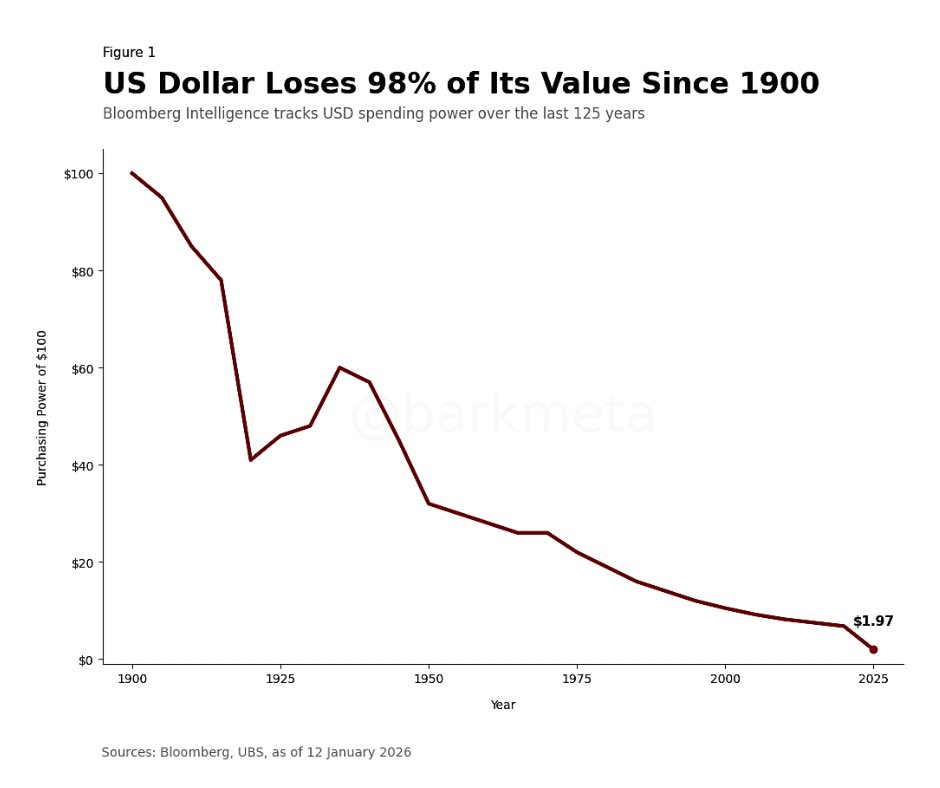
It’s no news that the dollar has been losing value over time, but seeing it printed right there in black and white puts things in perspective.
As we sink deeper into debt, especially with the Fed printing trillions into circulation…
I won’t be surprised if the dollar loses even more value.
And until someone cleans this whole mess from top to bottom, things won’t get any better.
Your only option?
Move every inch in your body to tackle rising costs by shooting up your income.
If you’re able to increase how much you earn, you could stay relatively immune to a rising cost of living.
Not to blow my own trumpet here, but I’ve been showing regular people how to do just that using an AI breakthrough.
I can’t make guarantees on the market…
But take a look at some of the reviews we’ve seen from the top users…
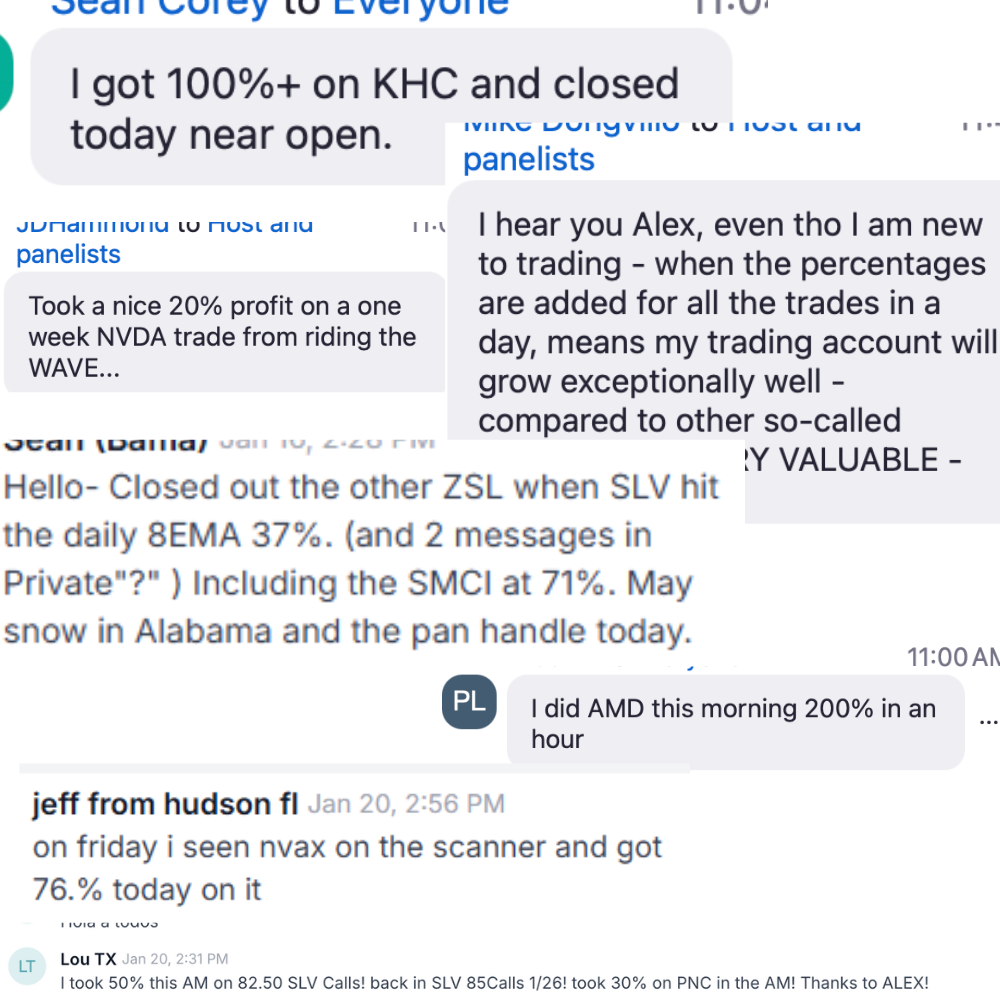
If you’d like to see how it can point you towards worthwhile trade opportunities every single day…
And how you can begin using this AI secret for yourself starting tomorrow…
I’ve laid out the details right here.
To Better Trading,
Alex Reid.
FedNow Is Live. The Real Trade Is Who Loses.

Markets don’t need a technology to be ubiquitous to reprice the companies it threatens. They only need it to be credible. FedNow crossed that threshold quietly, and most payments investors have not adjusted their models to reflect it.
FedNow is a real-time payment service launched by the Federal Reserve on July 20, 2023 that has grown to over 1,700 participating financial institutions. That is not a rounding error. The system has attracted 1,725 banks and credit unions, representing 19.7 percent of U.S. financial institutions as of the first quarter of 2026, with usage reaching 2,728,510 transactions totaling $271,252,920,121 per quarter. The volume is real. The settlement is instant. The Fed’s transaction fee: $0.045 per item to send or receive an instant payment, with additional monthly and optional fees depending on participation and features.
Compare that cost structure to the incumbents. Visa Direct and Mastercard Send provide near-universal reach across U.S. debit cards, enabling instant push-to-card payments, but charge fees to the sending financial institution or fintech that are typically higher than those associated with ACH, RTP, or FedNow. That spread is where the disruption lives.
The Adoption Gap Is the Signal
The Federal Reserve’s own data shows that send capability adoption continues to lag behind receive capability implementation across participating institutions. Many financial institutions cite moderate to severe challenges with legacy systems in handling instant payment sends. That friction is real, but it is also temporary. Every major payment infrastructure upgrade looked impossible until the network effect tipped it.
In 2026, bank-based instant payments like RTP and FedNow are moving beyond early adoption and becoming standard for payroll corrections, liquidity management, supplier payments, and treasury operations. What began as a faster alternative to ACH is now proving its value across a growing set of real-world, high-impact workflows. The use case expansion is the structural concern for card networks, not the consumer P2P layer they already dominate.
FedNow vs. RTP: Two Rails, One Outcome for Card Networks
FedNow settles payments directly in each bank’s Fed master account, using central bank money and offering liquidity management tools designed to support a 24×7 environment. That design advantage accelerates adoption at the community bank tier, precisely where card network penetration is deepest and switching costs are lowest.
FedNow entered a payment landscape already crowded with instant-feel alternatives. Consumers and businesses can already access rapid payment experiences through Zelle, push-to-card services such as Visa Direct and Mastercard Send, same-day ACH, and digital wallets such as PayPal, Venmo, Cash App, and Apple Cash. Because users perceive these options as instant, financial institutions face limited pressure to invest in enabling fast payments via FedNow or RTP. That comfort is the market’s blind spot. Perceived speed and actual settlement finality are not the same product, and B2B treasury teams know the difference.
The Payments Sector Read-Through
Visa and Mastercard are not standing still. Visa reported that cross-border volume rose 12% year over year in its fiscal second quarter of 2026. Mastercard’s adjusted operating margin was 61.0% in its second quarter of 2026. Those numbers are difficult to argue against in the near term. The issue is that both companies earn interchange on card volume. FedNow bypasses the card entirely.
A significant shift has already emerged: 58% of U.S. financial institutions that enable instant payments now use both the RTP network and FedNow Service. Dual-rail adoption among banks does not signal loyalty to either the Fed or The Clearing House. It signals that account-to-account payment infrastructure is being treated as commodity plumbing, where the lowest-cost route wins by default.
Options Framework for Payments Exposure
This is not a single-event trade. FedNow’s adoption curve runs over years, not quarters, which argues against short-dated directional bets on Visa (V) or Mastercard (MA) framed around this specific catalyst. IV on both names remains compressed relative to the structural nature of the risk. For traders expecting long-term margin compression from A2A payment displacement, a defined-risk long-dated put spread on V or MA, financed by selling nearer-term upside calls against an existing position, keeps exposure asymmetric without paying for volatility that may not arrive on schedule. For traders who believe the incumbents successfully absorb FedNow by layering value-added services on top of the rail, a bull call spread into either name’s next earnings window reflects that thesis at contained cost.
Action Checklist
- Track FedNow quarterly transaction volume versus RTP as the primary adoption scorecard, not institution enrollment counts.
- Monitor send-capability adoption rates among enrolled banks. That number, not total participants, determines when volume displacement becomes material for card network revenue.
- Watch FIS, Fiserv, and Jack Henry earnings calls for commentary on core banking integration with FedNow. Their build-out pace sets the clock on community bank send adoption.
- If you hold V or MA as core positions, defined-risk long-dated structures limit downside exposure to a multi-year shift without requiring precise timing on the inflection.
- Request for Payment (RFP) expansion in 2026 is the sleeper variable. The Federal Reserve has said it is seeing momentum building around RFP, which FedNow has supported since launch. That is where interchange revenue is most vulnerable.