August 29, 2026
Bonus Content: The Surcharge Nobody Put on the Income Statement
Hey,
I’m going to do something that may seem a little out of the “norm” these days…
I’m going to give you my #1 trade setup. For free.
It’s the same one I used to find winners like:
- 113% on GOOGL in under 2 hours.
- 240% on META in a single session.
I call it the “Opening Bell Breakout.”
It’s one simple setup I look for every morning. When it shows up…
I simply take the trade. And by 10 AM, I’m done.
I’ve put all the details on how it works in a simple, no-fluff guide.
No credit card required. No strings attached.
>> Get Your FREE “Opening Bell Breakouts” Trade Guide Here
This guide shows you the exact 15-minute window I trade, and how to spot the same setups the big funds are watching.
It’s yours for free.
Thomas Wood
P.S. This isn’t a 100-page novel. It’s a short, actionable guide you can read in about 10 minutes and put into action by tomorrow morning. Get it here.
The Surcharge Nobody Put on the Income Statement
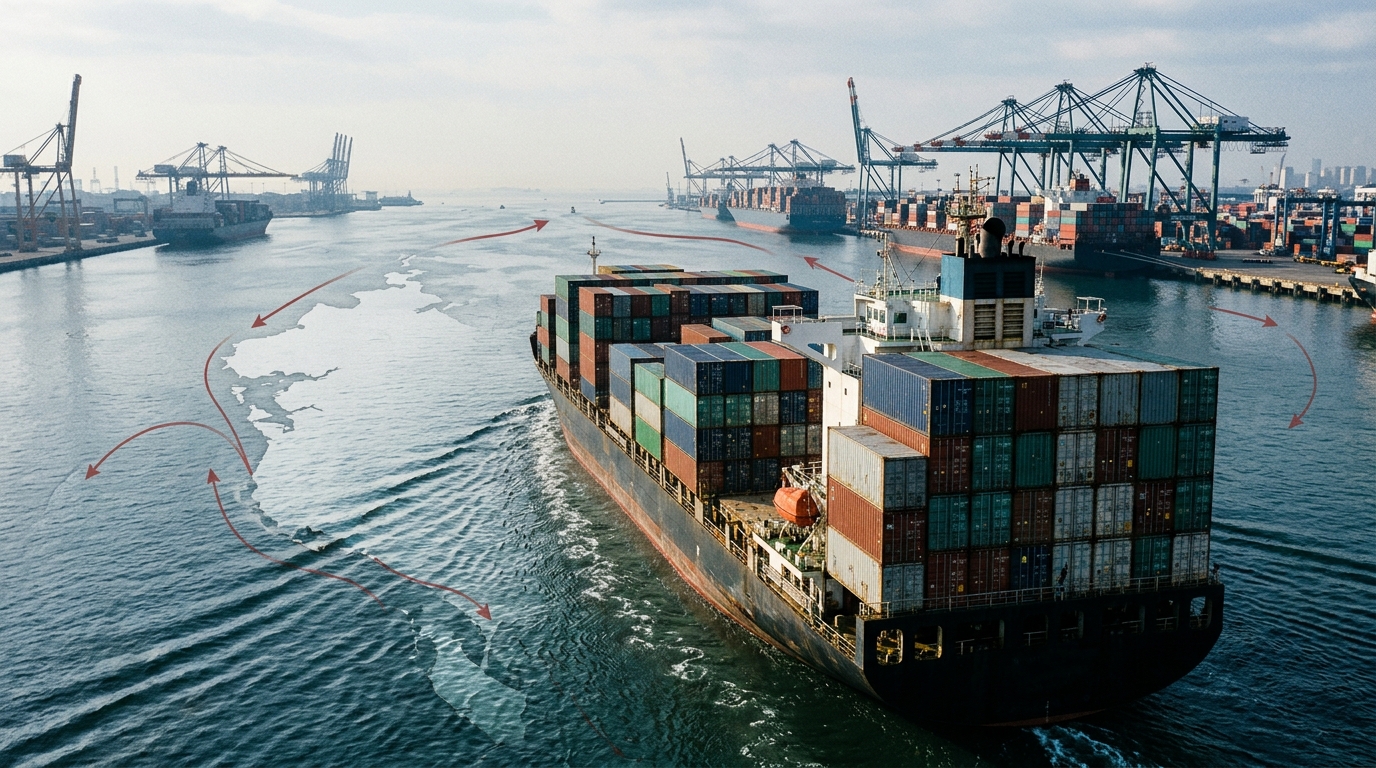
The Strait of Hormuz has been largely shut down since early March 2026. The Red Sea remains a hostile corridor. Both disruptions are structural, not seasonal, and the financial fingerprints are now showing up inside corporate earnings in ways that the headline numbers actively obscure.
This is not about freight as an abstract input cost. It is about which companies absorb that cost and which ones collect it, and about reading the Q2 results with enough granularity to separate one from the other.
The Macro Layer: What Chokepoints Actually Cost
Periodic Iranian attacks against shipping and retaliatory U.S. strikes against Iran have severely disrupted traffic through the Strait of Hormuz for most of the past five months as of early August 2026. That timeline matters because it predates Q2 reporting for most retailers. The disruption was already embedded in cost of goods before many of these companies reported.
The impact is substantial: freight costs up 20 to 50%, fuel consumption and voyage costs higher for Cape of Good Hope diversions, and transit times extended by roughly one to two weeks. The rate on a booking confirmation is increasingly only part of the story. Bunker adjustment factors, war risk surcharges, and emergency fuel levies are stacking on top of base rates in ways that can materially alter landed cost.
TGT: Reading the Refund Correctly
Target’s Q2 results looked like a comeback. It partly was. Second quarter net sales grew 5.3% over last year, with comparable sales growth of 3.8% driven by a 3.6% increase in comparable traffic. But the earnings figure requires surgical separation. GAAP and adjusted diluted EPS were $4.11 versus $2.05, including $994 million of tariff refunds that added $1.65 to EPS and about 3.7 percentage points to operating margin, which rose to 9.6%.
The unusually large tariff-refund benefit makes the quality of the earnings improvement more important than the headline profit growth. The central question is how much of the quarter can carry into the back half. That question is directly tied to freight. For retailers, higher inbound logistics costs and potential inventory delays often translate into higher shelf prices or tighter margins across groceries, consumer goods, and imported products. Target’s underlying operating margin guidance, excluding the refund, targets around 50 basis points of improvement over the 2025 adjusted 4.6% rate. That is a thin cushion against sustained cape-route surcharges heading into holiday inventory builds.
AMKBY: The Structural Beneficiary
Maersk is the clearest direct winner in this structure. Higher container freight rates and stronger cargo volumes helped lift second-quarter revenue by 20% to about $15.8 billion, with EBITDA around $3.0 billion and EBIT around $1.6 billion. Loaded volumes rose 4.1%, led by Asian exports, while average loaded freight rates increased 22%. Vessel utilisation remained high at 96%.
Maersk now expects full-year underlying EBITDA of between $10.5 billion and $12.5 billion, up from its previous forecast of $8 billion to $10 billion, and raised its underlying EBIT forecast to between $4.5 billion and $6.5 billion from $2 billion to $4 billion. That is a guidance upgrade issued twice in the same calendar year. Allianz Commercial has warned that global shipping is moving into a period of heightened geopolitical risk, arguing that disruptions such as those in the Red Sea and Strait of Hormuz are becoming structural rather than temporary. If Allianz is right, Maersk’s pricing power is not a spike. It is a regime.
FDX: The Air Premium Leg
In Q3 of its 2026 fiscal year, ended February 28, FedEx delivered a strong non-GAAP earnings report. Revenue rose to $24.0 billion from $22.2 billion a year earlier, while adjusted EPS increased to $5.25 from $4.51. The FedEx Express segment contributed to the improvement, as the company improved yield on both domestic and international priority shipments and continued to benefit from its cost-reduction program, resulting in a rise in the segment’s adjusted operating margin to 7.9% from 7.4%.
The strategic logic is straightforward: ocean routes that now add roughly one to two weeks push time-sensitive cargo toward air. High-tech shipments, including AI-related infrastructure and global e-commerce fulfilment, continue to support air freight demand, and while regulatory changes may alter shipment profiles, demand for speed and reliability remains strong. FedEx Express captures that premium directly through yield, not volume.
Options Framework and Structured Trade Templates
The asymmetry across this trio is the tradeable angle. AMKBY trades on the OTC market with limited options liquidity, making it better suited to direct equity exposure with defined position sizing. TGT and FDX carry listed options with sufficient open interest for structured approaches.
For traders expecting the shipping cost regime to persist through Q3, a defined-risk bull call spread on FDX targeting the Express margin expansion thesis offers contained downside. If you believe the tariff refund flatters TGT’s underlying margin and the back-half faces a freight headwind without that one-time benefit, a defined-risk put spread on TGT expiring in October captures that thesis as peak-season freight demand pushes surcharges higher. A neutral calendar spread on TGT acknowledges the genuine traffic recovery while hedging against cost pressure timing.
Risk Factors
Rate volatility could trigger a short-term spike initially if the Suez reopens, but once sailing schedules stabilize, the combination of shorter routes and new vessels could drive freight rates down. A ceasefire or Hormuz reopening is the primary risk to the bear case on TGT margins and the bull case on AMKBY. Monitor Drewry’s World Container Index weekly. Drewry’s World Container Index most recently reached $4,166 per 40-foot container, its highest level since September 2024. A sustained break below $3,500 would signal a regime shift.
Action Checklist
- Separate TGT’s $1.65 tariff-refund EPS from its organic earnings before assigning forward multiple.
- Monitor AMKBY vessel utilisation (currently 96%) as the leading indicator of rate sustainability.
- Track FedEx Express yield per shipment, not volume, as the relevant metric for the air-premium thesis.
- Watch Drewry WCI weekly. A sustained drop signals Hormuz reopening risk and reverses all three trade frameworks.
- Size any AMKBY position for OTC liquidity constraints. Use TGT and FDX for defined-risk options structures.