
Dear Reader,
The biggest mistake investors made during America’s first Great Deflation was buying the railroads.
More than 100 of those railroads eventually went bankrupt.
The best investments were the companies that used collapsing freight costs to crush their competition.
And I believe investors are making the exact same mistake with AI today.
They’re piling into the obvious “railroads”: NVIDIA, Microsoft, Meta, and Google.
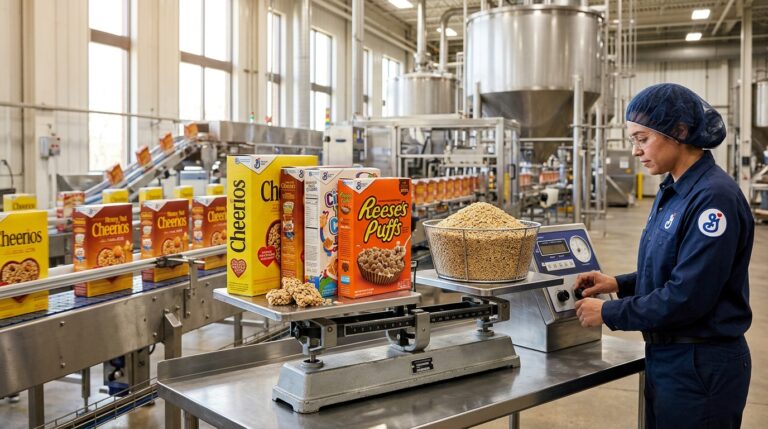
Meanwhile, one little-known aerospace manufacturer has connected 19 factories around the world into a single AI-ready data system.
And it is already producing remarkable results.
Its record profit margins climbed 25% year over year.
Revenue rose 11% last year.
But I don’t believe the story is finished.
This company isn’t trying to build the next artificial-intelligence empire. It’s using AI to make every factory faster, leaner, and more profitable.
It has now hit all five triggers in my proprietary stock-selection system, including accelerating sales, rising earnings, breakout momentum, insider buying, and meaningful disruption.
Don’t make the mistake of chasing the railroad while this potential “Price Killer” races ahead.
Good investing,
Alexander Green
Chief Investment Strategist, The Oxford Club
P.S. 19 connected factories, record margins, and all five of my triggers tell me the larger story may still be ahead.
See my larger prediction here.
The Only Employment Numbers That Matter This Week Come Wednesday at 8:30 AM
Markets don’t need a payrolls number to get a read on employment this week. They need Paychex and Cintas. Both report fiscal Q1 2027 before the bell on Wednesday, September 23, and with no CPI, no PCE, and no nonfarm payrolls scheduled between now and October 2, the two reports are the highest-frequency private-sector hiring signal available. That matters acutely one week after the Fed hiked rates for the first time since 2023.
The FOMC voted last Wednesday, September 16, to raise the federal funds rate by a quarter point to a target range of 3.75% to 4.00%, marking a sharp reversal from the easing cycle that ended last year. The latest jobs report showed unemployment at 4.1% in August, unchanged from the month prior, with 162,000 jobs added. Fed Chair Kevin Warsh underscored that he and his colleagues saw resilience in the economy. Wednesday’s reports will either validate that read or complicate it.
The Numbers
Analysts expect Paychex to report about $1.33 per share, up from $1.22 in the year-ago period, on quarterly revenue of about $1.6 billion compared to $1.54 billion last year. PAYX has beaten the consensus estimate in four preceding quarters, with an average earnings surprise of about 1%.
Cintas carries heavier growth expectations. Analysts expect $1.36 per share for the quarter, up from $1.20 in the year-ago period. Wall Street is modeling implied growth of +13.3% on the bottom line and +9.54% on the top line. The company has established a consistent pattern of exceeding expectations, having beaten earnings estimates in the trailing two quarters. The bar is high.
What These Reports Actually Measure
This is not about payroll-processing software. It is about client headcount. Paychex serves approximately 840,000 customers and pays 1 in 11 U.S. private sector workers. The company’s checks-per-client metric is the clearest available proxy for small-business hiring decisions between government data releases. Macroeconomic uncertainty around tariffs, inflation, and taxes has been causing small businesses to delay decisions, while underlying small-business employment remained stable but micro-market bankruptcies rose. Wednesday’s report is the first read on whether that stability held into August.
Cintas provides the complement: uniform-rental route volumes track physical headcount at hotels, restaurants, hospitals, and light manufacturing. Q4 FY 2026 revenue rose 9.0% year over year. If that cadence slips, it shows up in route stops before it shows up in any government survey. The September dot plot signals the median FOMC member expects one additional 25bp hike by year-end 2026, while Warsh emphasized that policy will remain data-dependent. Both Wednesday reports feed directly into that dependency.
Options Market Analysis
The divergence between the two implied moves is the most actionable data point heading in. The options market is pricing PAYX at ±9.0% and CTAS at ±3.6% for Wednesday’s event. Historically, PAYX tends to exhibit an average post-earnings move of about 4-6%. A 9% implied move for a stock that has averaged roughly half that on earnings day is a meaningful premium. IV has inflated well above realized. For CTAS, 3.6% against a quarter where the Street expects 13% EPS growth feels comparatively compressed. In the last 10 unusual options trades in CTAS, there were 4 puts and 6 calls, suggesting net bullish positioning into the event. On PAYX, the put-to-call ratio sat at 0.44, also call-leaning, though elevated IV makes long premium expensive on either name.
Structured Trade Framework
PAYX Bull Case: For traders expecting the Paycor cross-sell engine and PEO worksite growth to deliver a beat-and-raise, a defined-risk structure would be a Sept 26 call spread, buying the $120 call and selling the $125, limiting exposure to the premium paid while capturing a move inside the inflated implied range.
PAYX Neutral/Short-Premium Case: Given the 9% implied move versus a 4-6% historical average, a short iron condor spanning roughly $107 to $131 collects elevated premium with positive theta. Risk is assignment if guidance materially surprises in either direction. This structure favors the view that IV is rich relative to likely realized movement.
CTAS Bull Case: If route volume data supports the 9.5% revenue consensus, a defined-risk call spread on CTAS buying the $202.50 strike and selling the $210 captures directional exposure at a more reasonable IV level. A modest implied move of 3.6% means options are not pricing a large reaction, which cuts both ways: cheaper to own directional risk, but less reward if the beat is in line.
Bear Case, Both Names: Any guidance commentary signaling slowing client additions or declining checks per client would carry macro weight far beyond these two stocks. A Russell 2000 put spread, using IWM, is a defined-risk expression of that scenario given small-cap sensitivity to employment conditions and elevated borrowing costs.
Risk Analysis
The September dot plot showed the median FOMC member expecting one additional 25bp hike by year-end 2026. Higher rates compress small-business margins and reduce hiring. If either Paychex or Cintas signals client attrition or pricing pressure on Wednesday, the read-through extends to ADP, the broader HCM sector, and small-cap indices. On PAYX specifically, Paycor-related cross-selling and revenue synergies remain a key driver of top-line guidance, and any friction there could pressure the stock regardless of the headline EPS.
Action Checklist
- Wednesday pre-market, 8:30 AM ET: both PAYX and CTAS report simultaneously. Monitor checks-per-client on PAYX and route growth commentary on CTAS before reacting to the headline EPS.
- PAYX implied move at ±9% is roughly double historical realized. Evaluate whether to sell premium via iron condor or own a tighter call spread at lower cost.
- CTAS at ±3.6% implied is the cheaper directional vehicle if you expect the growth beat to hold.
- Listen to management commentary on small-business hiring trends. That language is the macro signal, not the EPS number.
- If either report shows client count deceleration, assess IWM downside structures as a defined-risk proxy for the broader small-business employment read.