September 30, 2026
Bonus Content: Tesla Heads Into Friday With a 60,000-Car Estimate Gap
Three shipments, fifty tonnes, and 4,405 ounces of silver
Fifty tonnes is about two truckloads. In 1907, 1916 and 1917 men carried roughly that much rock out by hand and by horse.
Government records put the grade between about 2,400 and 4,160 grams of silver a tonne, and the recovered silver near 4,405 ounces.
After 1917, silence for ninety years. Then in 2008 a loose rock from the same area assayed insane results. Enough to get the team mobilized.
See what modern mining technology is finding what was missed 100+ years ago..
Tesla Heads Into Friday With a 60,000-Car Estimate Gap
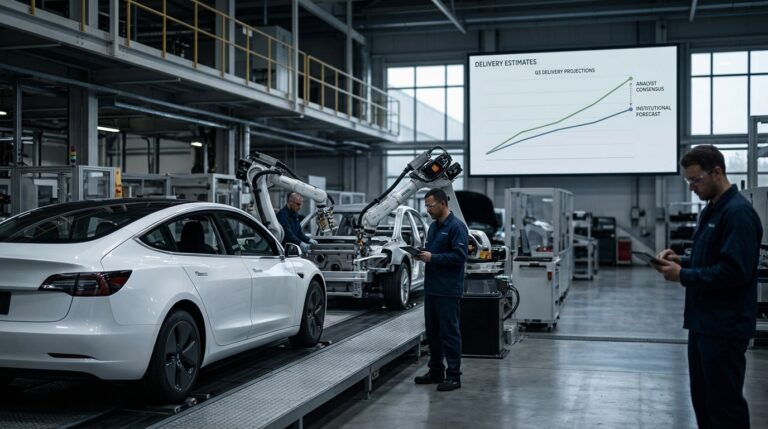
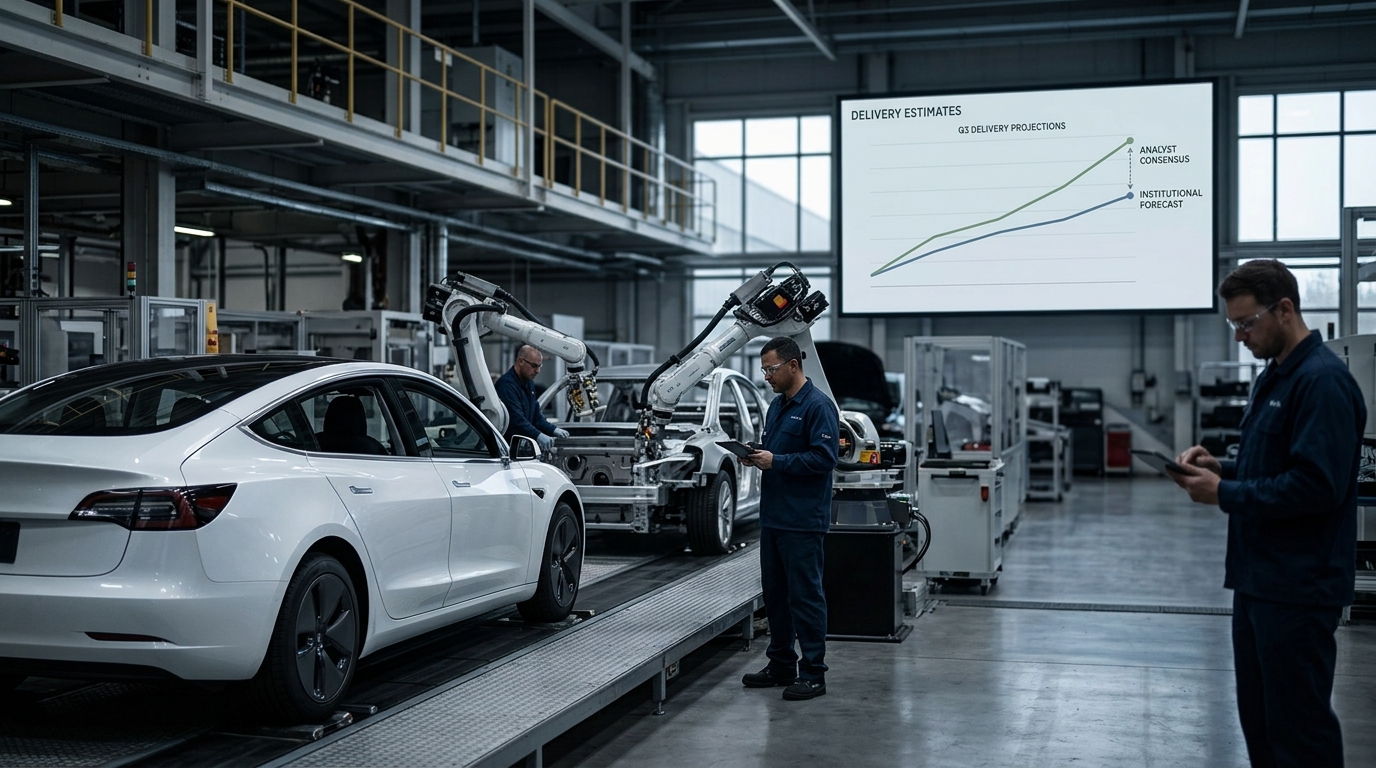
Before a single delivery number crosses the wire Friday morning, Tesla’s Q3 report is already a volatility event. Estimates from major banks span roughly 421,758 to 482,000 deliveries ahead of Friday’s report. That ~60,000-unit spread is not noise. It reflects two forces pulling directly against each other: the expiration of the $7,500 U.S. EV tax credit after September 30, 2025, which padded Q3 2025 demand and now creates a punishing year-over-year comparison, and crude oil sitting in the low-to-mid $90s a barrel recently, which can pull cost-conscious buyers toward electrics faster than many models anticipate.
The stock enters the event around $353, approximately 29% below its all-time high intraday level of $498.83 reached on December 22, 2025. That gap matters, because it sets the stakes for any number that surprises in either direction.
What the Street Is Actually Forecasting
Tesla released its company-compiled analyst consensus Tuesday, with Wall Street expecting vehicle deliveries to decline from both the previous quarter and last year’s record-setting Q3. The consensus, based on forecasts from 24 analysts, calls for 461,974 vehicles. The range is not tidy. By institution: JPMorgan at 482,000, Barclays at 475,000, UBS at 470,000, StoneX at 446,500, Goldman Sachs at 435,000, and Cantor Fitzgerald at 421,758.
If Tesla comes close to the consensus figure, deliveries would fall about 3.8% from the 480,126 vehicles delivered in Q2, and roughly 7% from the record 497,099 vehicles delivered during Q3 2025. Goldman’s bearish lean traces directly to regional data. Goldman Sachs recently lowered its delivery estimate to 435,000 due to regional sales data tracking below expectations.
Why the Range Is So Wide
This is not about modeling skill. It is about which data you weight. High gas prices could be partially compensating for the loss of demand tied to the end of the tax credit. Layer in the China discount dynamic, and Tesla can look weak early in a quarter, with a heavy end-of-quarter delivery pattern that often does the real work. Those two variables alone explain most of the ~60,000-unit spread.
The Q2 surprise versus many sell-side expectations is a reminder that models can fail badly here. The prediction market Kalshi has recently implied Q3 deliveries in the low-to-mid 470,000s, down from roughly 480,000 in mid-September.
Options Market Analysis
TSLA’s 30-day at-the-money implied volatility is around the mid-40% range, with an IV rank in the high-30s over the past year. The options market has recently been pricing an expected move on the order of about 9% to 13% into late October expirations, depending on the tenor used. The put/call open interest ratio has been roughly in the mid-0.7s recently, indicating calls outweigh puts, a modestly bullish lean in positioning. Delivery numbers reported quarterly and earnings guidance both move the stock, and double-digit post-event moves have been common enough historically that the options market’s implied move can look conservative in the wrong regime.
With IV rank near the high-30s, premium is neither cheap nor expensive on a one-year basis. Purchasing options heading into a major catalyst like a delivery update can expose traders to what is commonly known as a volatility crush immediately after the announcement. When implied volatility drops sharply after a catalyst resolves, even a correctly directional bet can result in losses if the options premium collapses faster than the stock moves.
Defined-Risk Trade Framework
Bull case: For traders expecting a delivery beat above 475,000, a defined-risk structure would be a call debit spread, buying the October 10 $360 call and selling the $390 call. The spread captures a move toward or through JPMorgan’s 482,000-unit scenario while capping risk to the premium paid. Maximum loss is the spread cost; maximum gain is the width of the strikes minus that cost.
Bear case: If you believe Goldman’s 435,000 estimate is closest to reality, a put debit spread, buying the October 10 $345 put and selling the $320 put, targets a return to the August lows while keeping risk defined. A number near Cantor’s 421,758 would likely push TSLA through both targets.
Neutral case: Given the wide analyst dispersion and IV rank near the midpoint of its range, an iron condor straddling the $320 to $390 range collects premium if the stock remains inside the options market’s expected move. This structure benefits from volatility crush post-report.
Risk Factors
The Q2 upside surprise versus consensus expectations is a reminder that models can fail badly here. A number above 485,000 likely sends TSLA sharply higher; a number below 425,000 tests the September lows. Tesla’s implied volatility is often elevated due to delivery uncertainty, Elon Musk headline risk, and the stock’s growth-stock valuation, which means the spread on any options structure will be meaningful. Size positions accordingly.
Action Checklist
- Key report date: Friday, October 2, pre-market.
- Consensus to beat: 461,974 vehicles (Tesla’s compiled estimate from 24 analysts).
- Bull threshold: above 475,000 (Barclays/UBS zone); strong bull above 485,000.
- Bear threshold: below 440,000 (Goldman zone); serious bear below 425,000.
- IV rank: recently in the high-30s, mid-range, supports debit spreads over naked long options.
- Define risk before Friday open. The ~60,000-unit range is wide enough to move this stock in either direction by more than the options market currently implies.