
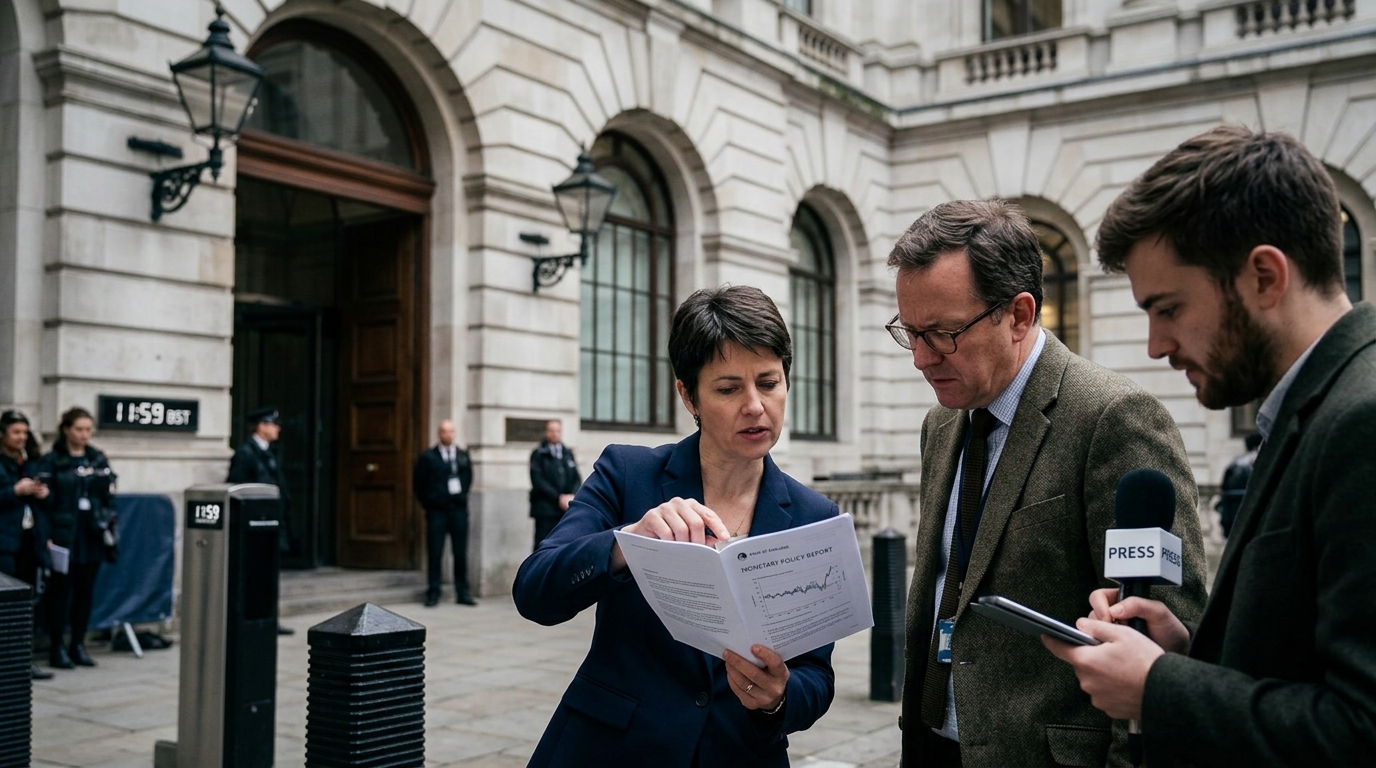
7:00 AM ET. The decision drops now. The Bank of England’s Monetary Policy Committee announces at 12:00 BST whether Bank Rate stays at 3.75% or rises to 4.00% for the first time since early 2024. Most economists still expect a hold.
What Changed Since July
The MPC held at 3.75% on July 30 in a divided 6-3 vote, with three policymakers pushing for an immediate rise to 4.00%. Megan Greene, Catherine Mann and Huw Pill were the three dissenters. Two things have shifted the calculus since then.
First, inflation. CPI rose 3.1% in the 12 months to August 2026, up from 2.9% the previous month. Motor fuels jumped 23.0% over the year, the single biggest driver of the increase, while services inflation stayed flat at 3.4%. Core inflation held at 2.6%, unchanged from July, the calmer signal the majority will point to.
Second, the Fed. The Federal Reserve approved its first rate hike since the summer of 2023 Wednesday, with the FOMC voting to increase its benchmark rate by 25 basis points. The move brought the funds target to 3.75%-4.00%, with policymakers noting that inflation remains elevated. That puts the Fed’s floor at parity with the BoE’s current ceiling, compressing the rate differential that has kept sterling relatively supported in 2026.
Why the Vote Count Is the Trade
A hold is broadly priced in. The new information will come from the vote, the language and the balance-sheet decision. Three hawks are already on record. Two more defections flip the result. Even a hold accompanied by a 7-2 or 8-1 split signals the MPC majority is drifting toward patience; a 5-4 or 4-5 split signals November is live.
The key risk is not Thursday’s decision itself but the tone of the guidance. Any signal that a November hike is becoming more likely could push UK gilt yields higher, strengthen sterling and weigh on rate-sensitive sectors such as housebuilders, property and consumer stocks. A softer message could have the opposite effect, easing pressure on borrowing costs and supporting domestically focused equities.
Stocks to Watch
UK banks are split by the rate direction. A hike or hawkish language lifts net interest margin expectations for Lloyds (LLOY), Barclays (BARC) and NatWest (NWG) near-term. Lloyds has guided to a return on tangible equity of greater than 16% for 2026, suggesting the bank is positioned to benefit from a higher-rate environment. A dovish hold, by contrast, compresses that margin outlook and may pressure bank shares even if the actual rate does not move.
Housebuilders run the opposite direction. The Lloyds house price index puts the average UK house price at £298,468 in August 2026, down 0.4% year on year and 0.2% on the month. Any signal of further tightening could extend that pressure. Watch Barratt Redrow specifically: the stock has been among the most sensitive to mortgage rate direction in 2026, and a hawkish vote could accelerate lender price moves ahead of November.
Sterling’s Setup
Sterling sat at 1.3383 ahead of the decision, with markets pricing building hike risk. Rate-sensitive UK domestic equities and housebuilders are exposed if the vote split tilts hawkish, and sterling’s reaction will depend on relative Fed pricing. With the Fed now at 3.75%-4.00%, a BoE hold keeps a narrow rate advantage intact. A hike to 4.00% matches the Fed’s floor and could briefly lift the pound before the broader question, whether the BoE is beginning a new tightening cycle or simply closing the gap, determines whether gains hold.
The Cheat Sheet
- Top theme: Central bank divergence is narrowing. The Fed hiked yesterday; the BoE decides now.
- Stock to watch: Barratt Redrow, most exposed to mortgage rate moves if guidance turns hawkish.
- Sector to watch: UK banks. A hawkish vote or language lifts margin expectations; a soft hold does the opposite.
- Biggest risk: A surprise 4-5 vote for a hike delivers a 4.00% Bank Rate. Sterling spikes, gilts sell off, housebuilders drop sharply.
- One thing to remember: Given the 6-3 split in July, Thursday’s decision is genuinely live in a way recent meetings have not been. The vote count, not just the rate, is what moves assets.