Below is an important message from one of our highly valued sponsors. Please read it carefully as they have some special information to share with you.
Dear reader,
This might be the most valuable document I’ve ever uncovered.

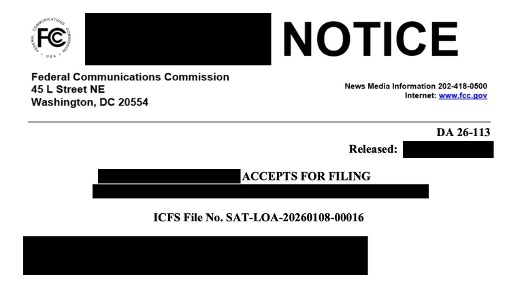
What’s under the black bars could change your life forever.
Elon quietly filed this document with the federal government.
And what’s inside could be bigger than Tesla, SpaceX, and xAI combined.
Big enough, I believe, to mint a record breaking wave of new “Musk Millionaires” over the coming years…
That’s because Elon is going after the largest cash pile in history.
Artificial Intelligence.
And what is in this filing proves he is about to make Bezos, Altman and Zuckerberg beg for mercy.
Look…
I called NVIDIA in 2008, Bitcoin in 2013, and his Super IPO years before they turned everyday Americans into millionaires.
And what Elon is doing next could be the biggest money making opportunity of them all.
Luckily, almost nobody knows this exists.
But it won’t stay quiet for long. Once it goes mainstream, your chance to get in early is gone.
If you missed out on Tesla…
If you missed out on Bitcoin…
If you missed out on NVIDIA…
>>> DON’T MISS THIS ONE TOO <<<
>>> CLICK HERE TO SEE HOW YOU CAN GET IN ON ELON’S NEXT MILLIONAIRE MAKER <<<
This could be your final shot to make up for every other opportunity you’ve missed.
Don’t let one more click and two more minutes of your time be the reason you miss out again.
Regards,
James Altucher
Nike Slashes Full-Year Profit Outlook. The Stock Fell Further Than Options Expected.
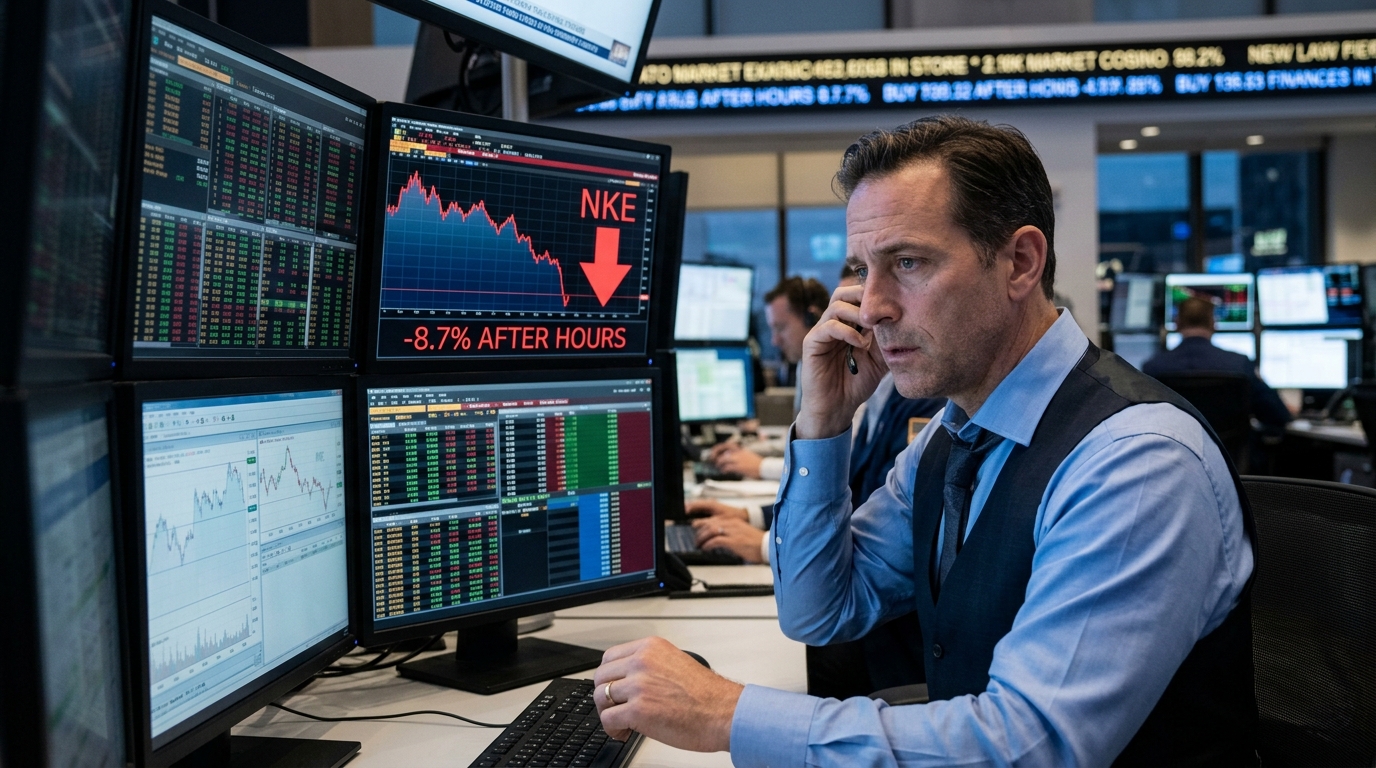
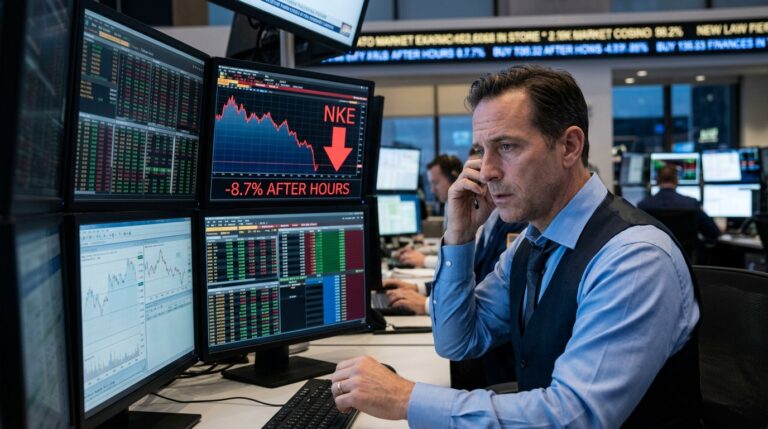
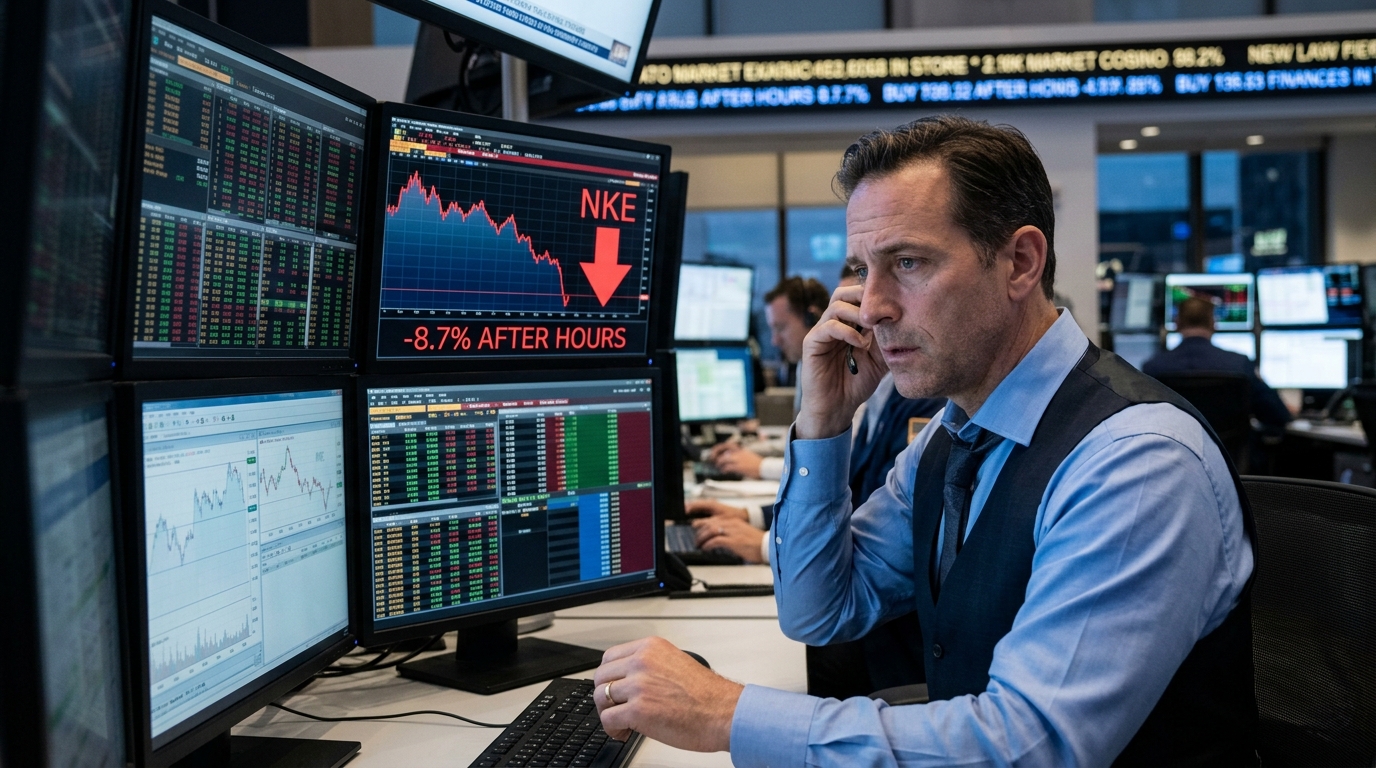
The quarterly earnings beat was real. It also did not matter. Nike reported Q1 FY2027 results that topped profit expectations but fell short on revenue, with diluted EPS of $0.48 versus a $0.44 forecast and revenue of $11.213 billion below the $11.35 billion estimate. Investors looked straight through the $0.04 EPS beat and sold the stock because what followed the quarter was the story: a full-year revenue guide calling for a high-single-digit decline, an annual adjusted EPS range of $1.15–$1.35, and a multi-year restructuring program called Pace that involves layoffs starting in 2027.
NKE closed the regular session at $35.15, then fell to about $32.09 in after-hours trading, a drop of roughly 8.7%. The at-the-money straddle for the first expiration after earnings implied a mid-single-digit move from current levels, that was the market’s priced expectation. The realized move was nearly double. That gap is where the options analysis begins.
The Numbers That Moved the Stock
Revenue fell to $11.213 billion from $11.720 billion a year earlier, a 4.3% decline, while gross margin improved 60 basis points to 42.8% and EBIT rose fractionally to $907 million. The margin improvement was real, but the top-line shortfall confirmed that the China reset is nowhere near complete. Nike said Greater China revenue fell 26% on a currency-neutral basis.
Nike issued conservative full-year guidance projecting a high-single-digit percentage revenue decline for fiscal 2027 and adjusted EPS of $1.15 to $1.35, well below the roughly $1.66 to $1.69 analysts expected. The company had earlier pointed to revenue being down low-to-mid-single digits for Q1 FY27, so the full-year revision is a meaningful step down from what the street was modeling. Nike also signaled EBIT is expected to fall by a larger percentage than revenue, reflecting lower sales and fixed-cost deleverage.
What Pace Means for the Model
The Pace program includes initiatives to further optimize the company’s global supply chain, better align its organizational structure to support strategic goals including through the establishment of a new campus in Bengaluru, India, and realign its operating model into three geographies. Nike said the Board approved steps expected to result in approximately $1.0 billion in pre-tax charges through fiscal 2031, in addition to about $0.3 billion of severance already recognized in fiscal 2026. The company expects approximately $0.3 billion to be recognized in fiscal 2027 and the remainder through fiscal 2031, consisting primarily of employee severance and other employee-related costs. The company expects the program to deliver approximately $2.5 billion in cumulative savings through fiscal 2031.
This is not a one-quarter reset. It is a multi-year cost restructuring whose savings land in FY31 while the charges hit now. Investors paying 17x trailing earnings for a business whose EBIT is compressing faster than revenue need a reason to hold beyond the promise of future savings. That reason has not yet arrived in the numbers.
Options Market: IV Was Elevated, the Move Still Exceeded It
Heading into the report, NKE implied volatility was around the high-40% area on common 30-day measures, but IV rank readings varied widely by data vendor. Elevated IV before an earnings event typically signals the market is pricing meaningful uncertainty. Here, that uncertainty was directionally correct but sized too small. A mid-single-digit expected move on a stock trading near $35 implies roughly a $1.75–$2.00 band. The realized after-hours drop was a little over $3.00.
NKE open interest was roughly 2.3 million contracts into the event versus a 52-week average near 1.7 million, putting it near the top of its one-year range. The put/call ratio by open interest was around 0.74, below the 52-week average of about 0.8, meaning the options market was not positioned defensively enough given the severity of the guidance cut. Post-earnings, IV is likely to collapse; traders who sold premium into the report booked the vol crush but gave back gains on delta.
Trade Frameworks
Bull case: If you believe Elliott Hill’s restructuring is credible and China stabilizes by mid-FY28, the gross margin expansion trend, 42.8% in Q1 against a roughly 42.4% estimate, offers a floor argument. A defined-risk structure would be a long call spread, buying the November $33 call and selling the $38 call, capping upside but limiting cost in a high-IV environment where outright calls are expensive. Max loss is the debit paid.
Bear case: Management indicated the pressure from deliberate changes in Nike Sportswear, Jordan Brand and Greater China will likely continue into fiscal 2028. For traders expecting further deterioration, a long put spread, buying the November $32 put and selling the $27 put, defines risk while targeting a continued slide below the new 52-week low. The position profits if NKE confirms the guidance cut is still conservative.
Neutral / volatility case: With pre-earnings IV elevated and a post-earnings vol crush underway, premium selling was structurally favored. Going forward, a short iron condor centered around current levels benefits from range-bound consolidation as the market digests the new guidance. Risk is defined to the width of the wings minus premium received.
Risk and Forward Outlook
NKE shares have fallen roughly 40% in 2026. The stock is now trading near a 12-year low with a guidance range implying further contraction. Two risks dominate: China does not stabilize on the timeframe management implies, and Pace charges arrive faster than the savings do. The margin improvement in Q1 is a genuine positive, but it is not large enough to offset a high-single-digit revenue decline without compressing EBIT materially.
Action Checklist
- Verify current NKE IV post-earnings crush before sizing any long-premium structure
- Key resistance levels: $35.15 (last regular-session close), $36.85 (R1 technical level cited pre-earnings)
- Monitor Greater China revenue trajectory in Q2 FY27, management says improvement takes time; the market will need to see the rate of decline slow
- Pace charge timing: about $300 million expected in FY27 is excluded from the adjusted EPS guide; GAAP EPS will be approximately $0.15 per share lower
- Defined-risk only: NKE has at times delivered realized moves larger than implied move at earnings events