There are two stories inside Deere’s fiscal fourth quarter, reported this morning before the bell. One is the quarter itself: Wall Street expected EPS of about $4.06 on revenue of $10.34 billion, implying roughly a 16% year-over-year revenue decline. Nobody is surprised. The other story is the first fiscal 2027 net income guide, and that number is the only one that matters for anyone holding the stock into next year.
The critical focus is Deere’s guidance for fiscal 2027, with Bernstein projecting net income of roughly $5.4 billion, or $20 per share, potentially 5 to 10% below current consensus. The firm notes Deere trades at an 80% premium to the S&P 500 on 2027 earnings estimates, well above the typical 40% premium seen at cycle troughs, leaving no valuation forgiveness for disappointment.
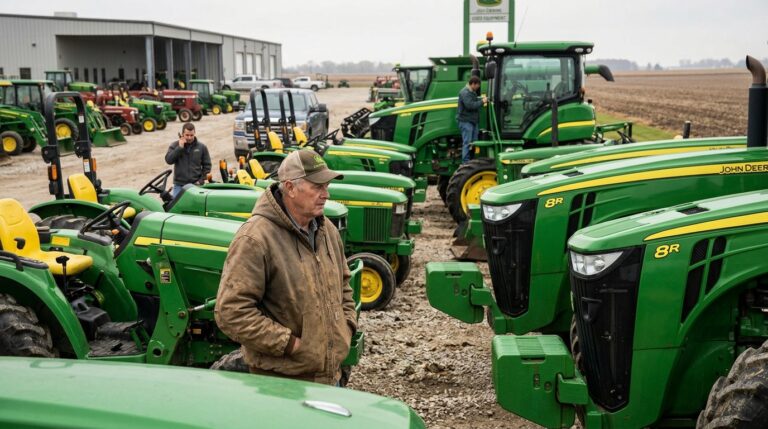
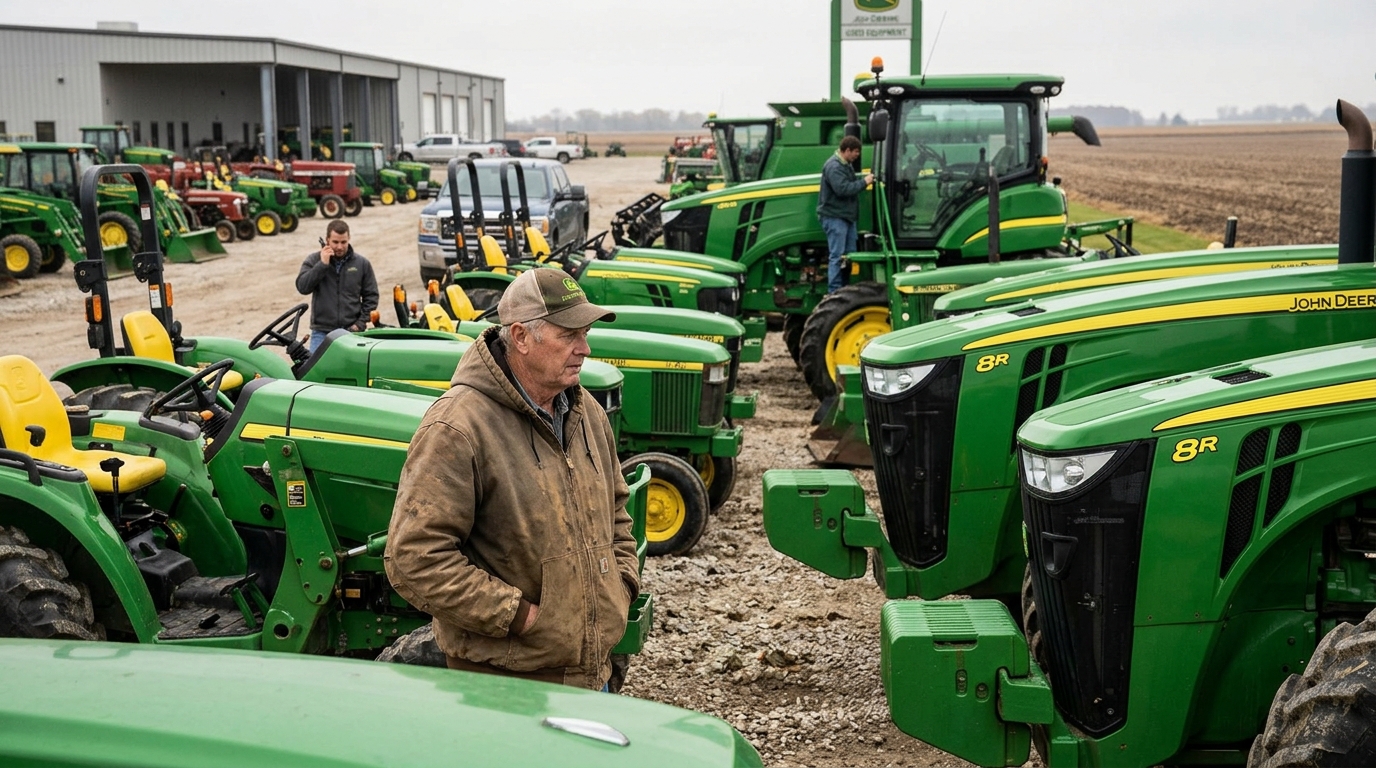
The bull case rests almost entirely on used-inventory normalization. In Deere’s August earnings call, management said model-year 2022 to 2023 used inventory of Deere 8R tractors reduced by a mid-teens percentage in the quarter and was about 25% below a March 2025 peak, while Deere sprayers were down mid-teens and Deere planters down nearly 30% from recent highs. At dealer level, the trade wholesale portfolio of used equipment financing is down more than 15% year on year, and dealers who moved earliest on used inventory are now the most optimistic about next year, with some looking to add selectively to their used fleets.
That is the order-book argument. Order books look cleaner because Deere deliberately underproduced retail demand through the cycle. Deere expects net tariff costs to rise in fiscal 2027 to around $1 billion, compared with about $750 million in fiscal 2026, even as it enters fiscal 2027 with inventories better positioned after modest underproduction in Production and Precision Ag and Construction and Forestry. Lower channel inventory is real. The question is whether it reflects genuine demand or simply that dealers stopped ordering.
Management has stated that 2026 marked the low point for the large agriculture cycle. The upcoming report will either confirm that assessment or suggest a delay. Early indicators for model-year 2027 orders showed mid-single-digit increases, and investors will want to see that trend continue.
Construction offers a cleaner bright spot. Deere’s Construction and Forestry segment grew sales 18% in its latest reported quarter, with customer backlogs extending into fiscal 2027. RBC also pointed to rental re-fleeting in construction as a steadier, planned source of demand. That segment can carry some weight if large ag stays subdued.
The bear case is straightforward. Given high expectations for roughly a high-20s percentage earnings jump in 2027, cautious guidance risks replicating last year’s post-earnings drop, amplifying volatility amid thin holiday trading. After a strong 2026 rally, the stock already reflects considerable optimism, while tariffs and weak farm equipment demand remain near-term headwinds.
CEO John May said in August, “we continue to believe 2026 will mark the bottom of the current ag equipment cycle,” and the 2027 net income guide issued this morning is the moment that claim either gets a number attached to it or quietly retreats. Watch the Production and Precision Agriculture volume assumptions and whether the guidance midpoint comfortably absorbs the full $1 billion tariff headwind. If it does, the channel data wins. If management hedges, the used lots are still telling a more cautious story than the order books suggest.