Below is an important message from one of our highly valued sponsors. Please read it carefully as they have some special information to share with you.
Dear Reader,
You Worked Hard, You Saved… You Still Got Poorer
The Shocking Truth About the U.S. Dollar and Retirement in America Today
You worked hard your entire life.
You made smart decisions. You avoided unnecessary debt.
You saved as much as you could. Sometimes, saving even caused you to sacrifice luxuries and little indulgences.
You did everything right, in other words.
But you still fell behind. You still got poorer. The gap between you and the “rich” still got bigger.
According to the Bureau of Labor Statistics, $1 in 2016 is worth only $0.62 today.
Just in the last decade, 38% of the dollar’s purchasing power has evaporated.
Since 2000, the dollar has declined by 50%.
It used to be, the “experts” said $1 million saved would give almost any American a comfortable, safe retirement.
Among the “wealthy,” according to HSBC, $1 million saved these days doesn’t come close to a safe retirement… today it’s $2.6 million to feel “comfortable.”
Today, according to a recent Goldman Sachs survey, 36% of households earning $500,000 or more per year live “paycheck to paycheck.”
Gas, groceries, healthcare, rising taxes and fees… you fight hard to keep up.
Meanwhile, the goalposts get moved further and further away from you… further away from “safe and happy.”
The sad fact is, the dollar is in decline.
Inflation eats your savings alive, like a bottomless pit.
And unpredictable, volatile markets only deliver gains in fits and starts.
Americans want answers. You want answers. And you deserve answers.
This new presentation – while at times not pleasant to watch – has answers.
What happened to our money… what promises were broken… and what YOU can do maximize your chance at a safe retirement, while there’s still time.
You’ll see all that, and more – when you click here now.
Again, I reiterate – you may not like some of what you see… but it’s time you saw the unvarnished truth about money in America today.
And face the reality of what’s likely to happen next.
Click here now to see the entire presentation.
Sincerely,
Jim Rickards
Editor, Paradigm Press
Spain Votes Sunday. Its Banks Could Gap 5% by Monday
Markets don’t get to vote on Sunday. They only get to react on Monday. That asymmetry is the entire trade.
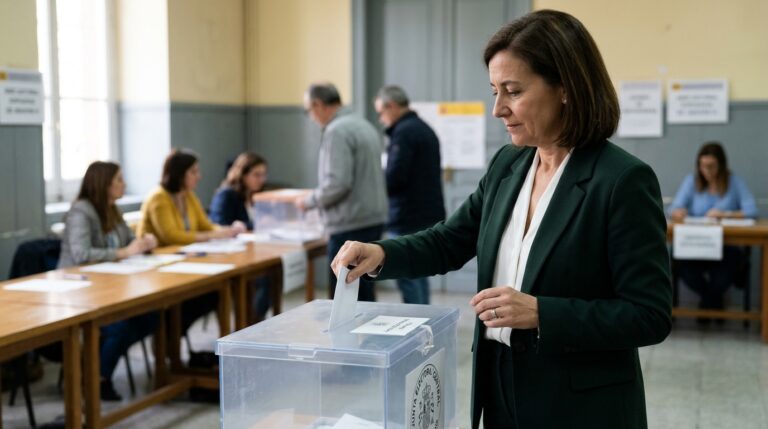
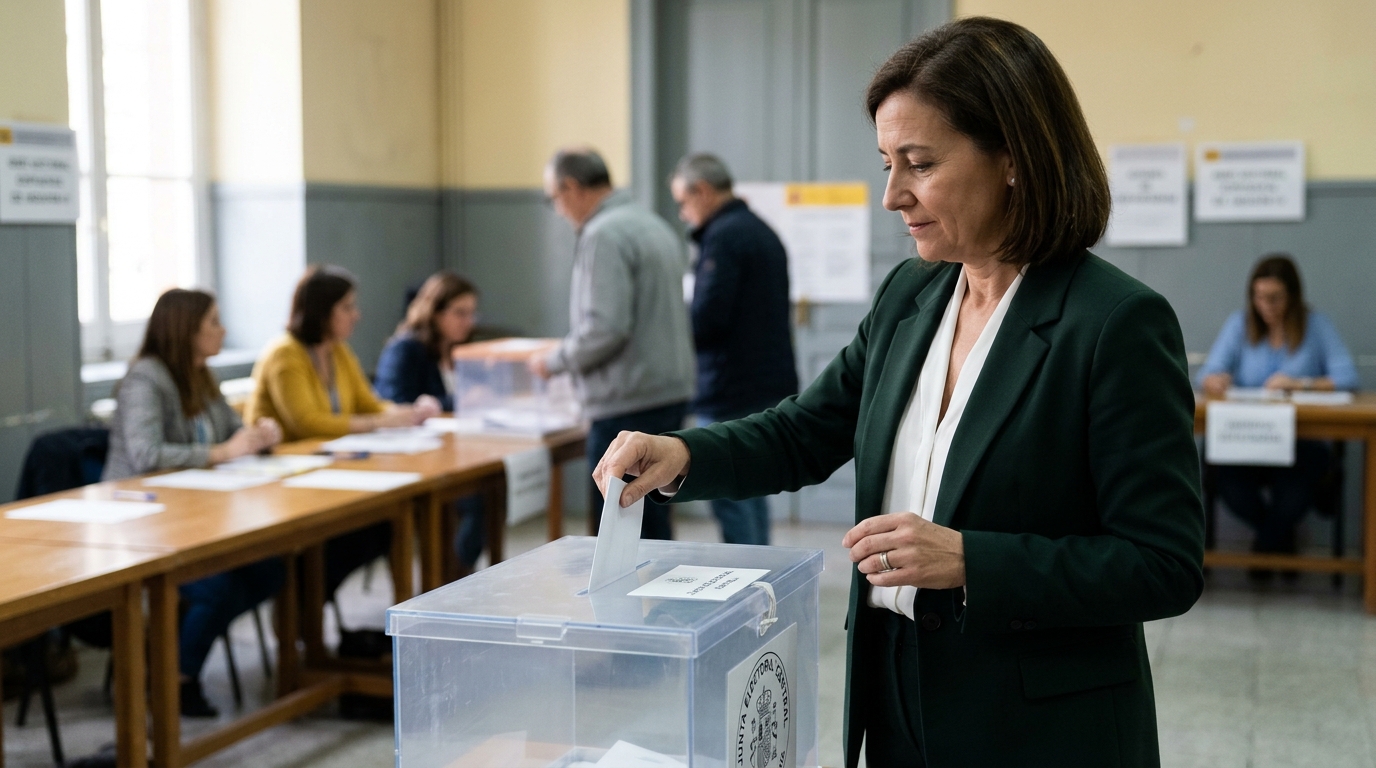
Spain goes to the polls on 29 November, and the result matters to traders well beyond Madrid. Prime Minister Pedro Sánchez called the snap election last month, aiming to frame the contest around housing affordability. The polls have been consistent for weeks. Politico’s Poll of Polls puts PP at 31%, PSOE at 29%, and Vox at 18%.
The base case is a right-wing win. But base cases don’t pay. What matters is what a PP-Vox government actually changes, what gets priced in Monday morning versus what was already priced in Thursday, and how much of either scenario is already baked into the IBEX 35 at current levels.
The Windfall Levy: Everything on the Table
The most direct market catalyst is the bank tax. Reuters reported on 21 November that Sánchez said his government would extend the banking levy through 2027 to fund housing policies. Reuters later reported on 24 November that the government approved a one-year extension expected to raise about €1.4 billion for housing measures.
Under the framework Reuters described, the levy ranges from 1% to 7% of lenders’ net interest income and commissions, depending on volumes, replacing the previous fixed rate of 4.8%. The highest rate applies to lenders generating more than €5 billion annually in the relevant income measure, which mainly affects Banco Santander, BBVA, and CaixaBank.
The extension is a lame-duck move: it still faces a parliamentary standing-committee step while there is no full legislature in place, and a new government formed after the vote could change course. PP leader Feijóo has previously promised to amend the bank taxes. Lower taxes would lift profits at Santander, BBVA, CaixaBank, and Banco Sabadell, which carry heavy weight in the index.
European bank policy risk is not confined to Spain. Italian bank consolidation shows how quickly regulatory and political shifts can reprice the entire southern European financials complex.
CaixaBank, Sabadell, and Unicaja are frequently cited as more exposed to domestic policy shifts because of their higher Spain concentration, while Santander and BBVA are typically framed as more insulated due to their international diversification.
Priced In, But Not Fully
The IBEX 35 heads into the vote as one of this year’s top performers among major markets in Europe and on track for another annual gain. Because the polls have been so consistent, much of the headline result is already priced in. The edge lies in the details of the policy that follows.
That is the critical distinction. A PP-Vox victory that delivers a clean majority delivers one market outcome. A hung result, a coalition that falls short of 176 seats, or a narrower-than-expected margin delivers another entirely. Taxes and regulation are where the election could have the biggest impact on domestically focused stocks. On utilities: a PP-Vox coalition could prioritize extending the lives of Spain’s nuclear plants, and strategists have argued that clearer nuclear policy and looser regulation could benefit Iberdrola and Endesa.
Options Framework: The Weekend Gap Problem
This is not about being bullish or bearish on Spain. It is about the structure of the risk. Exit polls begin at 20:00 CET Sunday. Most votes are expected to be counted by 22:30 CET, with the seat distribution settled before midnight. European equities open Monday morning. The IBEX 35 prints its gap before New York wakes up. Options held through Friday’s close are the only instrument that can define that gap risk in advance.
For traders expecting a clean PP-Vox majority and bank levy relief, a defined-risk bull structure on CaixaBank or a call spread on the IBEX 35 itself captures the upside scenario while capping the cost of a poll miss. If you believe the consensus is correct but want to avoid unlimited downside on a surprise left-bloc outcome, a long call spread expiring in the first week of December limits loss to premium paid.
For traders expecting volatility without directional conviction, a long strangle on Santander or BBVA ahead of Monday’s open reflects the binary nature of the gap: a clean right-wing majority rallies the banks; a hung parliament, or Sánchez holding on through a fragmented result, compresses or reverses the pre-election move. Either direction can be large.
Risk Analysis
The principal risk is a result that lands between the base cases. Polls have been consistent, but the state-run CIS poll has been a notable outlier and has shown the right-bloc short of the 176-seat majority line. An underperformance at Vox, or regional party dynamics that complicate coalition arithmetic, could leave PP short of a working majority and force prolonged negotiations. That outcome would not unwind the pre-election bank rally cleanly; it would leave levies in regulatory limbo, which is itself a drag on earnings visibility.
Action Checklist
- Know your gap: IBEX 35 results land Sunday night. Undefined equity positions in Santander, BBVA, CaixaBank, or Iberdrola carry unhedged binary risk through the weekend close.
- Bull case (clean PP-Vox majority): defined-risk call spread on CaixaBank or IBEX 35 December expiry; targets the levy removal and nuclear policy tailwind for Iberdrola.
- Bear case (hung parliament or coalition miss): long puts or put spreads on the IBEX 35; the index has run hard into the vote and a messy result has no priced-in cushion.
- Neutral case (result in line, reaction muted): short strangle post-gap captures the vol crush after the binary resolves, but only after the gap itself is confirmed.
- Watch the yield spread: the Spanish-German 10-year gap is a secondary signal. A wider spread on Monday signals bond market skepticism of the new government’s fiscal path, regardless of what equities initially do.