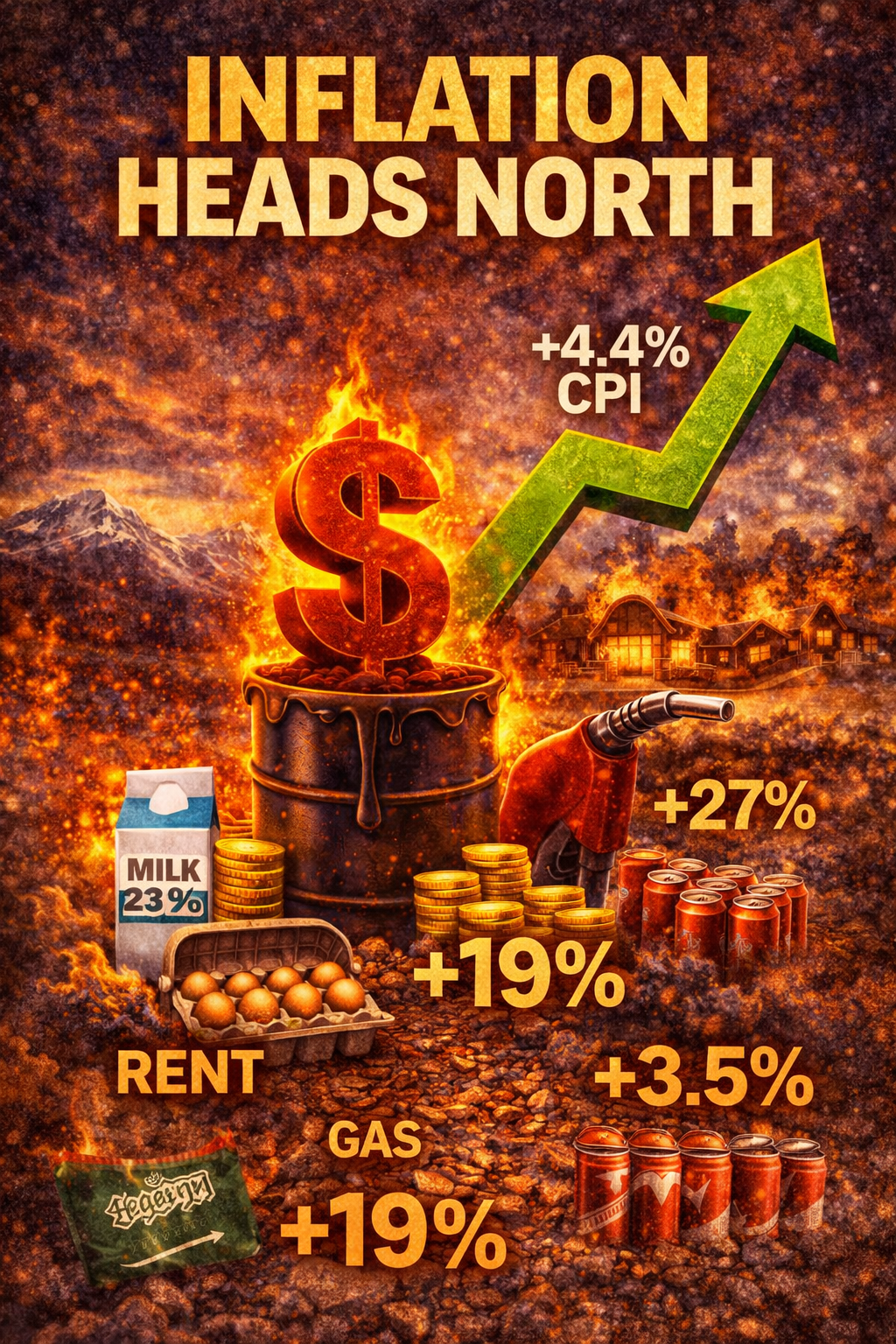
As the U.S. Israeli/Iranian conflict intensifies, with the closing of the Strait of Hormuz, and the continuing of Iran’s launching of missiles and drones to neighboring countries, the U.S. is preparing to increase forces including ground personnel involving the U.S. marines. President Trump has requested NATO members to contribute to the protection of tankers moving through the Strait. For the third week in a row markets have retracted, losing ground. Investor apprehension over the Middle East Conflict, continuing AI disruption concerns, plus the reversing trend of inflation have ‘strangled’ the U.S. investor as indexes have shown. All three declined Friday with Dow Jones falling 119 points while the S&P 500 and the tech-heavy Nasdaq Composite dropping 0.6% and 0.9% respectively. The GDP report released by the Commerce Department for the 4th quarter was lower, “0.7% or half of the 1.4% reported last month,” another drag on the market. Oil, a critical economic driver, again surged, up 11% to $103.14 a barrel for benchmark while West Texas Crude rose 8.6% to $98.71 at week’s closing. The 10-year Treasury note, which is a good barometer of borrowing costs “across the economy“ bumped up to 4.284%. across the economy.”
Monday’s oil prices cooled and the markets took a breather as investors and traders left the sidelines. The indexes turned positive as all three were up near 1% with Dow Jones Industrial Average adding 388 points. According to the Wall Street Journal “investors were relieved and happy “that Friday’s roller-coaster market” finished positive. “When you’re in this sort of news cycle, a Friday like the one we just had is likely to be a selling day,” said Jim Lebenthal, chief equity strategist at Cerity Partners. “Those worst fears from Friday did not come to pass,” he added. According to TradeWeb, record capital has flowed into the bond markets since the Iranian war started with the 10-year Treasury note firm at 4.19%.
Brent Crude continued to climb, up 3.2% Tuesday to another record of $103.42 a barrel. The indexes struggled as investors worried over the long-term impact of the war and the ultimate settling of oil prices. The Dow Jones added 48 points while the S&P 500 and Nasdaq were up 0.2% and 0.5% respectively. Fuel tanker traffic through the Strait of Hormuz is at a standstill, as Iran has pledged to attack any ship attempting to traverse the narrow channel. President Trump said he “wants to ramp up protection for all tankers,” and as previously noted, asked leading nations to participate with warships. Most all have declined, with France indicating it will assist with several warships.
The Federal Reserve on Wednesday said they will “stand pat,” not raising the interest rate. Governors voted 11–1 to hold the current “benchmark federal–funds rate in a range between 3.5% and 3.75%. The Federal Reserve Board is split 7–7 on whether to cut this year. The Wall Street Journal had anticipated a “no cut” decision, heavily influenced by the on-going war in the Middle East. Powell stated: “the implications of developments in the Middle East for the U.S. economy are uncertain.” With the Fed’s decision not to cut and new inflationary trends Wednesday’s market finally subscribed to the bad news. The Dow Jones Industrial Average fell 768 points, while the S&P 500 and tech heavy Nasdaq fell 1.4% and 1.6% respectively. “Investors are worn down by getting whipped–sawed,” said Michael O’Rourke, chief market strategist at JonesTrading. “A lot of the narratives we started the year with have started to unravel.”
RUMBLINGS ON THE STREET
Jim Ritterbusch, President of oil–advisory firm Ritterbusch, WSJ – “We are viewing this hypervolatility as but another sign that this price advance is far from completion.”
Ryan Weldon, Portfolio Manager at IFM Investors, WSJ – “The conflict in the Middle East is not going to be easily resolved. Even if we get down to $70.00 or $80.00 a barrel through the first half of 2026, that impact is still going to continue to reverberate in the economy.”
Josh Chastant, Portfolio manager of public investments at GuideStone Funds, WSJ – “There’s no picnic in the equity markets. There’s no picnic in the credit markets. Generally that’s a pretty good sign of just a modest price resetting.”
About the Author