April 3, 2026
The “Gigafactory” of Space
Blue Origin Filed for 51,600 Satellites. One Assembly Line Is Already Running.
The “Gigafactory” of Space
Most investors are watching the rockets. The smarter money is watching the factory floor.
On March 19, 2026, Blue Origin filed an application with the Federal Communications Commission to deploy up to 51,600 satellites under a program called Project Sunrise. The stated mission: build a constellation of orbital data centers powered by always-on solar energy, designed to offload AI compute workloads from terrestrial infrastructure. Jeff Bezos is not pitching broadband. He is pitching the cloud — from space.
This is not a moonshot press release. This is a regulatory filing. And inside that filing is an industrial supply chain problem that most readers are not talking about — but one company already quietly solved it.
Pre-IPO Access to America’s Top AI Defense Startup – for $50.
No waiting lists. No special status.
Just one 4-letter ticker that gives you a seat at the table.
The Scale Problem Nobody Is Talking About
Blue Origin’s Project Sunrise calls for a constellation operating in sun-synchronous orbits ranging from 500 to 1,800 kilometers in altitude, with each orbital plane containing between 300 and 1,000 satellites. The company envisions the system functioning as a distributed data center environment in orbit — providing compute capacity for AI workloads while bypassing the land, water, and grid constraints facing terrestrial facilities.
That vision is ambitious. The manufacturing requirement behind it is staggering.
51,600 satellites. Even spread across a decade, that is roughly 100 satellites per week. No organization on Earth has ever attempted sustained production at that cadence. The hardware is not the hard part. The factory is.
This is exactly where the narrative shifts — from Blue Origin’s ambition to the industrial infrastructure required to make it physical. And that infrastructure already exists, now operating under the roof of one of the largest defense primes in the world.
The Assembly Line That Was Already Running
Terran Orbital — formerly NYSE: LLAP, now operating as Terran Orbital, a Lockheed Martin Company — was already the most credible high-rate satellite bus manufacturer in the U.S. commercial market before Bezos filed a single page with the FCC.
In September 2023, the company officially opened a 60,000-square-foot factory addition in Irvine, California — purpose-built for serial production. That expansion brought the total Irvine manufacturing complex to approximately 98,000 square feet and doubled monthly satellite output from an estimated 10 units per month to more than 20 per month. The facility houses two advanced Printed Circuit Board Assembly lines, a Thermal Vacuum chamber, a wire harness facility, and automated module testing infrastructure. This is not a prototype lab. This is a production line.
The track record behind it is equally concrete. Terran Orbital manufactured satellite buses for Lockheed Martin’s work on the Space Development Agency’s Tranche 0 Transport Layer — 10 buses delivered and deployed. It then moved into active production of 42 buses for the Tranche 1 Transport Layer and was awarded a contract for 36 buses for the Tranche 2 Beta constellation. In parallel, its Tyvak subsidiary was awarded a $254 million prototype agreement for T2TL Gamma satellites. This is not a company that talks about mass production. This is a company that practices it.
“This latest expansion amplifies our ability to produce satellites at scale. We look forward to helping produce the thousands of satellites expected to launch into orbit over the next 10 years.” — William Beck, SVP of Infrastructure, Terran Orbital
Iran War Shock: What I Was Told In That Private Meeting
On January 7th… just outside Washington, D.C… I sat across from a man whose family has been tied to global power for decades.
Oil deals. Intelligence circles. Government insiders.
He leaned in and told me something that changed everything I thought I knew about the Iran war.
What you’re seeing on the news? It’s not the real story.
The strikes… the chaos… the escalation…It’s all part of something much bigger.
And the only reason I know this is because of him – an anonymous contact who risked everything to pass this information along.
The Lockheed Martin Consolidation — And What It Actually Means
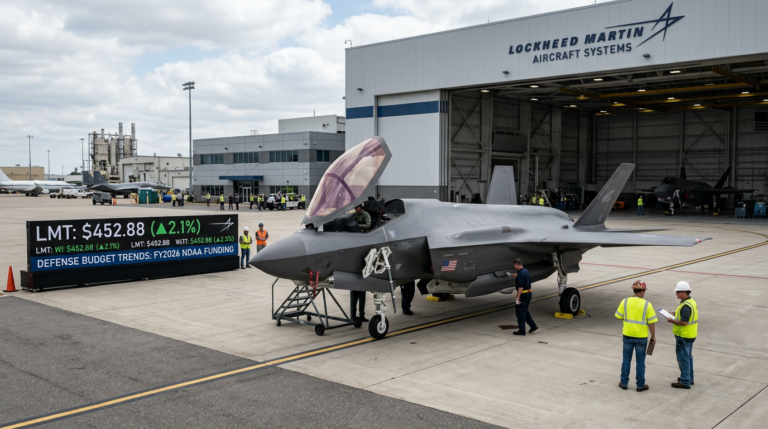
In August 2024, Lockheed Martin announced a definitive agreement to acquire Terran Orbital for an enterprise value of approximately $450 million. The deal closed October 30, 2024. Terran Orbital’s public ticker, LLAP, no longer trades.
On the surface, this looks like a prime absorbing a struggling supplier. Read the structure more carefully and a different picture emerges. Lockheed Martin was already Terran Orbital’s largest customer, representing approximately 71% of the company’s revenue in the first half of 2024. Terran had already become, in practical terms, a captive manufacturing arm of Lockheed’s Space division. The acquisition formalized a relationship that had functioned like a vertical integration play for years.
Critically, Terran Orbital was explicitly designated to remain a merchant supplier to the broader industry following the close — meaning it continues to take commercial contracts outside the Lockheed umbrella. That merchant status is the operative detail. It keeps Terran Orbital eligible to supply satellite buses to any future prime contractor ecosystem, including whatever supply chain Blue Origin eventually assembles around Project Sunrise.
The Structural Thesis: Supply Chain Before Constellation
The conventional narrative on space investing centers on the operators — the companies launching and operating constellations. That framing captures the upside story but misses the industrial reality. Before any satellite reaches orbit, it requires a bus: the structural, power, and communications backbone onto which mission payloads are integrated.
Blue Origin has filed for 51,600 satellites. It has flown its New Glenn rocket twice. It has not launched a single TeraWave or Project Sunrise satellite. The gap between the FCC filing and first hardware in orbit is measured in years — and in factories.
The analogy is direct: if Blue Origin is the Amazon of space infrastructure, the entity holding its manufacturing supply chain is its Foxconn. Terran Orbital — now inside Lockheed Martin — is the only organization in the U.S. commercial market that has demonstrated robotic, modular, high-rate satellite bus production at scale, with flight heritage across multiple government constellations. The buildout is already paid for. The workers are already trained. The throughput is already proven.
Can you really make money trading 1 hour each day?
My top income trading expert, Dave Aquino, just released a 1-hour trading strategy designed specifically to help regular investors generate enough income to become financially independent…
Without taking on excessive amounts of risk.
I’m talking about having the opportunity to collect $500 on Monday…
$563 on Wednesday…
Then as much as $625 on Friday.
Week in. And week out.
Key Facts to Watch
- Project Sunrise Scale: Blue Origin filed with the FCC for up to 51,600 satellites in sun-synchronous orbit, with each orbital plane housing 300–1,000 satellites. Operational data centers in space targeting AI compute offload.
- Terran Orbital Production Capacity: The Irvine complex hit 98,000 sq ft post-expansion, targeting 20+ satellite buses per month — the highest-rate commercial smallsat production footprint in the U.S.
- Proven SDA Track Record: 10 buses delivered for Tranche 0, 42 in production for Tranche 1, 36 awarded for Tranche 2 Beta, plus a $254M contract for T2TL Gamma — all under Lockheed Martin’s prime contract umbrella.
- Merchant Supplier Status: Post-acquisition, Terran Orbital remains open to commercial contracts outside Lockheed Martin — a structural door left open for future Blue Origin or third-party constellation supply agreements.
- The Lockheed Martin Angle (NYSE: LMT): With LLAP no longer publicly traded, the direct exposure to this manufacturing thesis runs through Lockheed Martin’s Space segment, which now owns the only operating high-rate satellite bus production line in U.S. commercial aerospace.
- Amazon Leo Parallel: Amazon’s own Kuiper/Leo program has hundreds of flight-qualified satellites waiting on launch capacity as of early 2026 — proof that manufacturing velocity already outpaces launch infrastructure. Demand for bus production is not a future problem. It is a current one.
The Forward Outlook
Project Sunrise is years from first launch. Regulatory approvals, ITU filings, and New Glenn launch cadence build-out all sit between the FCC application and a functioning orbital data center. Blue Origin has flagged openly that it is seeking waivers on deployment timeline requirements precisely because it understands the manufacturing and launch ramp ahead of it.
But the supply chain thesis does not require Project Sunrise to succeed on its original timeline. It only requires that the demand for high-rate satellite bus production continues to accelerate — from SDA, from Amazon Leo, from Starcloud, from every commercial LEO constellation still in regulatory pipeline. That demand is already documented, contracted, and funded.
Markets don’t need Project Sunrise to launch next year. They only need one factory already running at scale. That factory exists. And as of October 30, 2024, it belongs to Lockheed Martin.
Revealed: Musk’s “Hidden Supplier” For SpaceX
Musk’s SpaceX is now valued at $1.75 trillion…
But the company’s “hidden supplier” is trading around $33, is set to deliver 6.8 million chips DAILY to SpaceX, and is essential for Musk’s new “Orbital AI” breakthrough.
This editorial is provided for informational and analytical purposes only. It does not constitute financial advice, a solicitation, or a recommendation to buy or sell any security. All investments carry risk. Conduct your own due diligence before making any investment decision.
— The Editorial Desk
About the Author