April 4, 2026
The Invisible Frontline
3 Rising-Star Tech Stocks Defending the U.S. Power Grid This Weekend
No. 1 Stock to Buy for THIS MONDAY
Heads up: Tim Bohen’s new algorithm just uncovered a dirt-cheap stock that could DOUBLE or MORE this coming Monday. This powerful algo has already identified Monday moves of 149%, 190%, and even a whopping 536%…
Click here to see how to get positioned ahead of this Monday’s setup!
Before the first missile is ever launched, the war has already started. You just can’t see it.
In the last 48 hours, as headlines fixated on Iran-Israel tensions and the language of physical escalation, something far quieter — and potentially far more consequential — was happening inside the infrastructure that powers American cities. Cybersecurity firms monitoring state-sponsored threat actors reported a 400% surge in coordinated “pinging” attempts against U.S. utility grids. Not random. Not criminal. Surgical. Methodical. And timed precisely to a moment of geopolitical distraction.
This is the silent war. And it runs parallel to every physical conflict on the planet.
The 2026 Doctrine of War Has Already Arrived Early
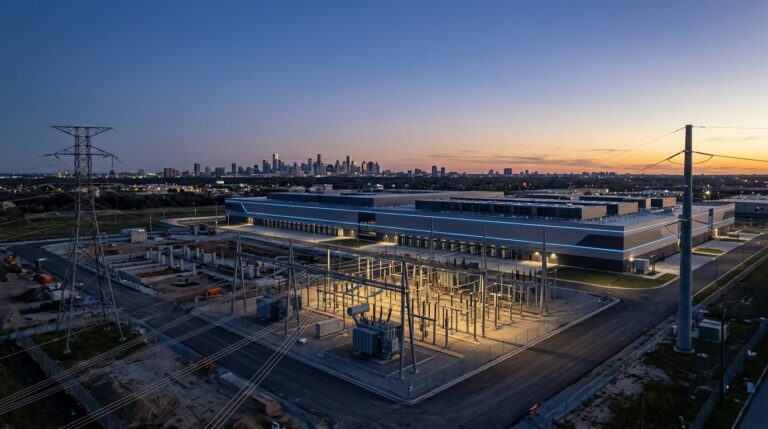
Military strategists have long theorized that the opening move of the next major conflict won’t look like anything we’ve seen before. No D-Day. No Shock and Awe. The first “shot” will be a line of code — executed quietly, deep inside a power substation, a water treatment protocol, or a hospital network — designed to create civilian chaos before a single uniformed soldier moves.
That theory is no longer theoretical. Ukraine’s power grid was struck by Russian cyberattackers in December 2015, plunging over 200,000 people into darkness. Saudi Arabia’s Aramco facilities were penetrated. U.S. water treatment plants in Florida were compromised. Colonial Pipeline went offline for six days in 2021, triggering a fuel panic across the Eastern Seaboard.
None of those required a missile. Every single one required a keyboard.
“In 2026, the companies defending the digital perimeter are just as strategically critical as the companies building the physical weapons. The difference is the market hasn’t fully priced that in — yet.”
Futurist Eric Fry says it will be a “Season of Surge” for these three stocks
One company to replace Amazon… another to rival Tesla… and a third to upset Nvidia. These little-known stocks are poised to overtake the three reigning tech darlings in a move that could completely reorder the top dogs of the stock market. Eric Fry gives away names, tickers and full analysis in this first-ever free broadcast.
The Two Names That Keep Appearing at the Center of Every Grid Defense Contract
When the Department of Energy, CISA, or the NSA needs a private-sector partner to monitor and respond to critical infrastructure threats, two names appear on the short list with remarkable consistency: CrowdStrike (CRWD) and Palo Alto Networks (PANW).
These are not speculative bets. They are operational infrastructure.
CrowdStrike (CRWD) — The Threat Intelligence Engine
CrowdStrike’s Falcon platform doesn’t just detect threats — it maps adversary behavior across millions of endpoints simultaneously, building a real-time picture of who is attacking, how they’re moving, and where they’re headed next. The company’s Adversary Intelligence unit maintains active dossiers on over 215 named nation-state threat actors, including groups directly linked to Iranian and Chinese state operations.
- Fiscal 2024 revenue: $3.06 billion — up 36% year-over-year
- Annual Recurring Revenue (ARR): $3.65 billion as of last quarter
- Government segment growth outpacing commercial: federal contract expansion accelerating
- Falcon Go and Falcon Complete positioned directly inside utility and energy sector deployments
- Free cash flow margin expanding: now above 30% — a profitability inflection most missed
This is not about whether CrowdStrike wins the next earnings print. It’s about whether the geopolitical environment forces a re-rating of what “essential” means in the defense stack. Every grid-pinging event that makes a headline is, functionally, a marketing event for Falcon.
Palo Alto Networks (PANW) — The Perimeter That Never Sleeps
Where CrowdStrike operates on the detection and response layer, Palo Alto Networks has built the wall itself. Its Next-Generation Firewall architecture and Prisma SASE platform are embedded in over 80,000 enterprise and government customers globally. When CISA published its emergency directives following the Volt Typhoon intrusions — a Chinese state-sponsored campaign specifically targeting U.S. power and water infrastructure — PANW was a named solution provider in the mitigation response.
- Fiscal 2024 revenue: $7.98 billion — up 16% year-over-year
- Next-generation security ARR: $4.22 billion — growing at 43%
- “Platformization” strategy converting point-solution customers into full-suite contracts
- Operating income turning decisively positive after years of growth-first investment
- OT (Operational Technology) security — protecting physical plant control systems — is now a dedicated revenue line
The OT security designation matters here specifically. Operational Technology is the software layer that tells a water pump to run, a substation to switch, or a gas valve to open. It was historically air-gapped — physically disconnected from the internet. That era ended. These systems are now networked, and PANW is one of the few scaled vendors with purpose-built OT protection deployed at grid operators.
If I Only Taught One Strategy: Expert Reveals Retirement Hack
A comfortable retirement may seem increasingly out of reach, but investing expert Dave Aquino says that just one simple strategy is turning even his novice students into profitable investors.
In his free guide, “How To Master The Retirement Trade”, Aquino reveals the little known strategy to…
The Third Name the Market Isn’t Watching Closely Enough
Beyond CRWD and PANW, one name sits in the operational technology and industrial control system (ICS) security space with considerably less analyst coverage and considerably more embedded government exposure: Dragos Inc. — currently private, but watch for IPO signals — and its publicly traded proxy exposure through Claroty-adjacent plays and Tenable Holdings (TENB).
Tenable’s vulnerability management platform is specifically deployed across federal civilian agencies under a CISA mandate. When grid operators need to know which of their exposed surfaces a state-sponsored actor is most likely to probe first, Tenable’s exposure intelligence is frequently the answer. Revenue run rate approaching $900 million, with federal segment growth accelerating in each of the last three quarters.
What the 400% Spike Actually Signals
A 400% spike in grid-directed pinging attempts is not background noise. Pinging — the act of probing an IP address to map its responsiveness and identify open ports — is reconnaissance. It is the digital equivalent of a scout studying a fortification before an assault. You don’t spike 400% because you’re curious. You spike 400% because something specific is being planned or coordinated.
The timing, layered on top of the Iran-Israel escalation cycle, follows a pattern that cybersecurity analysts have documented across multiple prior geopolitical events. When state-level tensions rise, affiliated threat actors increase their pre-positioning activity — mapping vulnerabilities, testing access pathways, and identifying targets — even when no immediate strike is authorized. They are getting ready. That preparation phase is precisely when detection platforms earn their keep.
The Framework: How to Think About Positioning
This is not a trade built on fear. It is a trade built on structural demand that was already in place — and that geopolitical events accelerate rather than create. The demand for cybersecurity at the critical infrastructure level is a multi-year, federally mandated, contractually embedded revenue stream. The geopolitical catalyst doesn’t manufacture that demand. It simply makes it visible to investors who weren’t paying attention.
- Bull case: Geopolitical escalation drives emergency procurement cycles, accelerating federal contract timelines for CRWD and PANW by 6-12 months
- Bear case: De-escalation removes the urgency narrative; both names trade back to valuation-driven pressure given elevated forward multiples
- Neutral case: Structural federal cybersecurity mandates (CISA, EO 14028) underpin baseline revenue growth regardless of headline risk — these companies grow in any scenario, the question is magnitude and multiple
For traders operating in options, implied volatility in both CRWD and PANW has expanded meaningfully in the past two sessions. For those expecting continued geopolitical uncertainty, defined-risk structures — long calls or debit spreads — offer exposure to upside without carrying binary earnings risk. For those who believe de-escalation is the more likely near-term outcome, a neutral to mildly bearish posture via put spreads may offer a more disciplined framework.
In either scenario, the underlying business thesis is not in question. These companies are embedded in systems that cannot be unplugged.
Action Checklist
- Monitor CISA advisories and DHS threat bulletins this weekend — any named critical infrastructure advisory is a near-term catalyst for the sector
- Track CRWD and PANW relative strength vs. XLK (tech sector ETF) — divergence above the sector indicates institutional rotation into defense-cyber specifically
- Watch BUG ETF (Global X Cybersecurity ETF) for broad sector flow confirmation
- Note any congressional statements referencing “grid security” or “critical infrastructure” — they tend to precede emergency supplemental spending language
- For defined-risk exposure: evaluate CRWD and PANW call spreads 30-45 days out; assess current IV rank before sizing — high IV environments favor spread structures over outright longs
- For longer-duration thesis holders: TENB offers lower-multiple, higher-federal-exposure entry relative to CRWD and PANW at current prices
The missiles are visible. The code is not. But both are weapons — and only one of them has a publicly traded defense layer you can analyze, size, and own with defined risk. That asymmetry is the trade.
— The Editorial Desk
If You Think Oil Is Headed to $150… You Need to See This
Iran just shut down 20% of the world’s oil supply.
Prices are surging. And they may not stop anytime soon.
But while Wall Street panics, one analyst found an investment that could turn this crisis into a consistent income stream.
It’s been paying out for 137 years. Through every war. Every embargo. Every shock.
And it’s never been better positioned than right now.
About the Author