

May 14, 2026
RAD INTEL: More than 95% allocated.
FEATURED: AMD Hits $726B. What the Options Market Is Pricing Now

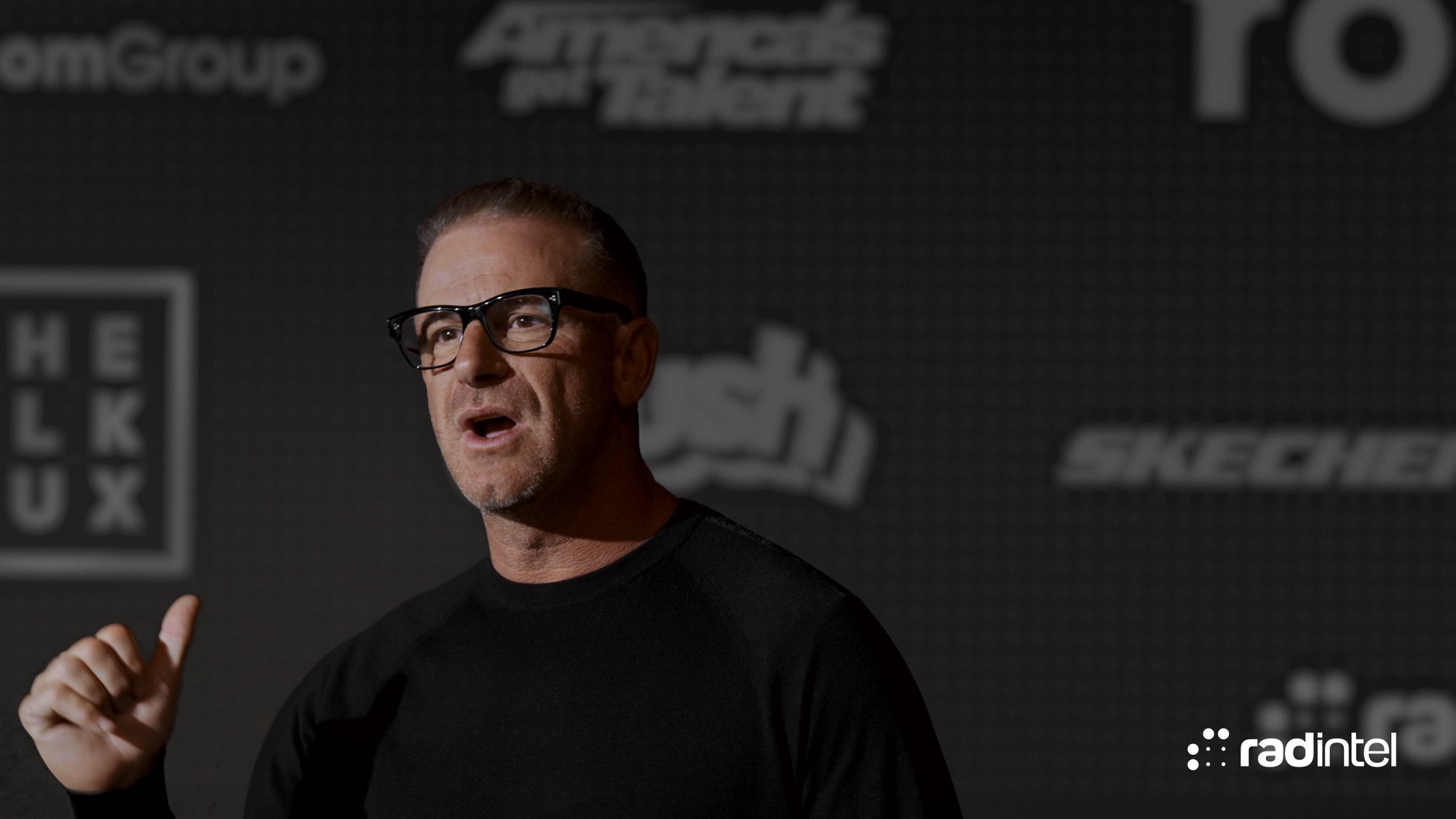
Jeremy Barnett, founder and CEO, RAD Intel
A note from the founder
More than 95% allocated. Why I’m asking you to act now.
There are three things I tell every investor who asks me, “why now?”
First, the AIBO Engine compounds.
Each new operating brand we run on the engine makes the next one cheaper to launch and faster to scale. That is the difference between a tool and a holding company. We chose the holding company.
Second, AI marketing is consolidating.
The creator economy alone saw 52 M&A deals in the first half of 2025, a 73% year-over-year increase. Larger firms are racing to acquire AI decision-layer infrastructure. We have spent five years building exactly that.
Third, this Reg A+ window does not reopen.
The round is more than 95% allocated. The remaining capacity can fill at any moment. There is no scheduled cutoff and no warning before it closes. Once filled, the current pricing tier is no longer available to new investors.
If you have been on the fence, this is the moment. Read the offering circular, weigh the risks, and make the call. There are 20,000+ shareholders here already. Whatever you decide, decide now.
Jeremy Barnett
Founder & CEO, RAD Intel
| Invest Before It Closes |
RAD Intel, Inc. is offering securities under Tier 2 of Regulation A+. The offering circular and risk factors are available at invest.radintel.ai. Investing in early-stage companies involves significant risk, including the loss of principal. Past performance does not predict future results. Brand references reflect factual platform use, not endorsement. Investor references reflect factual individual or institutional participation and do not imply endorsement or sponsorship by the referenced companies.
FEATURED
AMD Hits $726B. What the Options Market Is Pricing Now
A month ago, AMD was a chip company with a compelling AI argument. Today it’s a $726 billion company — and that number keeps moving. The stock has surged roughly 109% year-to-date through mid-May, hit an all-time high of $469.22, and is now one of the most actively traded names in the semiconductor sector. The iShares Semiconductor ETF (SOXX) is up over 71% YTD. That’s not a sector rotation. That’s a structural revaluation of what compute infrastructure is worth.
What changed? The short answer: AMD stopped being a story about potential and became a story about delivery. Q1 2026 results, reported May 5, made that case clearly. Let’s go through the actual numbers before anything else.
Revenue came in at $10.25 billion — up 38% year-over-year — against a Street consensus of $9.89 billion. Non-GAAP EPS was $1.37 versus the $1.29 estimate, a beat of roughly 6%. The Data Center segment generated $5.8 billion, up 57% year-over-year, driven by EPYC server CPU demand and the continued ramp of Instinct GPU shipments. Client business revenue was $2.9 billion, up 26%. Non-GAAP gross margin held at 55%. And the balance sheet got sharply stronger: free cash flow hit a record $2.566 billion for the quarter, with cash and short-term investments at $12.3 billion.
That’s a clean beat on every major line. But the beat wasn’t the story.
The Q2 guidance was. AMD guided for approximately $11.2 billion in revenue — representing 46% year-over-year growth and roughly 9% sequential growth at the midpoint. Street consensus heading into the print was closer to $10.5 billion. That $700 million gap between guidance and expectations is what accelerated the stock the day after results. Non-GAAP gross margin for Q2 is guided at approximately 56% — up 100 basis points sequentially — driven by higher server CPU sales. The Zacks consensus for Q2 EPS now sits at $1.60 per share, implying 234% growth year-over-year.
Slight tangent, but it matters: AMD also dramatically revised its total addressable market view for server CPUs. The company nearly doubled its prior forecast and now sees the server CPU market growing at over 35% annually, reaching $120 billion in revenue by 2030. That’s not a rounding error — that’s a fundamental change in how management is sizing the opportunity. AMD held 36% of the server CPU market in Q4 2025, up from 27% a year prior. Intel’s next-generation Xeon processor, Diamond Rapids, has been pushed to mid-2027. That’s a meaningful competitive window.
What the Options Market Is Actually Doing
Post-earnings implied volatility compression ran as expected. When a stock gaps 16% higher on results and the event uncertainty resolves, the IV premium evaporates quickly — that’s the standard dynamic, and it played out in AMD’s options in the sessions immediately after May 5.
What’s less standard is what happened after. IV rank on AMD was sitting near the 83rd percentile in the post-earnings sessions — elevated for a post-event environment. That reading tells you the options market is still pricing meaningful forward movement even after the earnings gap resolved. The gap between implied and realized volatility has widened: 20-day realized vol has compressed toward 10% annualized, while options pricing continues to reflect something materially higher. That structural divergence tends to favor premium sellers, at least until the next identifiable catalyst closes the window.
Put/call ratios across single-stock options shifted sharply in the days following the report — a broad repositioning that reflected improving sentiment, not just AMD-specific flow. AMD was the anchor of that move in the semiconductor complex.
One structural item worth flagging separately: AMD and Intel have announced collaboration on AI Compute Extensions — a new x86 instruction set targeting a 16x improvement in compute density. This doesn’t move August options pricing in any meaningful way, but it matters for the next four quarters of guidance conversations. The longer-term implication is that AMD is helping define the x86 AI compute standard, not just competing within it.
Structured Trade Framework
Bull case: For traders expecting continued momentum into the Q2 report on August 3–4, a defined-risk call spread targeting the $490–$540 range in the July or August expiry gives exposure to the next guidance cycle catalyst without open-ended risk. Data Center at $5.8 billion growing 57% YoY, server CPU share gains accelerating, and Helios rack systems targeting commercial availability in H2 2026 all support the underlying thesis. AMD’s AI accelerator business — anchored by the Meta deal (up to 6 gigawatts of Instinct GPU deployment, with the first gigawatt using a custom MI450-based chip) and OpenAI commitments — gives the bull case a revenue anchor that extends well beyond Q2. Analysts at Bank of America recently raised their price target to $500; Mizuho raised theirs to $515 with an Outperform rating.
Bear case: AMD has more than tripled over the past 12 months. At ~109% YTD with a $726 billion market cap and a forward P/E near 51x, the bar for the August print is high — and it rises every week the stock climbs. A few specific risks deserve attention. First, the MI450 GPU ramp is expected to pressure gross margins in H2 2026 as production scales. Management acknowledged this. Second, TSMC’s advanced packaging constraints (CoWoS capacity) could limit AMD’s ability to meet AI accelerator demand — estimates suggest a 15–20% shipment shortfall relative to potential demand if capacity doesn’t expand on schedule. Third, PC shipments are expected to soften in H2 due to elevated memory and component costs, which would weigh on client margins. If you believe forward estimates are already fully discounted in the current price, a put debit spread targeting a retest of the $380–$400 zone defines the risk clearly without the squeeze exposure of outright short positioning.
Neutral case: The wide gap between implied and realized volatility — IV rank near the 83rd percentile with 20-day realized running near 10% — creates a structurally interesting environment for iron condors or short strangles in AMD. The next major catalyst is the August 3–4 earnings date, providing roughly an 80-day window for range-bound premium collection with clearly defined wings. This is not a low-risk structure in a name with AMD’s beta (2.42 trailing), but the vol gap is real and measurable.
Risk Factors and Forward Signals
AMD delivered its fourth consecutive quarter of record server CPU revenues in Q1 2026, with server CPU sales growing over 50% year-over-year across both cloud and enterprise. That’s a durable trend. But durability and valuation are separate questions, and right now the stock is trading at a forward P/E near 51x on fiscal 2026 estimates of approximately $7.18 per share in earnings — a multiple that demands continued execution without deceleration.
The chip industry is also facing a global memory shortage driven by AI demand and supply chain constraints — a headwind that cuts both ways. It limits shipment volumes but also supports pricing power for those who can deliver. AMD’s Lisa Su addressed supply chain concerns directly on the Q1 call, noting the company is coordinating with partners to expand foundry and backend capacity. Whether that translates to on-schedule Helios deliveries in H2 2026 is the key operational question heading into the August print.
What to Watch Before August
- Helios rack system commercial availability timeline — AMD and AMD partners have confirmed H2 2026 targets; any slip matters for H2 revenue confidence
- MI450 gross margin impact — management guided that the MI450 ramp beginning in Q3 could pressure margin expansion; watch Q2 commentary for updated framing
- Server CPU market share trajectory — AMD held 36% in Q4 2025, up from 27% YoY; the Venice CPU launch into an Intel Diamond Rapids void is the 2H opportunity
- TSMC CoWoS packaging capacity — constrains Instinct GPU shipment volumes; any update from TSMC’s earnings or AMD management is a direct read-through
- AI Compute Extensions (x86 / Intel collaboration) — product timeline and enterprise adoption signals will shape the longer-term CPU TAM conversation
- Q2 revenue delivery vs. the $11.2B guide on August 3–4 — the single most important data point for the next options cycle
AMD has confirmed management expects tens of billions in annual Data Center AI revenue in 2027. The market is pricing some version of that already. What the next 80 days will actually reveal is whether Q2 execution — the first full quarter after the blowout — narrows or widens the gap between what the stock implies and what the financials deliver. That’s the tension options traders are sitting with right now. Not whether the AI infrastructure cycle is real. It clearly is. The question is how much of the next two years of earnings is already in the price today.
About the Author