
May 17, 2026
The catch about my 9:30 AM strategy
Featured: Lemonade Is Quietly Reinventing Insurance From the Ground Up
Hey,
I have been getting a lot of the same question lately:
“Thomas, if this strategy is so good, why are you giving the guide away for free?”
It is a fair question. Especially in an industry where every “free” offer is usually just a Trojan horse for a $2,000 upsell or a 90-minute webinar you have to sit through.
So here is my honest answer.
I have been trading professionally for years. I have seen talented people blow up their accounts because they were following overly complicated systems sold to them by people who do not actually trade.
It bothers me. A lot.
The “Opening Bell Breakout” is the simplest, most repeatable strategy I have ever used.
It takes about 30 minutes a day.
It does not require expensive software.
And it has produced gains like 113% on GOOGL and 240% on META.
I put it into a free guide because I genuinely believe that if you see how it works, you will understand the kind of real, actionable trading education we provide at Base Camp Trading.
And maybe down the road, you will want to learn more from us.
But that is entirely up to you. There is no pressure. No auto-billing. Just the strategy, explained clearly, in a guide you can read in 10 minutes.
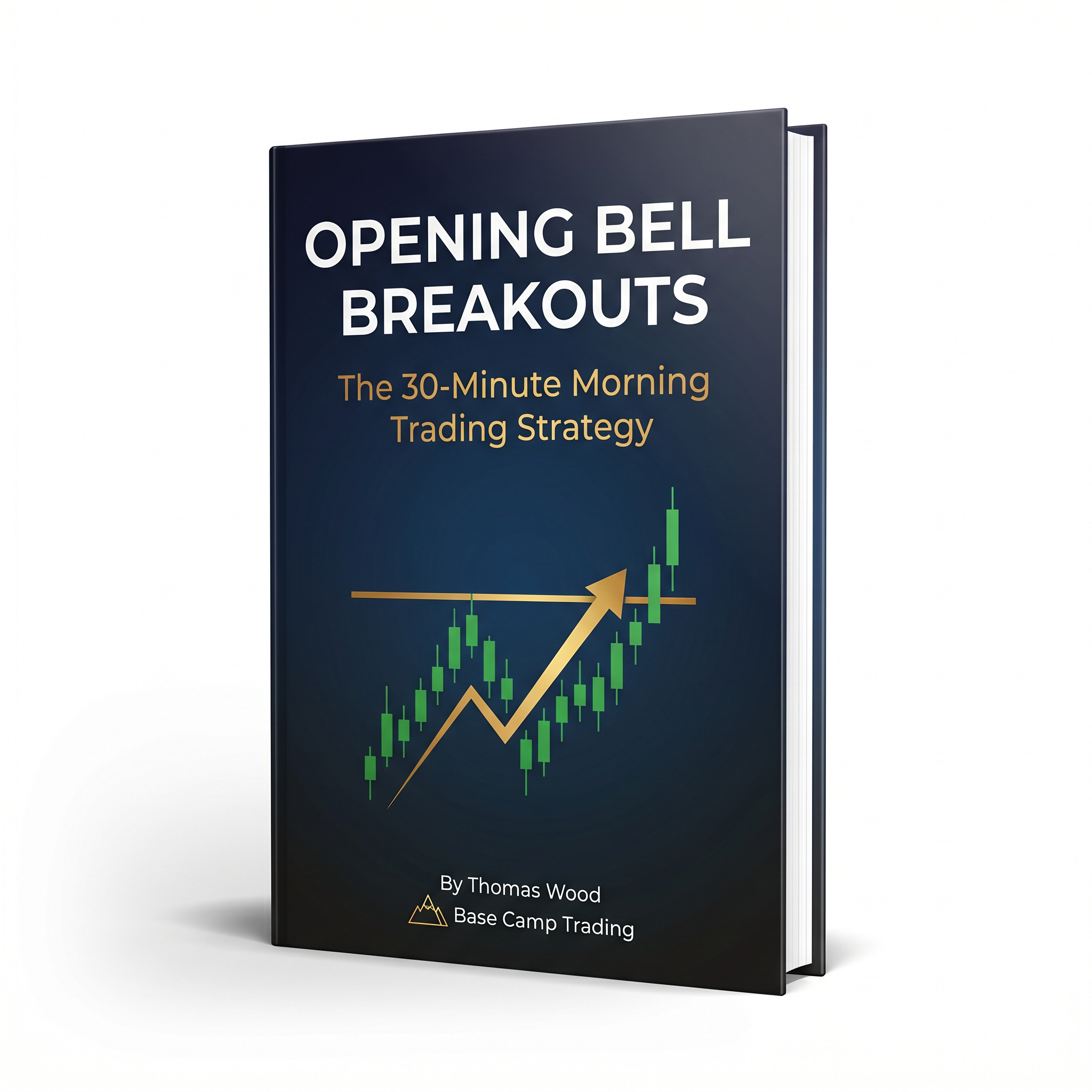
| Download the FREE Opening Bell Breakouts Guide |
If you have been burned before by “free” offers that were anything but, I understand. All I am asking is that you give this one a look.
Thomas Wood
Pro Trader, Base Camp Trading
FEATURED
Lemonade Is Quietly Reinventing Insurance From the Ground Up
Insurance is not an industry people get excited about. That’s exactly the point.
Lemonade (NYSE: LMND) beat Q1 estimates, grew revenue 71% year-over-year, raised full-year guidance – and the stock dropped 15% in a single session. That kind of reaction is worth slowing down on.
Quick Hit
- Q1 revenue: $258M – up 71% YoY, beat estimates by 2.6%
- Gross profit up 159% to $100M – margin expanded to 39%
- Adj. EBITDA loss narrowed 64% YoY to just $17.1M
- In-force premium: $1.33B – 10th consecutive quarter of acceleration
- FY2026 guidance raised: $1.20B revenue, $1.63–$1.64B IFP
- EBITDA breakeven still on track for Q4 2026
- Stock trading ~$51 – down from 52-week high of $99.90
- Q2 results expected August 5, 2026
Make this trade on Monday
20-year trading veteran Tim Bohen just identified a dirt-cheap stock that could soar 100% or MORE this coming Monday…
Click here for the full details on this urgent opportunity now.
What the Numbers Actually Say
Lemonade has spent a decade building something the traditional insurance world cannot easily copy – a fully AI-native platform that writes policies in under 90 seconds and settles claims in as little as three seconds. No phone calls. No waiting periods. A model that compounds efficiency the bigger it gets.
Q1 followed a strong Q4 2025 where revenue hit $228.1 million – a 53% jump year-over-year – and gross loss ratio touched a record low of 52%. Net loss in Q1 improved to $35.8 million from $62.4 million a year earlier. None of those moves are incremental. They’re operating leverage showing up on the income statement, quarter after quarter.
In-force premium reached $1.33 billion, up 32% year-over-year. That’s the tenth consecutive quarter of IFP acceleration. Customer count hit 3.14 million, up 23%, with 158,000 new customers added in Q1 alone. For the full year, management raised guidance to $1.20 billion in revenue with projected IFP of $1.63–$1.64 billion.
One number that gets overlooked: Lemonade now generates over $1 million in in-force premium per employee – a nearly 3x improvement over four years, putting them on rough parity with Progressive, Allstate, GEICO, and Travelers. A company that started writing renters policies out of a New York apartment is now running at the operational efficiency of industry titans.
The Products Getting Interesting
Pet insurance crossed $500 million in IFP early in Q2 – the first product in Lemonade’s portfolio to hit that mark, and now its largest line of business. Pet IFP grew 55% in 2025 against an industry average of 17%. That’s not a coincidence. That’s distribution advantage compounding over time.
Slight tangent, but it matters: most people still think of Lemonade as a renters insurance company. Pet and car together are quietly changing that.
The more intriguing product right now is autonomous car insurance. Launched in January 2026 in partnership with Tesla, the offering prices FSD-engaged miles at roughly half the rate of human-driven miles – using Tesla’s Fleet API to distinguish autonomous driving from manual, mile by mile. Car IFP grew 60% year-over-year in Q1 2026. The gross loss ratio on the car product came in at 74% – still elevated, but moving in the right direction.
What’s interesting is Lemonade isn’t just selling insurance here – it’s building the pricing infrastructure for a world where AI drives the car. No traditional carrier has the tech stack to do that. Most of them are still on legacy platforms that don’t talk to each other.
How the Rich Retire
For decades, one type of investment was reserved for the ultra-wealthy. Then Trump signed Executive Order 14330 – and opened it to everyone. Now you can get into this boom for less than $20.
Where the Risks Actually Live
Here’s where it gets honest. Lemonade is still losing money. The adjusted EBITDA loss guidance for full-year 2026 sits at $47–$51 million. Stock-based compensation hit $21.2 million in Q1 alone – more than doubling year-over-year – and that will weigh on margins near term. Any underwriting deterioration from weather events or a spike in car claims can move the loss ratio in ways AI models don’t always anticipate fast enough.
The reinsurance transition is also worth watching. The ceding rate dropped from 55% to 30% in Q1, is expected to hit 25% in Q2, and normalize around 20% by Q3. Retaining more premium boosts revenue but also means absorbing more direct risk. That’s not necessarily a problem – it’s actually a sign of confidence in the underwriting model – but it adds volatility if claims spike unexpectedly.
The stock closed nearly 15% lower on the day Q1 results dropped, despite beating on both revenue and EPS. As of mid-May 2026, shares are trading around $51 – well off the 52-week high of $99.90. The company has also generated positive adjusted free cash flow in seven of the last eight quarters and ended Q1 with $1.14 billion in cash and investments. This is not a company running out of runway.
The Options Angle
Here’s where it gets more interesting for those who trade options. After a 15% single-session drop, implied volatility on LMND tends to stay elevated for a few weeks before compressing – which creates a window. A few approaches worth thinking through:
- Bullish thesis / longer timeline: A long call or bull call spread targeting a recovery toward the $65–$70 range by Q2 earnings (August 5) gives defined risk exposure to the EBITDA breakeven story without full equity downside. The $55 strike call expiring in August has been of interest given the stock’s proximity to that level.
- Neutral-to-bullish / income angle: Selling a cash-secured put at the $45 or $47.50 strike with an August expiration collects premium while setting an entry point at a level that represents meaningful support. If LMND holds above those strikes through Q2, you keep the premium. If it doesn’t, you’re buying shares at a price most long-term holders would consider attractive.
- Volatility play: If you think the post-earnings IV crush hasn’t fully played out yet, a short strangle or iron condor centered around $51 with strikes at roughly $42/$60 captures premium in a range-bound environment. The risk is a sharp move in either direction – which, given LMND’s history, is always possible.
- What to watch: The July 1 reinsurance renewal is the near-term catalyst most equity traders are ignoring. Any clarity on retention levels and premium economics could move the stock meaningfully before Q2 results even hit.
As always – these aren’t recommendations. They’re frameworks for thinking through position sizing and risk around a stock with a clear catalyst calendar and elevated vol.
The Bigger Picture
Over 5% of Lemonade customers now hold multiple policies, and that group accounts for nearly 20% of in-force premium. Cross-sell nearly doubled year-over-year per management. That’s a high-margin growth lever that doesn’t require much incremental marketing spend.
The path to a $10 billion IFP business over the next decade requires execution on autonomous vehicle expansion, cross-sell penetration, and AI-driven cost reduction. None of that is guaranteed. But the company has a consistent record of hitting the targets it sets publicly – EBITDA breakeven in Q4 2026 was first stated in 2022, and the model has tracked it closely ever since.
The market wants proof, not trajectory. Q2 results on August 5 will matter more than usual.
The Cheap Investor Scorecard – LMND
- IFP growth (target: 32% YoY) – Q1 2026: 32% YoY to $1.33B. On track.
- Revenue growth (target: 63% FY2026) – Q1 2026: 71% YoY. Ahead of pace.
- Gross profit margin (target: expanding) – Q1 2026: 39%, up from ~18% a year ago. Strong.
- Adj. EBITDA loss (target: positive Q4 2026) – Q1 loss of $17.1M, 64% narrower YoY. On pace.
- Gross loss ratio – Q1 2026: 62% (including 5% cat impact). Acceptable range.
- Car gross loss ratio – Q1 2026: 74%. Still elevated. Watch closely.
- Adj. free cash flow – Q1 2026: +$17M. Fourth consecutive positive quarter.
- IFP per employee – Surpassed $1M in Q1 2026. Nearly 3x improvement in four years.
- Customer count growth (target: 23%+ YoY) – Q1 2026: 23% YoY to 3.14M. On pace.
- Annual Dollar Retention (ADR) – 85%, stable sequentially. Needs to improve.
Bottom line: If Lemonade hits positive adjusted EBITDA in Q4 2026 and sustains 30%+ IFP growth into 2027, the current price doesn’t reflect the business they’re building. If the car loss ratio stays elevated and reinsurance risk creates surprises, the path gets bumpier. Q2 results on August 5 are the next real test. The July 1 reinsurance renewal is the one to watch before that.
– The Cheap Investor