May 19, 2026
Blackstone (BX): The Infrastructure Play Behind the AI Cloud Move
A $5 billion majority stake in a Google TPU venture isn’t a bet on AI. It’s a bet on what AI can’t run without.
First a note from i2i, llc
The Defense Choke Point Nobody Is Talking About
When defense budgets grow, most attention goes to big programs – aircraft, hypersonic missiles, and satellites. But history shows the real limits often appear elsewhere.
Testing, scheduling, and access determine how fast new systems actually reach the field. And right now, those systems are under strain.
As hypersonics and space technology move from research into deployment, infrastructure – not funding – is becoming the choke point.
That’s where a small, operational aerospace company is gaining relevance. Not by competing with defense giants, but by helping them move faster.
In every major build-out, the companies that remove bottlenecks often matter long before they become widely known.
Blackstone (BX): The Infrastructure Play Behind the AI Cloud Move
The market has been crowding the same AI trade for two years — chip names, hyperscalers, software wrappers. What Blackstone just announced is something different. Not a software play. Not a chip bet. A structural claim on the physical layer AI depends on entirely.
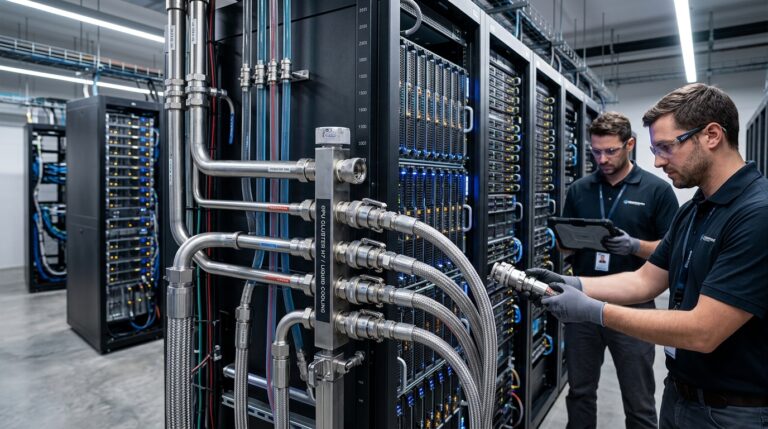
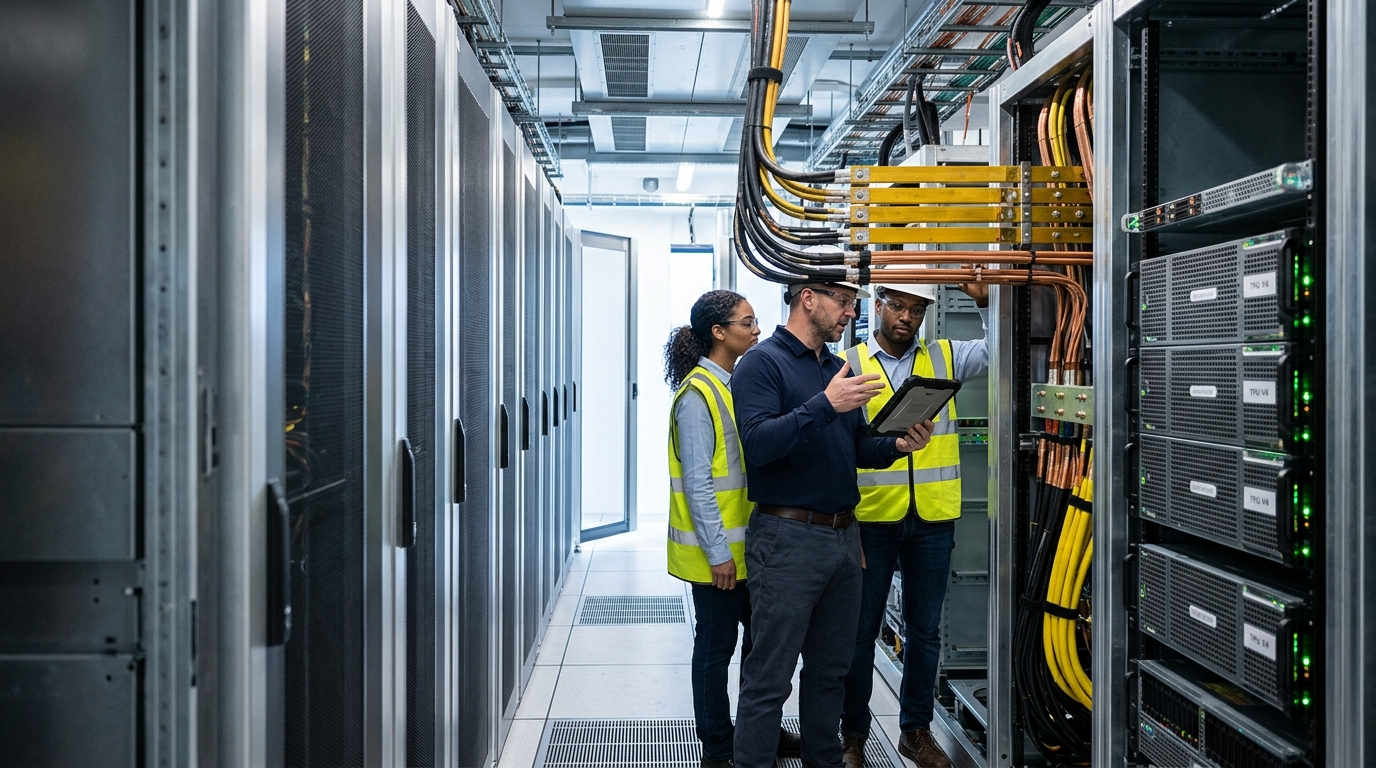
On May 19, 2026, Google and Blackstone announced a U.S.-based joint venture to stand up an independent AI cloud company. The terms matter here. Blackstone commits $5 billion in initial equity and holds majority ownership. Google contributes the hardware and silicon stack – specifically its proprietary Tensor Processing Units (TPUs) – along with software and services. Including leverage, total investment exposure across the venture is expected to reach $25 billion, per Wall Street Journal reporting.
The target: 500 megawatts of computing capacity online by 2027.
Why the Structure Is the Story
This is not Blackstone writing a check into an existing cloud provider. The joint venture is a standalone company – offering data center capacity, operations, networking, and Google TPU access as a compute-as-a-service product. Blackstone is the majority owner of the entire entity. Google supplies the silicon. Blackstone controls the infrastructure wrapper around it.
The model is being directly compared to CoreWeave – the neocloud that IPO’d in 2025 in the largest U.S. tech offering since 2021. CoreWeave built its business reselling Nvidia GPU access through owned infrastructure. This venture substitutes Google’s custom TPUs for Nvidia GPUs and replaces CoreWeave’s private equity backing with Blackstone’s scale. The comparison isn’t flattering to CoreWeave – it’s a competitive threat with a trillion-dollar balance sheet behind it.
Slight tangent, but relevant: Blackstone already owns QTS, one of the largest North American data center operators, acquired in 2021. It also acquired AirTrunk in 2024. The firm now controls more data center capacity than any other private investor globally. The Google venture isn’t a pivot – it’s a vertical integration on top of an infrastructure base that was already dominant.
The Capital Picture
Five days before this announcement, Blackstone’s Digital Infrastructure Trust completed a $1.75 billion U.S. IPO – 87.5 million shares at $20 – specifically targeting newly constructed data center assets. The timing is not coincidental. Blackstone is layering public vehicles on top of private infrastructure positions, creating multiple capital pools oriented around the same thesis: AI compute demand is a physical bottleneck, not a software problem.
The new AI infrastructure arm – called BXN1, led by Jas Khaira, who previously ran Blackstone’s CoreWeave investment – already has two deals in market. The first: a $1.5 billion JV with Anthropic, Goldman Sachs, and Hellman & Friedman selling Claude tools into private equity portfolios. The second is this Google venture. As Khaira framed it: one venture sells the tools, the other sells the compute the tools run on.
Major tech firms are expected to spend over $700 billion in capital expenditures on AI infrastructure this year. Private asset manager Ares has estimated the third-party data center opportunity alone at $900 billion. Blackstone is not watching that capital deployment from the sidelines.
Your Download Link Will Expire
If you still haven’t downloaded my free “Simple Options Trading For Beginners” guide…
…please take a few seconds and download it right now before your new temporary download link expires.
I eventually plan to charge money for this training, so do yourself a favor and download it now…
That way, no matter what it costs in the future, you’ll have a free copy on your computer.
Make sense?
What’s interesting is that BX’s stock reaction to this announcement has been relatively measured – which is typically how the market responds when a deal confirms a thesis rather than surprises one. Blackstone didn’t just enter AI infrastructure yesterday. This is the payoff architecture on a position the firm has been building for four years. The question for traders isn’t whether the deal is good. It’s how much of this is already in the multiple – and whether the $25 billion in total exposure starts generating fee-bearing AUM faster than the market expects.
That answer won’t come from the press release. It’ll come from 2027 capacity milestones and how quickly this venture moves from announcement to contracted revenue. Watch those data points closely.