
May 30, 2026
Something extraordinary is happening in the markets right now.
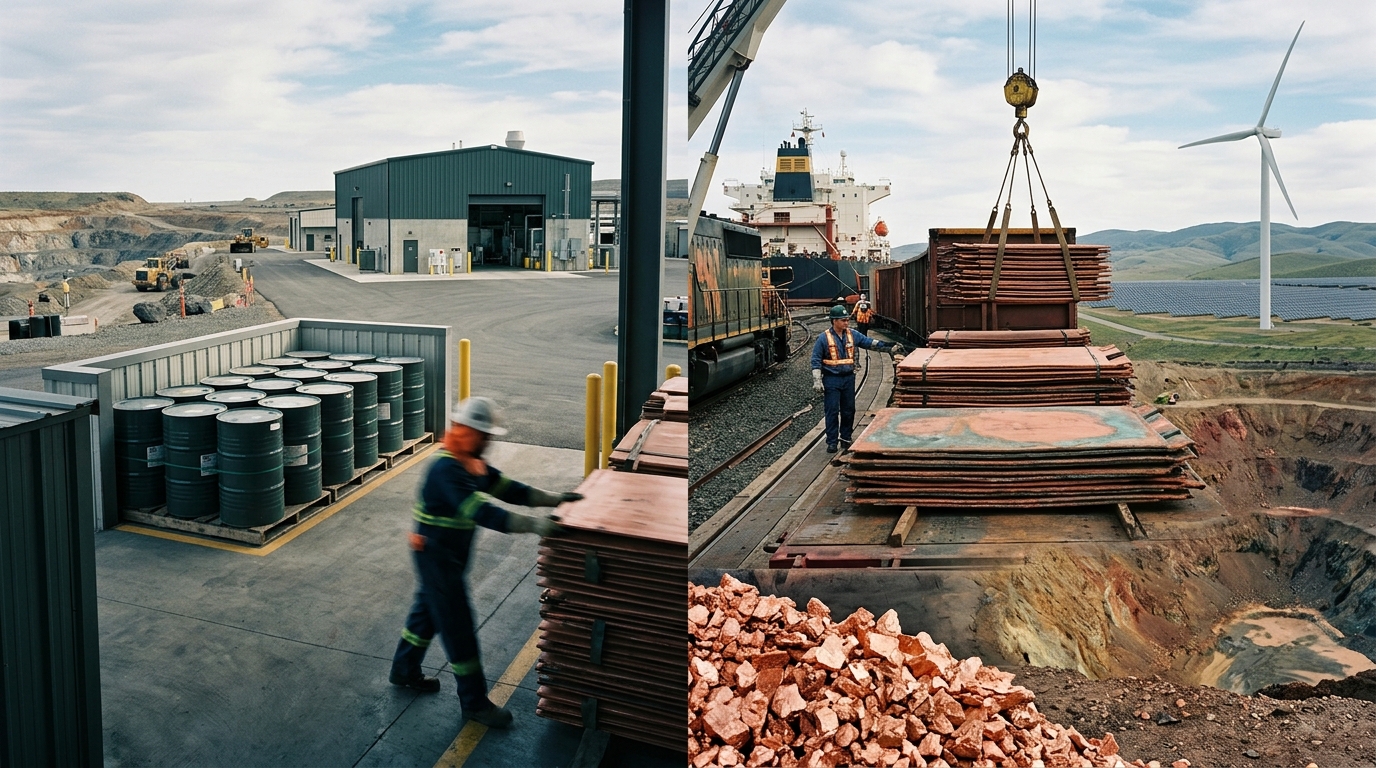
Featured: Uranium and Copper: Two Commodity Markets With Real Supply Limits in 2026
Dear Reader,
Something extraordinary is happening in the markets right now.
I’ve been watching the markets for nearly 20 years… And the data I’m looking at right now is unlike anything I’ve seen before.
Consider this: Six years ago, $30 billion sat in U.S. leveraged ETFs – the type of instrument that allows investors to make turbo-charged bets on the market.
Today, they just hit a record $177 billion. That’s nearly six times more money, making bigger and more aggressive bets.
Investors are sprinting full-speed into the stock market. And it’s not just Americans…
Foreign investors now hold a record $21 trillion in U.S. stocks – up 170% since 2020. They have an unusually large share of their money in U.S. stocks – more than even during the peak of the dot-com bubble.
In other words, the entire world is piling into American stocks.
Meanwhile, the S&P 500 just hit a fresh all-time high, adding $11 trillion of value in just seven weeks.
This is what a Melt Up looks like.
I know what the skeptics will say: “This sounds like a top.”
But here’s what they’re missing…
Every bull market in history – 1929, the dot-com boom, Japan in the late ’80s, and more – followed the same exact pattern.
Stocks rise steadily for years… Then, something changes. People who sat on the sidelines panic that they’re missing out. They rush in all at once… prices explode… and then, when there’s nobody left to buy… it all comes crashing down.
We’re not at peak euphoria yet. Not even close. You’ll know it arrives when your neighbors and barber are giving you stock picks.
But Melt Ups happen fast. During the dot-com bubble, the Nasdaq nearly doubled in just a few months.
The window is still open – for now.
That’s why I just published a brand-new presentation laying out everything you need to know to maximize your returns during the Melt Up (including how to know when to get out before the Melt Down).
Watch it right here while there’s still time.
Regards,
Brett Eversole
Senior Editor & Analyst, Stansberry Research
P.S. If you’re over 55, navigating the next 12 to 18 months in the markets will be the final, most important decision of your financial life – the difference between the retirement you’ve planned for… and one haunted by “what ifs.” You deserve to be on the right side of it.
Click here to learn the simple steps I’m urging my readers to take before it’s too late.
FEATURED
Uranium and Copper: Two Commodity Markets With Real Supply Limits in 2026
There’s a difference between a commodity rally that’s “interesting” and one that changes corporate behavior. Uranium and copper have moved into the second category.
Copper has been trading at levels that force downstream users to do math they’d rather avoid. COMEX copper was roughly $6.37/lb on May 29, 2026, after pushing to new highs in mid May. ([tradingeconomics.com](https://tradingeconomics.com/commodity/copper?utm_source=openai))
Uranium is trickier because “spot” depends on the indicator you’re using (UxC, TradeTech, NUEXCO). The one clean statement we can make is this: most public trackers show uranium well above the lows of 2024 and 2025, and the contracting conversation remains far more important than the day to day quote.
Macro first: markets don’t need perfect demand, just tight supply
This is not about whether global growth is “strong” or “weak.” It’s about how little elasticity these supply chains have when demand shows up in the wrong place at the wrong time.
Slight tangent, but it matters: the energy transition discussion tends to focus on new capacity (more reactors, more EVs, more grid build). The part people skip is the inventory and replacement cycle. Even if demand only inches higher, the system can still get tight if inventories are not where end users need them, when they need them.
Your Download Link (Expiring)
If you still haven’t downloaded the free Simple Options Trading For Beginners guide…
…please take a few seconds and download it right now before your download link expires.
I eventually plan to charge money for this report, so do yourself a favor and download it now…
That way, no matter what it costs in the future, you’ll have a free copy on your computer.
Make sense?
Simple Options Trading For Beginners (Download Link Expires)
Copper: the balance is no longer theoretical
The cleanest up to date way to frame copper is to separate price action from balance data.
On the data side, the International Copper Study Group shows a 2025 refined copper balance of +462 thousand metric tons (a surplus) in its widely circulated table of production and usage trends. That’s important because it directly conflicts with the “2025 deficit of 289,000 tons” figure in the current draft. In other words, the 289,000 ton number should be removed unless you have a specific ICSG report page and date that supports it. ([icsg.org](https://icsg.org/wp-content/uploads/Table1.pdf?utm_source=openai))
So why has copper still acted tight? Because balance tables don’t capture everything traders care about: where the metal is held, what form it’s in, and whether it’s usable by the marginal buyer. A surplus on paper can coexist with real friction in concentrate, acid, smelting capacity, and delivery timing.
On the price side, copper’s move has been dramatic. Trading Economics showed copper at about $6.37/lb on May 29, 2026. That’s a very different world than $4 and change, and it changes the cash flow profile of producers fast. ([tradingeconomics.com](https://tradingeconomics.com/commodity/copper?utm_source=openai))
Sector read-through: FCX and SCCO benefit, but in different ways
Freeport-McMoRan (FCX) tends to trade like the market’s levered view of copper plus execution risk. Southern Copper (SCCO) tends to trade like a high margin incumbent with a clearer linkage to copper pricing and capital return expectations. Same metal, different equity personality.
If copper stays elevated, the story migrates from “do they earn more?” to “what do they do with it?” Buybacks, dividends, capex, and political risk usually decide the next leg.
Uranium: Cameco’s Q1 numbers, corrected
The current draft has several Cameco items that needed tightening.
In Cameco’s Q1 2026 release, reported revenue was about $845 million versus $789 million in Q1 2025. That’s the company’s number and it’s consistent across the news release and supporting filings. ([nasdaq.com](https://www.nasdaq.com/press-release/cameco-reports-first-quarter-2026-results-financial-results-and-operational-execution?utm_source=openai))
The draft also said Cameco raised full year production guidance to 36 million pounds. That does not match the guidance language being circulated around the Q1 release. A commonly cited breakdown for 2026 is: delivery guidance of 29 to 32 million pounds, with production targets of 19.5 to 21.0 million pounds, plus market purchases up to 3 million pounds. Treat the “36 million” figure as incorrect unless you can point to a specific company statement. ([investing.com](https://www.investing.com/news/company-news/cameco-q1-2026-slides-uranium-output-on-track-eps-beats-forecast-93CH-4679186?utm_source=openai))
What matters is not a heroic volume assumption. It’s the business model reality: utilities want contract coverage, and producers want contract terms that compensate for delivery obligations, procurement costs, and the cost of keeping capacity ready.
Equity behavior: CCJ’s move is big, but check the time window
The draft said CCJ was up 44% over the trailing 12 months. Depending on which exact measurement date you use in May 2026, several public pricing summaries show a much larger 12 month move (well over 100% in some datasets). The core point stands that the stock has been strong, but the 44% figure is not reliable as written. ([financecharts.com](https://www.financecharts.com/stocks/CCJ/summary/price?utm_source=openai))
The New Arms Race Is Being Built Right Now
Global tensions are accelerating a new kind of arms race powered by advanced technology.
AI, drones, and autonomous systems are becoming central to modern defense strategies. This report reveals five companies positioned to benefit from this shift and what it could mean for investors.
Options market lens (defined risk, no hero bets)
If you’re looking at these themes through options, the key is to stop treating “directional conviction” as the whole game. With commodities and commodity equities, volatility is part of the product.
Instead of trying to call the exact next move, traders often focus on a few observable inputs:
- Implied volatility vs. realized volatility into catalysts (earnings, guidance updates, major macro releases)
- Skew (how much downside protection costs vs. upside exposure)
- Expected move into earnings windows, then comparing it to what actually happened
- Open interest concentration (where strikes cluster can matter, especially for liquid names)
For uranium equities, the recurring issue is that the underlying commodity can be stable while the equities swing hard on positioning and sentiment. For copper equities, the recurring issue is that earnings sensitivity can look obvious, but the stocks still trade on macro risk appetite.
Three defined-risk frameworks
Bullish bias: If you believe copper stays elevated through the next quarter and producers keep generating excess cash, a common defined risk expression is a call spread (cap upside, cap cost) in FCX or SCCO.
Bearish bias: If you believe the move has gone too far and a pullback is more likely than continuation, a defined risk expression is a put spread rather than a naked put, especially in high volatility windows.
Neutral to slightly bullish: If you believe the next month is more about digestion than continuation, defined risk income structures can make sense conceptually, but only when the risk is tightly capped and sized small relative to account equity.
Trending tickers for the commodity to equity bridge
- CCJ – Cameco, liquid uranium equity proxy
- UEC – Uranium Energy Corp, higher beta uranium exposure
- FCX – Freeport-McMoRan, copper driven earnings sensitivity
- SCCO – Southern Copper, high margin copper exposure
- COPX – Global X Copper Miners ETF, diversified miner basket
What I’m watching into June
1) Whether copper can hold above $6 while macro volatility stays elevated.
2) Whether uranium contracting headlines continue to show utilities prioritizing security of supply over small price differences.
3) Whether the equities keep acting like they’re discounting a multi quarter commodity regime, or whether they start reacting more to company specific execution again.
Worth a look this week: pull up CCJ’s Q1 release, then read it next to where the stock is trading now. The numbers are straightforward. The market reaction rarely is. ([nasdaq.com](https://www.nasdaq.com/press-release/cameco-reports-first-quarter-2026-results-financial-results-and-operational-execution?utm_source=openai))