
August 12, 2026
The Options Market Called SMCI First
Before Tuesday’s results, a near-record IV rank, a 0.48 put/call ratio, and a 13.76% implied move said pay attention. Now the real question begins.
First a note from MediaPub
Hi, I’m Lance Ippolito. I’ll fully introduce myself in a minute…
But right now, I have an urgent message for you.
It’s no news that robots run the market now.
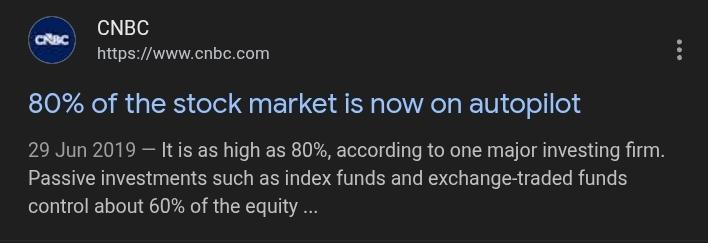
As of 2019, 80% of all stock trading was done by high-efficiency algorithms and bots. That number has since increased.
Wall Street is already letting unemotional, ruthless robots do their dirty work.
I’m sounding the alarm on this because I’ve been on the inside.
I traded multi-million dollar books for private clients.
And I’ve seen firsthand how algos control the market in the blink of an eye.
So why should you and I be left behind?
This is exactly why I developed K.I.R.A.
An advanced AI engine designed to outclass any other tool you’ll find out there.
It goes without saying, of course, that K.I.R.A. won’t execute trades on your behalf.
However, this brand-new breakthrough will give you every single detail you need to take the trade yourself.
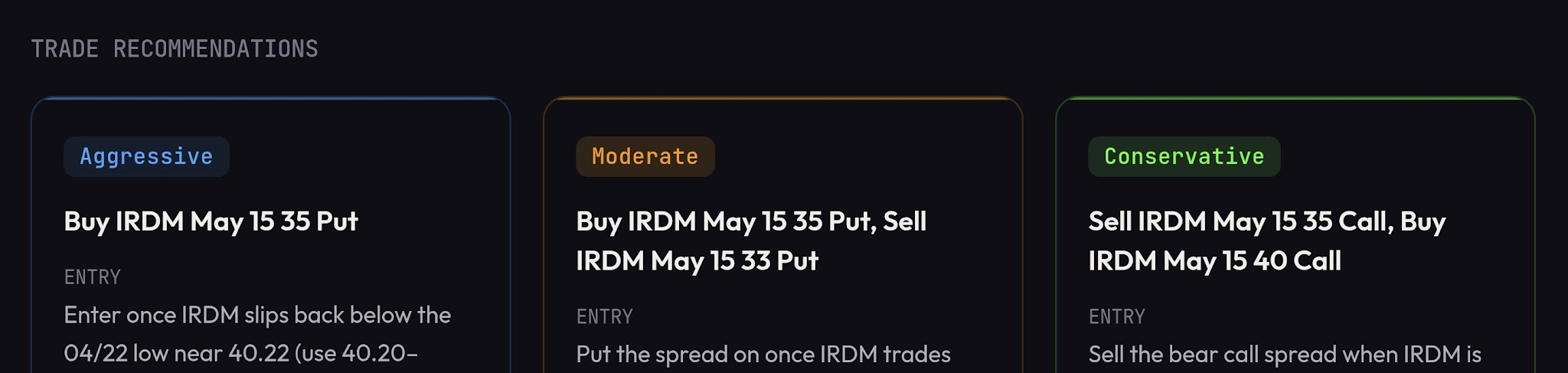
In fact, KIRA isolates three different approaches to the same trade for you to choose from based on how much risk you’re willing to take on.
Now you don’t have to take my word for it.
You can fire K.I.R.A. up right now and see everything for yourself.
Till the next trade,
Lance Ippolito
The Options Market Called SMCI First

The Signal
The stock market watches earnings results. The options market watches what traders are willing to pay to be positioned before those results arrive. In the days leading up to Super Micro Computer’s Q4 fiscal 2026 report, the options market was broadcasting something specific and worth reading carefully.
The implied move heading into Tuesday’s close was priced at approximately 13.76% in either direction, according to TipRanks data. For a stock trading near $31.60, that is a range of roughly $4.35 on each side embedded directly into near-term options premium. The full-chain put/call ratio sat at 0.48, a number that signals call volume running at more than two times put volume across all strikes and expirations. And among the ten most recent unusual options trades flagged in the days before earnings, nine were calls and one was a put.
That is not a balanced market. That is a market leaning hard in one direction with real premium behind it. The question worth asking is not whether the calls were right. They were. The question is what the options market is now telling us about the period ahead, after the results have landed and volatility has begun to collapse.
Why It Matters
Super Micro Computer is not a quiet stock. Its beta sits at 1.94, and the stock has moved an average of 12.3% on earnings day over the past eight quarters, compared with 5.8% for the broader S&P 500 technology sector median. The stock has posted intra-month moves exceeding 20% on seven separate occasions between January 2024 and June 2026. Options on this name carry structurally elevated implied volatility for reasons that are fundamental, not incidental.
The IV rank heading into earnings was near the top of its one-year range. Implied volatility on the nearest monthly contract was running near 84% to 86%, elevated relative to the 52-week median, with options pricing an expected daily move of roughly $1.63. That is a market pricing in maximum uncertainty. The 13.76% implied move before results was actually below SMCI’s own four-quarter average post-earnings move of approximately 16.9%, which is a useful data point: the options market was not overpricing the event relative to historical behavior. It may have been underpricing it.
Then there is the short interest. Approximately 97.15 million shares, representing 15.02% of shares outstanding, were sold short heading into the report. A heavily shorted stock with a near-record IV rank and a 0.48 put/call ratio creates a specific kind of setup: if the results disappoint, put holders profit and shorts press. If results beat materially, the short squeeze dynamic layers onto call gains. Both directions carry amplified potential. The options market, reading all of that context, was pricing accordingly.
The Company Behind the Signal
Super Micro Computer reported Q4 fiscal 2026 results Tuesday evening. The headline fiscal 2027 revenue guide of $65 billion to $72 billion stopped analysts mid-sentence. Consensus had been near $54 billion. The Q1 FY2027 guidance of $14.5 billion to $15.5 billion came in above even the most optimistic external estimates, which Reuters had placed in the $11.68 billion range. That is not a guidance beat. It is a different category of result.
The underlying quarterly numbers were also strong. Q4 revenue was $11.1 billion, up 93% year over year. Gross margin recovered to 17.5% GAAP, up from 9.5% a year earlier. Non-GAAP EPS of $1.70 cleared the $0.96 consensus by a wide margin. Full-year revenue reached $39.1 billion, up 78% from fiscal 2025’s $22 billion. Non-GAAP EPS for the full year came in at $3.63, up 76% from $2.06.
The order book is the figure that demanded attention. Supermicro disclosed more than $60 billion in new orders received during Q4 alone, a number that dwarfs the $11.1 billion in revenue recognized during that same quarter. The company enters fiscal 2027 with a record backlog. A co-build arrangement with SpaceX and xAI was among the disclosed order contributors. Management characterized the fiscal 2027 revenue target as selective, meaning the company is deliberately targeting higher-margin business rather than volume at any price.
Two things complicate the picture. First, full-year operating cash flow was negative $6.8 billion. Second, the board is conducting an ongoing independent review tied to export-control matters, and results remain classified as preliminary and unaudited. The insider lock-up expired August 10, adding near-term selling risk, and recent insider transactions have skewed toward sales. Those facts were not invisible to the options market heading in. They are built into the premium.
Market Expectations
Heading into Tuesday, the options market was communicating three things simultaneously. First, it expected a large move, larger than most earnings events for comparably sized technology names. Second, it was tilted bullish, with the 0.48 put/call ratio reflecting call-heavy positioning rather than balanced hedging activity. Third, it was pricing in maximum uncertainty through near-peak implied volatility.
Those three signals together tell a consistent story: sophisticated participants expected a large positive move but were not willing to treat the outcome as certain. The high IV rank and premium levels reflect the residual governance and cash-flow risk that kept put buyers active even as call volume dominated. The market was not pricing a clean story. It was pricing a high-variance outcome with a bullish skew.
What actually happened confirmed the bullish side. SMCI jumped 7.45% in after-hours trading on Tuesday and extended further in the session that followed. The actual move cleared the standard daily expected move embedded in options, though it remained within the broader 13.76% implied earnings range. Historically, SMCI averages a 12.31% same-day move on earnings beats. This result is consistent with that pattern, not an outlier in either direction.
Now the volatility picture shifts. With results on the table, the near-term expiration implied volatility that was elevated heading into Tuesday collapses quickly. This is the post-earnings dynamic that experienced options traders plan for in advance: the crush of implied volatility after the event resolves. Options that looked richly priced at 84% to 86% IV before the report will see that premium evaporate in the sessions following, regardless of direction. The challenge now is identifying what the options market is pricing for the next phase, not the event that just passed.
Trump: Don’t Mess With This American Stock!
One little-known U.S. stock is 20x cheaper than AMD – yet more profitable than Airbnb, Chipotle, and Hilton.
Backed by Trump and now partnering with a top AI firm, it’s poised to explode.
Strategic Considerations
The post-earnings options environment in SMCI presents a distinct set of conditions. Implied volatility has been elevated for months due to the governance overhang, the cash-burn concerns, and the binary nature of each earnings event. That elevated IV environment benefited option sellers heading into results. In the sessions following the report, the dynamic changes.
Three frameworks are worth considering, depending on how you assess the risk profile of the next three to six months.
For traders expecting continued upside with defined risk
A bull call debit spread using September or October expiration contracts could allow participation in further upside while capping the premium at risk to the net debit paid. For example, if you believe X that SMCI can sustain momentum into Q1 FY2027 results, a defined-risk long call spread positioned above the current price, with the short strike near the level implied by the fiscal 2027 revenue guide re-rating, limits maximum loss to the premium paid while preserving meaningful upside if the stock continues to move. The key risk is that post-earnings implied volatility compression reduces option values even when the stock moves in the intended direction. Spread structures reduce that vega exposure relative to outright long calls.
For traders expecting elevated but range-bound behavior
If implied volatility remains structurally elevated due to the ongoing governance review and cash-flow uncertainty, a defined-risk iron condor or short strangle in a further-out expiration could benefit from premium decay, provided the stock does not break materially beyond either wing. This is not a directional bet. It is a bet that the options market continues to overprice realized movement during the period between now and the next major catalyst. Given SMCI’s history of average realized moves that sometimes underperform implied moves, that edge may exist. The risk, and it is real, is that a governance disclosure or a macro shock produces a move that overwhelms the premium collected.
For traders anticipating a mean reversion or renewed governance risk
A defined-risk put debit spread, using strikes below current price and targeting the mid-$20s that represent the bear case if Q1 FY2027 results disappoint or compliance issues resurface, allows a bearish position with limited premium at risk. The short put in the spread reduces the cost of the long put, though it caps maximum gain. Given that the stock has already moved sharply on the earnings guide, a position expressing skepticism about the Q4 margin sustainability or the backlog conversion timeline has a concrete catalyst calendar to anchor it: Q1 FY2027 results and the ongoing independent board review.
In all three cases, the critical variable right now is the pace at which implied volatility normalizes after Tuesday’s event. If IV compresses quickly back toward its trailing median, option buyers across all strategies will face headwinds even if their directional view is correct. If the governance review keeps a floor under realized volatility and therefore under implied volatility, the environment for option sellers becomes less favorable than it might otherwise appear.
What to Watch
- Implied volatility term structure: Track how quickly front-month IV collapses relative to further-dated contracts in the days following Tuesday’s results. A slow collapse in near-term IV would signal the market still perceives event risk ahead, likely tied to the governance review or audit timeline.
- Put/call ratio in the days after earnings: A shift from the pre-earnings 0.48 reading toward a more elevated put/call ratio in the week that follows would signal that sophisticated participants are hedging the rally rather than chasing it, which is a meaningful change in character.
- Short squeeze dynamics: With 97.15 million shares short and the stock moving higher on results, watch daily volume and options open interest changes at strikes above the current price for evidence of short covering activity. Sweep call orders at above-ask premiums in the next several sessions would suggest informed participants believe covering has more room to run.
- Q1 FY2027 revenue tracking: The guided range of $14.5 billion to $15.5 billion is the credibility anchor for the entire fiscal 2027 thesis. Any pre-announcement, supply-chain signal, or management commentary that casts doubt on that range will register first in the options market, likely through put volume spikes or a sudden widening in implied volatility skew on downside strikes.
- Governance and audit catalysts: The board’s independent review tied to export-control matters is the single largest unresolved binary for this stock. When that review concludes, either with a clean outcome or a disclosure of further issues, the options market will move before the stock fully prices it. Watch for unusual volume in near-dated puts as a leading indicator of negative news, or a sharp compression in IV as a signal the market believes the review has resolved cleanly.
- Gross margin trajectory: The Q4 reading of 17.5% included nonrecurring tariff and inventory benefits. The Q1 guide of 10.4% to 10.8% is the sustainable starting point. If options skew on the downside begins to steepen in the weeks ahead, it may reflect concern that even 10.4% is not achievable. Flat or compressing skew suggests the market is comfortable with the guided trajectory.
- Insider activity after lock-up expiry: The insider lock-up expired August 10. Meaningful insider selling disclosed over the next several weeks would be a signal worth noting, particularly if it coincides with elevated call open interest at upper strikes, a combination that can indicate insiders hedging rather than exiting with conviction.
Bottom Line
The SMCI options market did not predict the fiscal 2027 guide. No derivatives market predicts specifics. What it did was price the probability distribution around a high-variance event accurately, lean bullish through a 0.48 put/call ratio, and demand elevated premium commensurate with genuine two-sided risk.
The result confirmed the bullish side of that distribution. The stock moved, the calls were right, and the implied move was not materially exceeded. What comes next is a different kind of problem: not whether to buy the event, but how to think about the options market in a post-event environment where IV is falling, short interest remains significant, and the fundamental story has both a record order book and an unresolved governance review sitting side by side.
The options market is not done talking about SMCI. The question is whether you are listening to what it says next, before the next data point arrives and the market moves again.