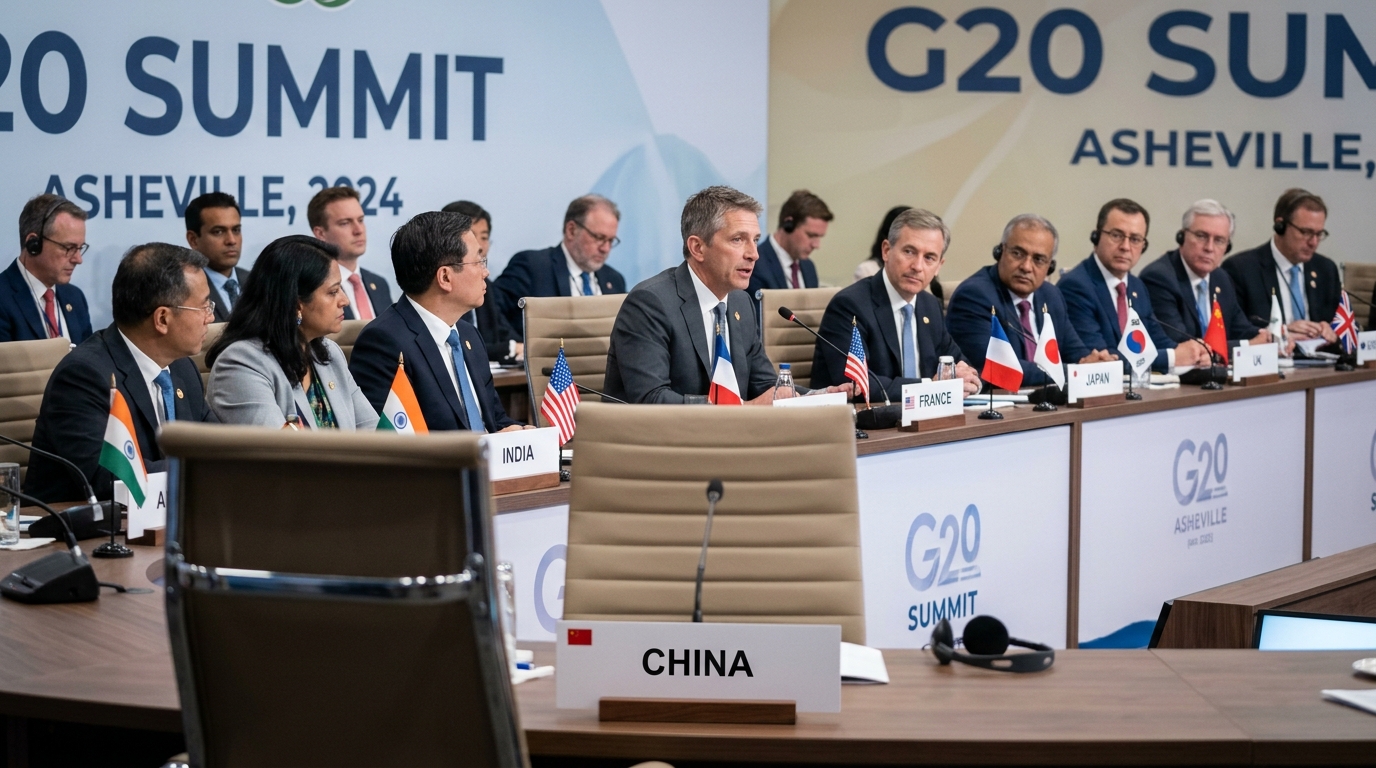
The moment arrived quietly in Asheville, North Carolina. China was the only Group of 20 member to dissent from a chairman’s statement that “non-market-based economies pushing out a never-ending stream of cheap exports is not sustainable,” Treasury Secretary Scott Bessent said Tuesday. One country isolated. Nineteen aligned. That is not a trade skirmish, it is a structural realignment.
Bessent confirmed that China, “the country with the world’s largest and unsustainable current account surplus,” was the sole dissenter from his chairman’s statement. China’s trade surplus reached a record-high $1.2 trillion in 2025, according to reporting that cited China’s official customs data. The arithmetic behind that number explains why the other 19 governments found consensus.
Bessent had warned other nations at the beginning of Trump’s second term that the new U.S. “tariff wall” would mean Chinese goods would flood their markets. “And unfortunately, I was right,” he told reporters on the sidelines of the meetings. His advice now: follow the same path. “The rest of the world probably needs to take a hard look at what they should be doing to protect their citizens’ jobs, their manufacturing base, so that everything they do doesn’t get offshored,” he said.
For long-term investors, the investment question is not whether Bessent’s coalition holds. It is which industries get rebuilt at home, and who owns the companies doing it.
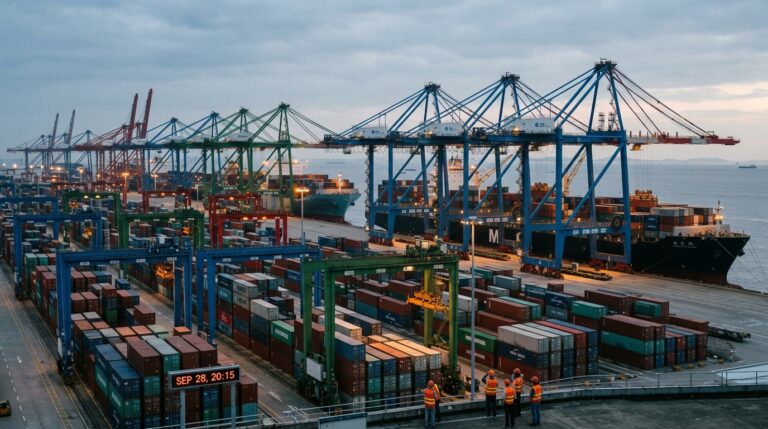
Steel is the clearest near-term case. In 2025, in the face of multiyear declines in Chinese domestic steel demand, Chinese steel exports accelerated to a record 131 million metric tons, according to the OECD. According to the OECD, Chinese steel firms in 2024 received about 15 times as much in subsidies relative to their asset size as steel firms in the rest of the world. That disparity cannot persist once 19 governments begin erecting their own barriers. Domestic producers in the U.S., Europe, and India inherit pricing power that had been crushed for years.
Autos follow a similar logic. Cheap Chinese cars, batteries, steel, and electronics are already flooding European markets, and what started as a debate over Chinese electric vehicles has evolved into a much broader confrontation with the structural consequences of China’s industrial overcapacity. European Union documents and Council communications have warned that global steel overcapacity could rise to 721 million tonnes by 2027, more than five times the EU’s annual consumption. That imbalance is part of the engine driving the coalition Bessent just assembled.
The pattern a mogul-minded investor recognizes here is the early innings of a long supply-chain reorganization. When the rules of a global industry change, not because of one country’s tariffs but because of coordinated policy across 19 economies, the beneficiaries are the businesses positioned to serve newly protected domestic markets. Steel mills with low-cost domestic footprints, auto manufacturers with onshore battery supply chains, and industrial infrastructure companies tied to capacity expansion all stand to gain over a five-to-ten-year horizon.
The other G20 members will take action in the coming “days, weeks or months” to “reach a resolution on this unsustainable equilibrium,” Bessent said. That timeline is the investor’s window. The companies that own the rebuilt capacity will not be Chinese. The only remaining question is which of their competitors is durable enough to compound through the construction phase.
This is not a call to buy cyclicals into a slowing global economy. Execution risk is real, policy can reverse, and any Xi-Trump summit later this month could soften the edges. But the Asheville consensus is a policy anchor that did not exist a year ago. Nineteen finance ministers in a room agreed the old model is finished. That is the kind of structural shift long-duration investors should not ignore.