
September 2, 2026
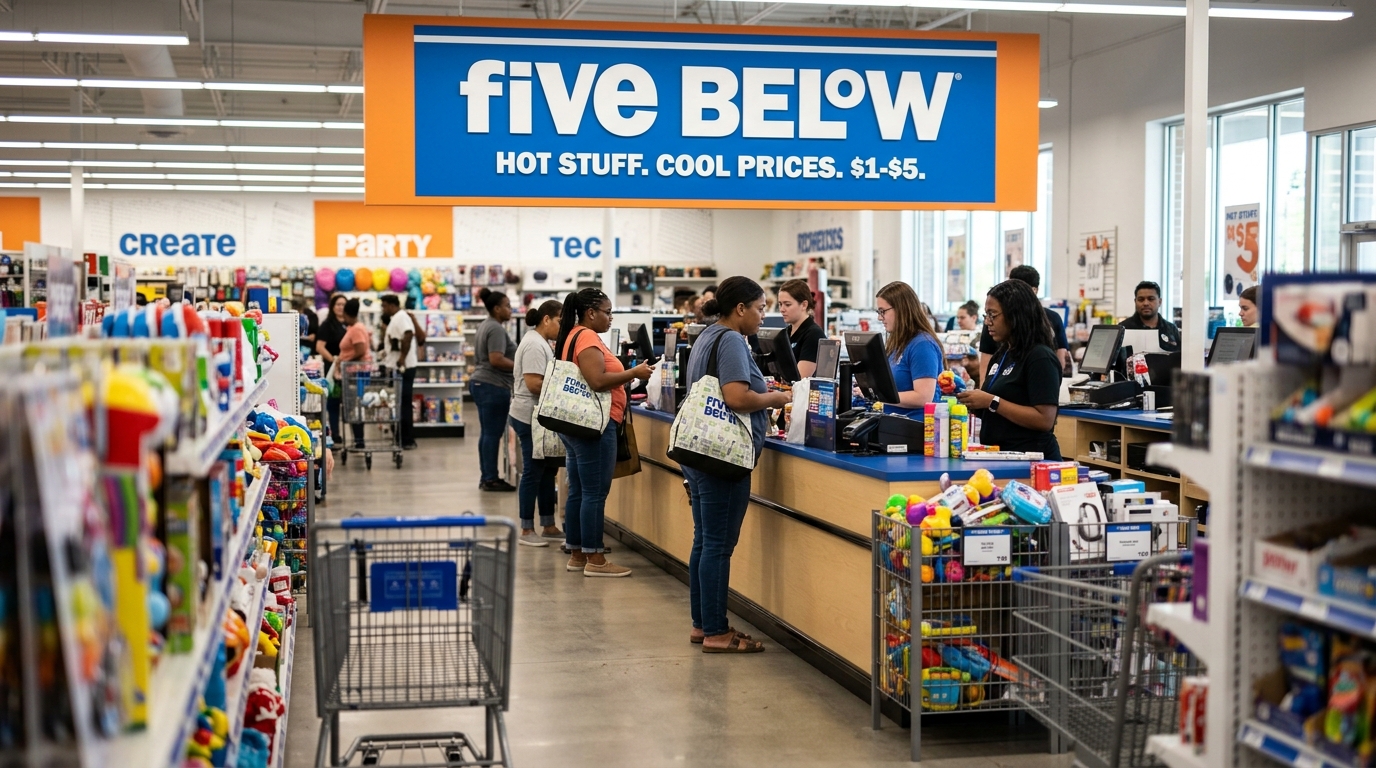
Bonus Content: Five Below Reports Tonight. The Stock Already Knows How to Punish a Beat.
Early in July, oil prices were falling as expectations of an Iran peace agreement weighed on the market.
Then a notably large position appeared on Polymarket — a public prediction market — indicating that an oil price move was being priced in by that market’s participants.
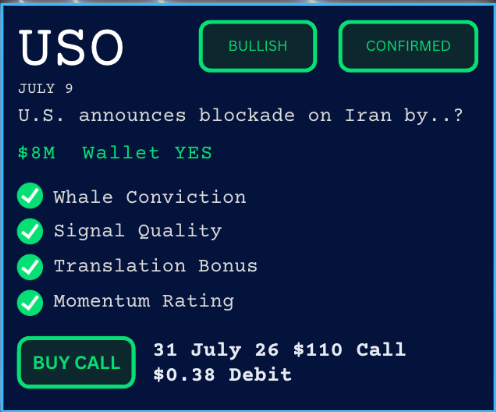
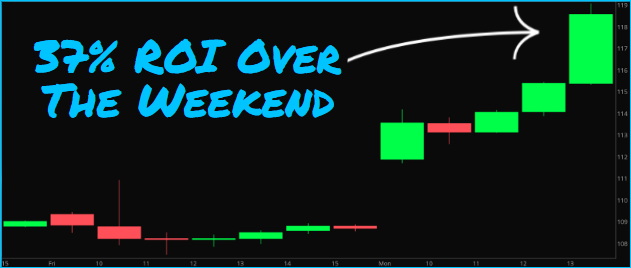
Days later, the geopolitical situation escalated and oil prices moved sharply higher.
Tracking that Polymarket signal corresponded to a 37% move over the same weekend window.
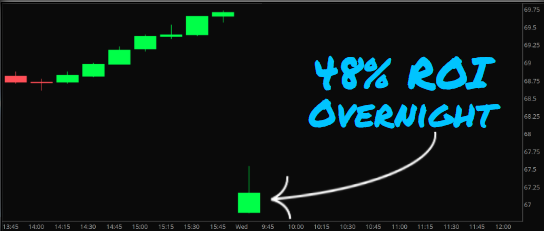
Similar signals have corresponded with moves of 48% on SLV…
And 83% on ETHA over 2 days…
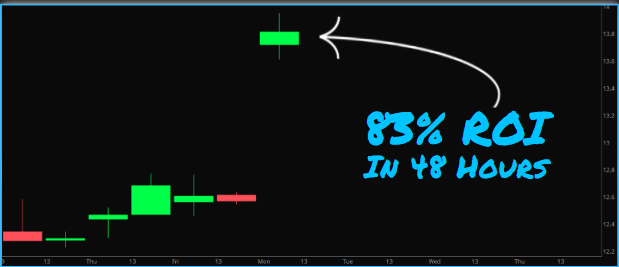
There were smaller wins and trades that did not work out — no performance claims here, just the record as it stands.
The tool behind this tracking is a first-of-its-kind prediction market scanner called Oracle.
Oracle monitors significant position flows on public prediction markets and surfaces the equity and options setups that may reflect those same moves.
Paired with matched options positioning data…
It gives traders a framework for acting on prediction market flows before that data is widely reflected in equity pricing.
Access to Oracle is currently available at no cost.
To begin monitoring prediction market flows and the corresponding equity signals…
Tap here to access Oracle at no cost.
To Better Trading,
Alex Reid
Five Below Reports Tonight. The Stock Already Knows How to Punish a Beat.
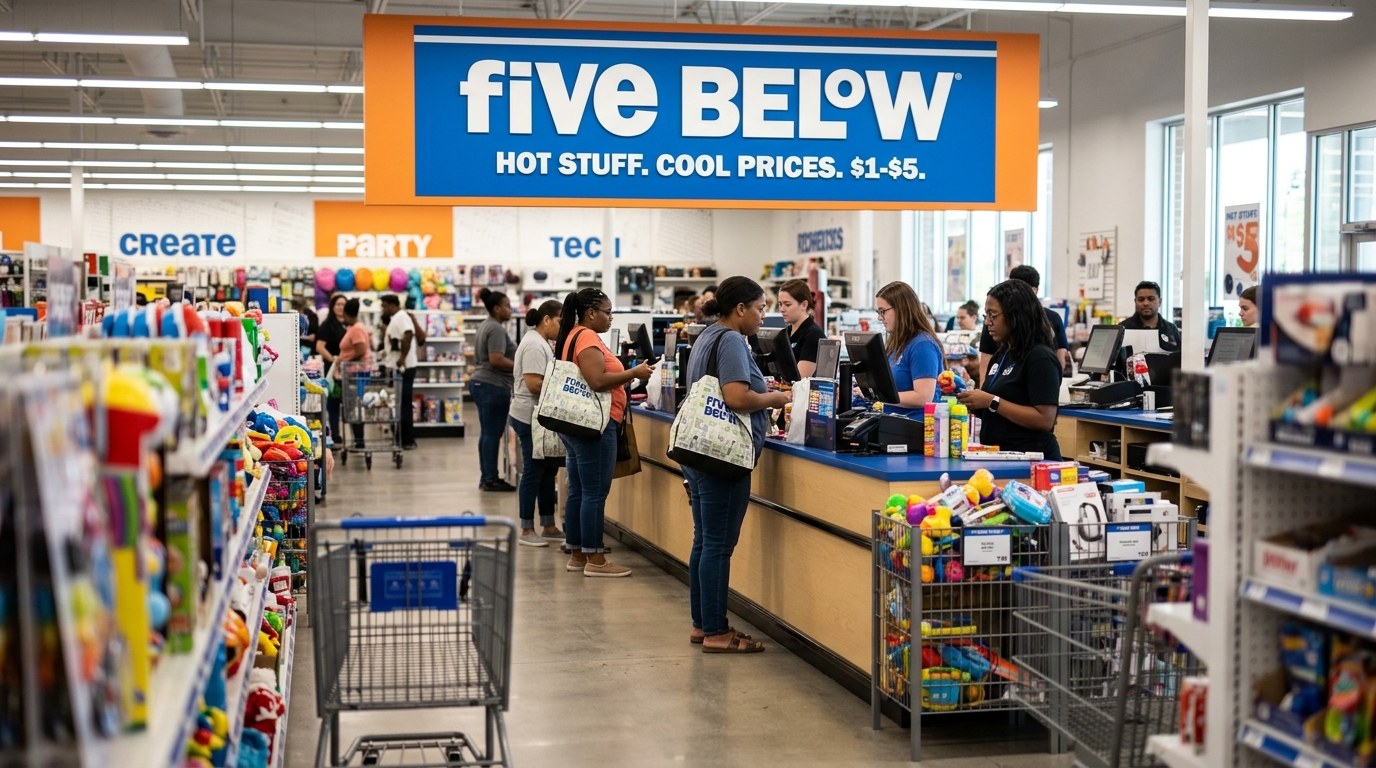
Five Below (FIVE) beat every number on the board in Q1 fiscal 2026 and still lost about 11% of its value by the next morning. That is the context every trader needs going into tonight’s Q2 report.
The set-up is not complicated. The market does not need Five Below to beat. It needs Five Below to convince investors the tariff assumptions embedded in its guidance reflect reality. Those are two entirely different asks, and the stock has already demonstrated it will not reward the first one in isolation.
The Numbers on the Table
Q1 results were exceptional by any conventional measure. Adjusted diluted EPS came in at $2.22, well ahead of consensus. Revenue rose 32.5% year over year to $1.29 billion. Comparable sales surged 22.7%. Operating income climbed to $154.2 million. Management opened 49 net new stores, ending Q1 with 1,970 locations across 46 states.
None of it was enough. Shares fell about 11% in after-hours trading following the release as investors fixated on the guidance architecture. The company’s full-year fiscal 2026 outlook, $5.40 billion to $5.48 billion in net sales and $8.65 to $9.05 in adjusted diluted EPS, includes a tariff-related assumption that investors have treated as the key swing factor. On a model this import-heavy, tariff math is not a rounding error.
Tonight the market gets its answer. For Q2, management guided net sales of $1.18 billion to $1.20 billion and adjusted EPS of $1.17 to $1.29, with comparable sales up approximately 7% to 9%. Street estimates move, but heading into the event, consensus has been clustered around the high end of that EPS range. A positive predicted-surprise read and a handful of higher estimates have kept expectations elevated.
What Happened Since June
The consumer backdrop has not improved. The national average for regular gasoline stayed above $4 per gallon every single day of August, reaching about $4.08 as of August 31, making this the most expensive August at the pump on record and running roughly 90 cents above year-ago levels. For Five Below’s core low-income customer, fuel is a regressive cost that compresses the exact discretionary budget the company is trying to capture.
Analysts have responded to the fundamental momentum rather than the macro pressure. Jefferies upgraded the stock to Buy and raised its price target to $350. Telsey lifted its price target to $280 while maintaining its rating. Other firms, including Mizuho, have also raised targets in recent weeks. Where the Street has converged is simple: the stock is being priced on guidance credibility, not last quarter’s beat.
Strategic Interpretation
This is not a question of whether Five Below can execute. The Q1 comp of 22.7% proved it can. The question is whether management’s tariff assumptions proved accurate, and if not, how severely the back half gets marked down. If tariffs did not ease as modeled, the existing FY26 range may need a downward revision regardless of how strong July comps ran. That is the single variable that can explain a double-digit post-earnings decline on a quarter that beat decisively.
Options Market Analysis
Implied volatility on FIVE is elevated ahead of the event, consistent with historical behavior around its earnings releases. The options market is pricing an expected move that reflects binary risk: a beat-and-raise on both earnings and the tariff conversation could drive a double-digit move higher, while any guidance cut or confirmation of sustained tariff pressure likely brings the stock back toward the $200-$215 support range tested earlier this summer. Earnings-date IV crush is typical for FIVE post-announcement. Traders leaning directional should account for significant premium decay once the call concludes at 4:30 p.m. ET.
Defined-Risk Trade Framework
Bull case: For traders expecting management to raise full-year guidance and confirm tariff normalization, a defined-risk long call spread above the current market price with a September expiration captures upside while limiting premium exposure ahead of IV crush. A call spread centered near $265-$280 reflects analyst target clustering.
Bear case: If you believe tariff relief did not materialize and management is forced to lower the back-half outlook, a put spread below current levels, with strikes near $230-$215, positions for a replay of the June reaction without unlimited downside risk.
Neutral case: A short strangle sold after the announcement, once IV begins to collapse, captures premium decay if the stock settles within a 8-10% post-event range. This structure carries assignment risk and is suitable only for traders comfortable with undefined exposure on one leg, or as an iron condor if defined risk is required.
Risk Analysis
The tariff assumptions are the primary risk in both directions. A surprise confirmation that tariffs stayed elevated into late summer compresses the FY26 EPS range and removes the basis for many upgrades. Conversely, if trade conditions improved faster than modeled, the upside case is not just a beat, it is a guide that holds together under scrutiny. Record August gas costs add a second-order risk: even with favorable tariff math, consumer traffic data covering the back-to-school period may show demand deceleration that pressures the Q3 outlook.
Forward Outlook
Management participates in the Barclays Global Consumer Conference on September 9. That is a near-term opportunity to contextualize tonight’s results. The stock has returned roughly 69% over the past year into this report. That performance compresses the margin for error: at current levels, the market is pricing in execution, not just optionality.
Action Checklist
- Watch adjusted diluted EPS against the $1.17-$1.29 guidance range and where the Street is clustered
- Track comparable sales against the 7%-9% company range
- Monitor full-year EPS guidance revision: any raise above $9.05 is the bullish trigger; any cut is the bearish one
- Listen for management language on tariffs: this is the call’s single most important variable
- Note any commentary on August traffic and back-to-school trends given record fuel costs
- Account for IV crush before initiating post-announcement options positions