September 17, 2026
Bonus Content: Dave & Buster’s Fell 17%. Here Is What the Options Market Is Saying Now.
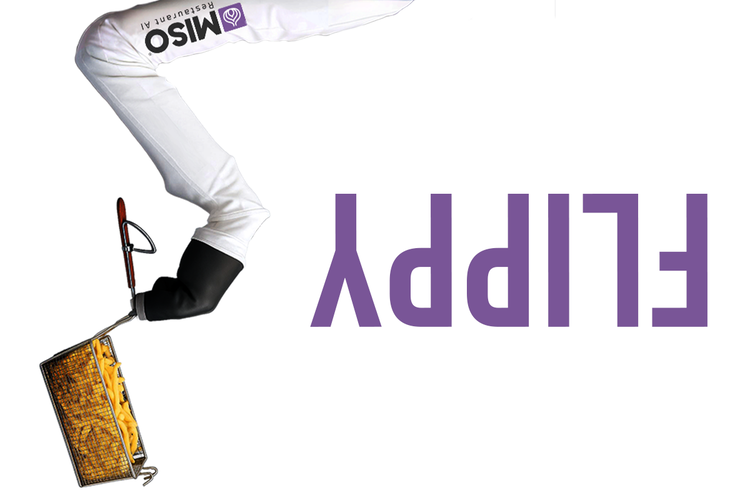
A french-fry robot named Flippy? That doesn’t make sense.
Miso Robotics, whose share price changes on 9/17, has heard it all before.
But ask restaurant operators in the $1T fast-food industry like White Castle that deploy Miso’s Flippy Fry Station robot, and it sure makes a lot more sense.
Flippy FLIPS restaurant operator’s bottom lines, helping boost a location’s profits up to 4X.
And with Miso having a $4B/year US revenue opportunity for just the fry station alone, these french fries are way beyond small potatoes.
This year is when Flippy is really leaving its mark.
After Miso acquired two major new product assets, Flippy has become the star of a rapidly expanding ecosystem. Restaurants think of what Miso is building as a new operating system for modern restaurants.
And Miso just added big-name customers like Jersey Mike’s and Cinnabon…and grew its patent portfolio by ~10X to 300+. On top of that, they even started entering college campuses, NBA arenas, and a new national burger chain.
Everyday investors like you who don’t want to miss the robotics boom have already made more than 44,000 investments into Miso.
This is your chance to claim a stake for yourself.
But hurry. Invest in Miso at $5.48/share before the stock price changes on September 17.
Dave & Buster’s Fell 17%. Here Is What the Options Market Is Saying Now.
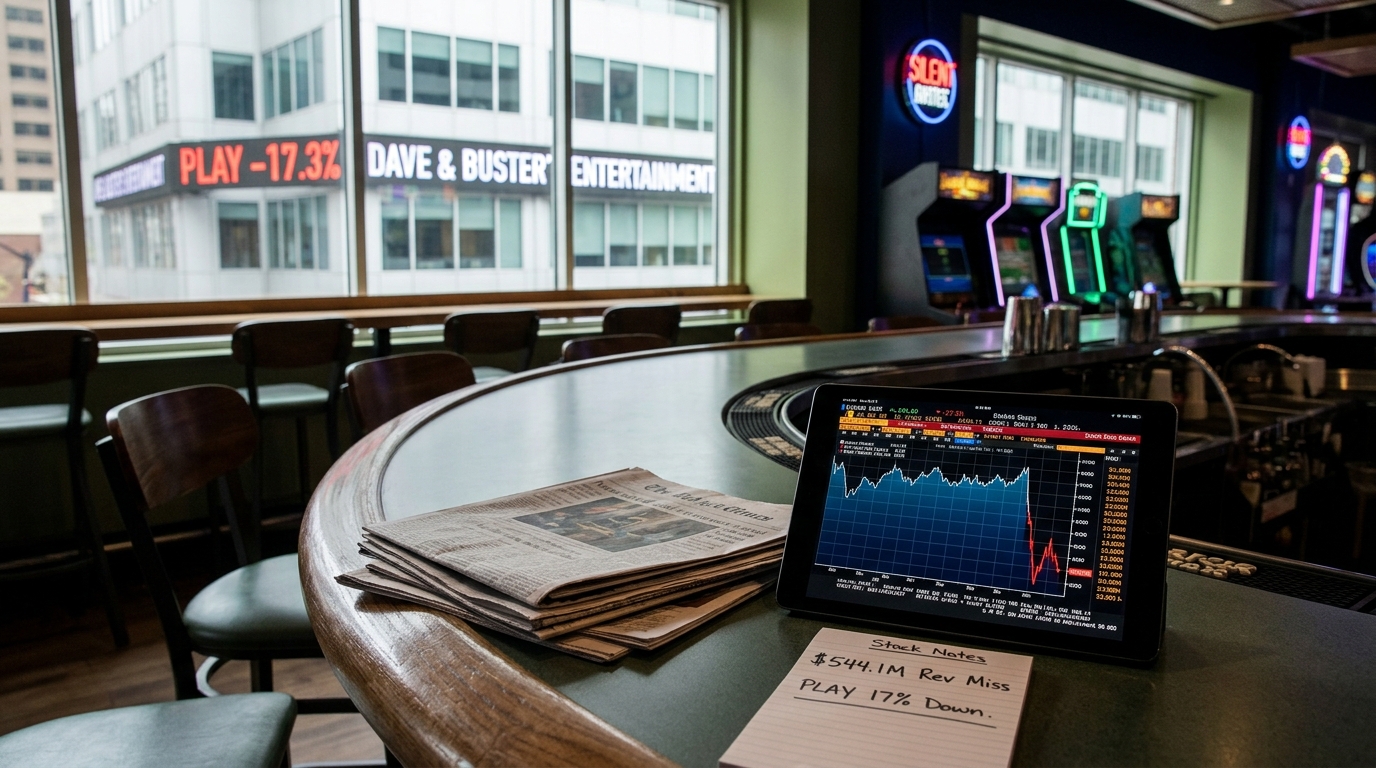
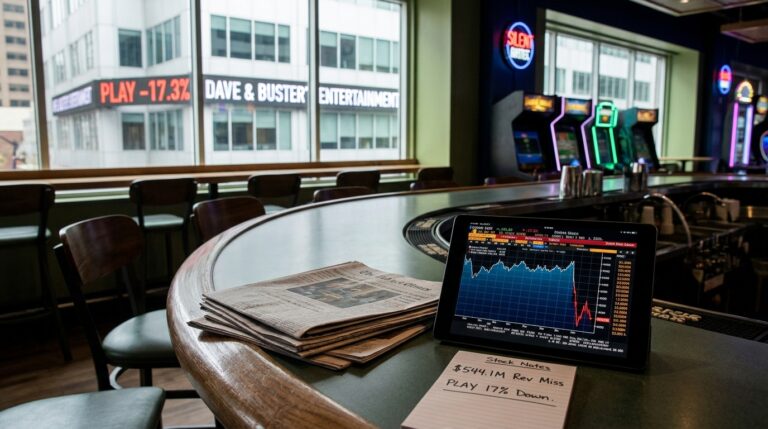
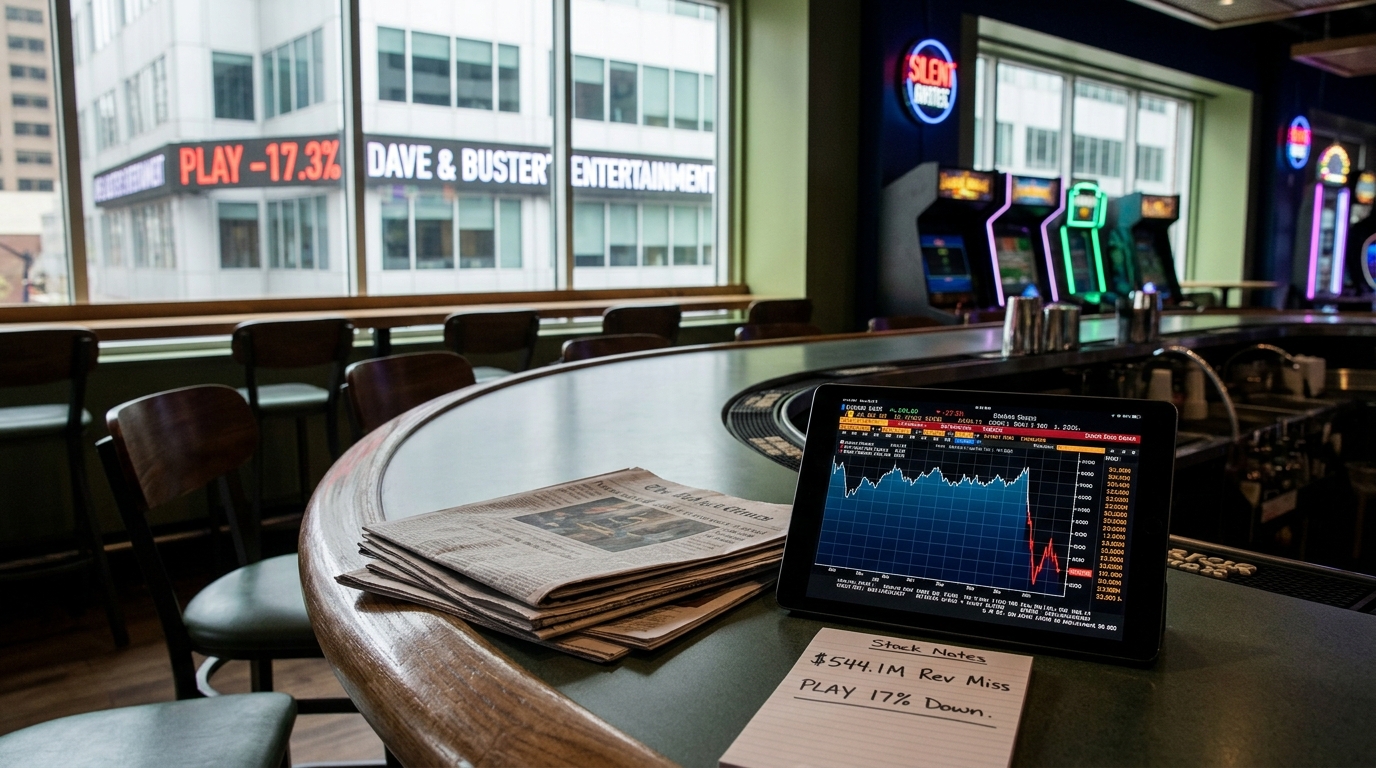
Markets don’t need a catastrophe. They only need a number that breaks a story people had already paid up to believe. On Tuesday, Dave & Buster’s (PLAY) delivered exactly that.
PLAY reported Q2 fiscal 2026 revenue of $544.1 million, down 2.4% year over year, and posted a net loss of $12.5 million, or $0.36 per diluted share, versus net income of $11.4 million, or $0.32 per diluted share, in the prior-year quarter. The revenue figure fell short of Wall Street estimates of about $556.8 million. The adjusted loss of $0.27 per diluted share significantly missed consensus expectations of about a $0.19 per share profit. That swing, from expected profit to reported loss, is what broke the stock.
The Split Inside the Quarter
The entertainment segment proved to be the primary weakness, declining about 9% to $332.6 million. The other half of the business told a different story. Food and beverage comparable sales increased 7.6%, marking the fifth consecutive quarter of growth. Two divisions, opposite trajectories. PLAY is an entertainment company in the clinical sense; food and beverage is the amenity, not the reason for a visit. When that core product shrinks, no amount of wing-night comp growth rescues the margin structure.
Adjusted EBITDA fell to $98.9 million from $129.8 million a year earlier, with the adjusted EBITDA margin falling to 18.2% from 23.3%. Operating margin compressed to 3.6% from 9.5% in the same quarter last year. Management’s counterweight: adjusted free cash flow was positive $19.5 million through Q2 FY26 versus negative $36.5 million through Q2 in the prior year period, a year-over-year improvement of approximately $56 million. Real progress on cash conversion, but not enough to offset the earnings shock.
Sector Read: Idiosyncratic, Not Systemic
Six Flags (FUN) fell 2% and Lucky Strike (LUCK) slipped 1%, with modest declines suggesting investors are separating sector-wide pressure from PLAY’s specific earnings problems. That spread matters. A two-point sympathy move in FUN and a one-point dip in LUCK are noise. A 17% single-day plunge in PLAY is a verdict on execution, not on entertainment spending broadly. The results also land amid a leadership transition. Darin Harper became CEO effective August 3, 2026.
Options Market: What Was Priced In, What Comes Next
This is where the story turns into structure. The options market had priced an implied move of roughly 13.7% into the earnings date. The actual realized move exceeded that threshold, which means buyers of at-the-money straddles entering the event were rewarded, but only if they held through the gap. Post-event, sharp implied volatility drops can materially affect an options trade, even when the underlying price moves as expected. With the event now resolved and implied volatility deflating, the calculus reverses.
For traders who believe the stock stabilizes near current levels (PLAY is now trading more than 70% below its 52-week high of $24.19), the relevant structures shift away from directional premium buying. A defined-risk bull put spread, sold below current price with a purchased strike further out, captures elevated residual premium without requiring a V-shaped recovery. If you believe the food and beverage momentum and the $56 million free cash flow improvement represent a genuine inflection, that structure offers a bounded reward for a bounded thesis. A defined-risk bear call spread above the breakdown level suits traders expecting continued pressure from the entertainment segment. For a neutral view, an iron condor takes both sides of elevated post-event premium while keeping risk capped on either wing.
Risk and Forward Outlook
UBS lowered its price target to $9 from $12 while maintaining a Neutral rating, with analyst Dennis Geiger saying sales trends are showing early signs of improvement, but greater-than-expected margin and earnings pressure, elevated macro risks, and limited visibility suggest the turnaround remains in its early stages. Sequential improvement emerged heading into July, where comparable sales dipped just 1.6%, a notable improvement from June’s 5% decline. That trajectory is not nothing, but it is also not a catalyst.
Action Checklist
- Verify current PLAY implied volatility versus its 52-week range before entering any structure; post-event IV collapse changes the cost of every leg.
- Bull case: Defined-risk bull put spread below current price if you believe the free cash flow improvement and sequential comp recovery matter to the next quarter.
- Bear case: Defined-risk bear call spread above the breakdown level for traders who view the entertainment decline as structural, not cyclical.
- Neutral case: Iron condor to harvest residual elevated premium with defined wings on both sides.
- Monitor FUN and LUCK as real-time sentiment gauges; further weakness there would shift the thesis from idiosyncratic to sector-wide.
- Key risk event: Q3 comparable sales data, particularly whether July’s 1.6% dip holds or reverses as the new CEO’s initiatives begin to show measurable impact.