September 19, 2026
The CFO said it out loud at a Morgan Stanley conference. The question is whether October options have priced it yet.
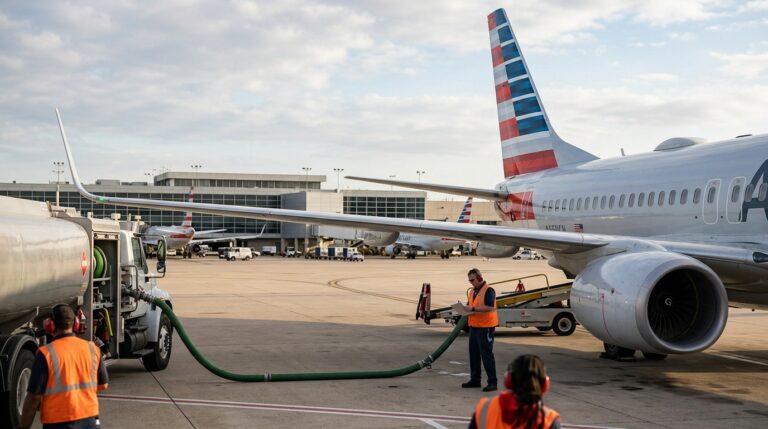
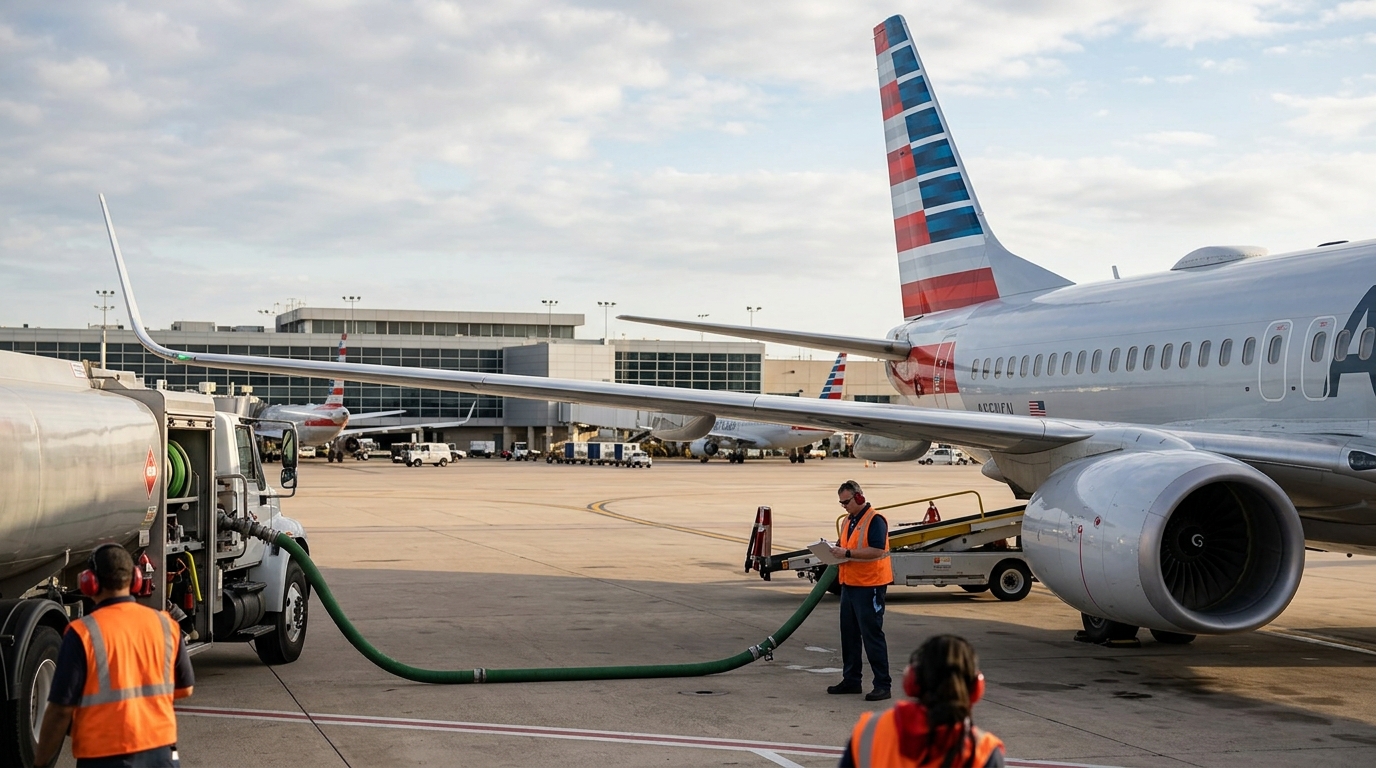
Markets don’t price warnings. They price surprises. So when American Airlines CFO Devon May stood at the Morgan Stanley Laguna Conference on September 16 and told investors that Q4 jet fuel is running roughly $1 per gallon above the level assumed in July guidance, the information itself wasn’t the event. The question is whether AAL options, with earnings still a month out, have absorbed what that dollar-per-gallon figure actually means.
The Department of War Is on a Gold Mine’s Filings
On May 21, 2026, the board of a federal bank voted unanimously to lend nearly $3 billion to build a gold mine on American soil. Congress got 25 days notice. Nobody objected.
Final papers are expected in the second half of this year. The day that ink dries, three things happen at once:
One more detail. The company’s own filings cite “substantial support and partnership from the Department of War,” a phrase we’ve never seen on a gold project. The reason: alongside its gold, the deposit holds a metal China formally banned from export to the United States. The only domestic reserve in the country.
The company is about one fiftieth the size of Newmont.
May said Q4 fuel prices have risen roughly $1 a gallon from American’s July assumptions, adding about $1 billion to quarterly fuel costs, and noted that every 1-cent move in fuel prices shifts American’s quarterly bill by roughly $10 million. That arithmetic is clean. What is less clean is how much of a $1 billion cost overage is already embedded in the October expiration cycle.
The Numbers Behind the Warning
U.S. jet fuel spot pricing was about $4.51 per gallon on September 18. American paid $4.05 per gallon in Q2 2026, and its quarterly fuel expense surged $2.2 billion year over year to $4.9 billion, with no fuel hedges in place. The hedge-book absence is critical. Every gallon lands at spot. There is no buffer between the distillate market and American’s income statement.
Jet fuel has climbed above $4 per gallon, more than double the cost a year ago, leading executives at American, United, and Southwest to rethink their least-profitable routes. The distillate complex driving that move is not a domestic story. In its latest Short-Term Energy Outlook, the EIA said it assumes oil flows from the Middle East remain constrained through the fourth quarter of 2026 and that it could take until Q2 2027 for most production and trade flows to return to pre-conflict averages.
What the Three Carriers Said
Executives from American, United, and Southwest all said higher jet fuel prices are prompting carriers to adjust capacity and closely monitor flight schedules. The responses differ in specificity. United CFO Mike Leskinen said the carrier will make adjustments into Q1 2027 if fuel stays high, framing it as flying for profitability and free cash generation rather than market share. Southwest CFO Tom Doxey said the carrier has already pared back about half of the modest year-over-year capacity growth it had planned at the start of 2026. American’s path is the most exposed given its unhedged book and the scale of the declared overage.
Musk’s Quiet AI Empire Could Trigger the Next Boom
While everyone watches Nvidia and Microsoft… Elon Musk is building a secretive AI empire.
We’ve uncovered a stock that gives investors “backdoor” access to his next major move…
Without buying Tesla or OpenAI.
American plans to give a fuller Q4 outlook with earnings next month, when investors will look for whether the carrier leans on capacity cuts, pricing, or other cost controls to soften the hit. That earnings report is expected October 15.
Options Market Analysis
This is not a binary earnings trade. It is a pre-earnings volatility question. When AAL last reported on July 23, shares declined about 8.35% the following session. That Q2 report came with an 83% year-over-year jump in fuel expense and a guided Q3 fuel bill that was already $1.7 billion above the prior year. The Q4 warning disclosed on September 16 adds another layer on top of that baseline. Options heading into an October report with a known $1 billion cost gap already on the table should be pricing elevated realized-move risk.
Put-heavy flow has been a feature of recent AAL trading, but the specific put and call contract totals and the 2.01 put/call volume ratio cited here could not be verified in primary options data sources. That skew, when it persists, typically reflects hedgers and directional bears positioning ahead of the guidance event, not speculative long interest. Premiums elevated by put-heavy flow tend to overprice downside and create opportunities on the structure side rather than the directional side.
Structured Trade Framework
Bull case: If you believe fuel has peaked near current levels and American’s capacity discipline restores unit revenue enough to absorb most of the $1 billion overage, a defined-risk bull position using a call debit spread in the October or November cycle captures upside while capping premium outlay in a high-IV environment.
Inside the Nuclear Revival Reshaping Energy Markets
Governments worldwide are investing billions to revive a proven energy source. Supply chains are tightening, demand is rising, and select companies stand to benefit. The Nuclear’s Second Act report explains what’s happening next.
Bear case: For traders expecting the Q4 guidance delivered at earnings to disappoint against an already-lowered bar, a put debit spread centered near recent support offers defined-risk downside exposure. If put-heavy positioning remains crowded, buying outright puts means paying into that crowd. A spread reduces the net debit materially.
Neutral/volatility case: With IV elevated heading into a known event and downside skew often richer in airline selloffs, a short strangle or iron condor defined-risk structure looks for the stock to stay range-bound through expiration. This structure sells elevated premium on both sides while capping risk. The relevant risk: a guidance shock wider than the expected move collapses this position.
Risk Analysis
The EIA assumes Middle East supply constraints will persist through year-end, and it has said it could take until Q2 2027 for most production and trade flows to return to pre-conflict averages. If that baseline holds, the $1 billion fuel overage American disclosed is a floor, not a ceiling. Any deterioration in shipping flows or additional infrastructure disruptions amplifies the downside scenario. The balance sheet carries $34.9 billion in debt with a 0.49 current ratio, limiting the cushion available to absorb extended margin compression.
Forward Outlook
The October 15 earnings date is the forcing function. Between now and then, every weekly crude reading, every IATA jet fuel price update, and any incremental commentary from Delta or United will shift AAL options in real time. American’s Q4 margins may ultimately hinge less on the fuel price itself and more on how quickly the carrier adjusts supply. Traders who conflate the two will misprice the event.
Action Checklist
- Confirm current AAL IV rank and IV percentile relative to the 52-week range before initiating any position; elevated put/call ratios can persist and expand.
- Map the October 15 earnings date against your chosen expiration to ensure the event is captured within your cycle.
- Size defined-risk structures to a fixed percentage of capital given the $34.9 billion debt load and binary guidance risk.
- Monitor IATA weekly jet fuel price reports (currently $181.46 per barrel globally) as the leading indicator for whether the $1 billion overage widens before earnings.
- Track UAL and LUV conference commentary for any capacity signals that shift sector-wide supply expectations ahead of AAL’s report.