

September 20, 2026
Bonus Content: BioNTech Has the Same mRNA Cancer Platform. Its Stock Is Half the Price.
The REAL Reason Trump Is Invading Iran
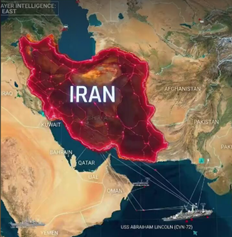
For a moment…
Forget about Trump’s ties to Israel.
Forget about reports of Iran’s nuclear program.
Because my research has led me to believe we’re risking World War 3 with Iran for a completely different reason.
Click here to find out what it is.
If you have even a single dollar invested in the U.S. stock market, this is going to directly impact you.
BioNTech Has the Same mRNA Cancer Platform. Its Stock Is Half the Price.

Moderna proved something on August 19 that the entire mRNA sector had been waiting years to confirm: personalized mRNA cancer vaccines can work in a Phase 3 trial. The stock nearly tripled in a single session. What happened next tells you where the real trade sits right now.
BioNTech climbed about 22% on August 19 after Moderna and Merck reported that their personalized melanoma vaccine hit its Phase 3 endpoints, cutting the risk of cancer recurrence and spread in a trial of 1,137 patients. That reaction looks large until you compare it to Moderna’s move. The gap matters because the closest peer using the same underlying technology moved far less, which suggests the market is paying for Moderna’s specific asset rather than the mRNA cancer vaccine category as a whole.
The Platform Is Identical. The Data Timeline Is Not.
BioNTech’s autogene cevumeran (BNT122) pairs custom mRNA with a patient’s specific tumor mutations to train the immune system, the same core design Moderna just proved out in melanoma. BioNTech’s version runs through a partnership with Roche’s Genentech unit and has been studied in colorectal cancer and pancreatic ductal adenocarcinoma instead. That distinction is what the options market is currently pricing: same mechanism, different indication, later data.
But the timeline has tightened and, in one key slice, reversed. BioNTech disclosed on August 28, 2026 that it is terminating its Phase 2 colorectal cancer adjuvant monotherapy trial of autogene cevumeran (BNT122-01; NCT04486378). The Phase 2 pancreatic trial (IMcode003; NCT05968326) continues as planned, and BioNTech has discussed looking to an interim analysis in 2027 for that setting rather than treating 2027 as a broad, clean “first data” line for the program.
BioNTech has used cash from its COVID vaccine profits to acquire rights to a more diversified pipeline of biologic drug candidates in oncology, with launches potentially starting in 2027 to 2028. Revenue from that franchise, however, is compressing: BioNTech posted revenue of €2.87 billion in 2025 against an operating loss of €1.405 billion.
What the Options Market Says
BNTX’s options chain is priced for volatility. The September expiration aggregates run to implied volatility near 90%, open interest tilted to a put/call ratio of 0.9, and max pain near the $105 strike, with total listed open interest across that expiration at 33,100 contracts. Longer-dated structures are less extreme: the available options chain reports annualized implied volatility near 50% on December expirations. That divergence between near-term IV and longer-dated IV signals the market’s uncertainty is concentrated around immediate data events, not structural doubt about the company.
The put/call volume ratio on recent chains ran 0.43, call-heavy. The displayed chain reports annualized implied volatility of 72%, with 3,700 call contracts traded against 1,600 put contracts. That call skew suggests traders positioning for upside into BioNTech’s next oncology catalyst rather than hedging downside.
Three Structures Worth Examining
Bull case. If you believe Moderna’s Phase 3 melanoma result validates BioNTech’s BNT122 platform and that the market has underweighted the 2027 pancreatic interim-analysis catalyst, a defined-risk call spread on BNTX, buying a January 2027 $110 call, selling a $135 call, caps premium outlay while targeting the gap between current levels and analyst price targets. TD Cowen holds a $120 target; BMO has set $143.
Bear case. For traders who expect that BioNTech’s management is correct to downplay the Moderna cross-read, BioNTech’s chief medical officer Özlem Türeci said on the second-quarter 2026 call that there is no read-through opportunity because melanoma and colorectal cancer are different diseases with different biology and responsiveness to immunotherapy. A defined-risk put spread below $95 captures a reversion toward the pre-August base if COVID revenue disappointments accelerate.
Neutral/volatility case. With IV near 72% on December expiries and BNT122 pancreatic interim analysis discussed as a 2027 event, a short iron condor centered on the $100 to $120 range collects elevated premium while defining max loss on both sides.
Risk Factors
Three risks dominate. First, BioNTech co-founders are departing by year-end, introducing leadership uncertainty at a critical pipeline juncture. Second, U.S. federal health officials have scaled back mRNA-related development activity under BARDA, including cancellations and de-scoping across projects totaling nearly $500 million, a macro headwind for the sector. Third, if mRNA flu vaccines cannot convert superior efficacy data into durable annual uptake, despite higher reactogenicity, political skepticism, and a crowded field, it weakens the commercial case for mRNA across every other respiratory indication now in development.
Forward Outlook
BioNTech’s off-the-shelf four-antigen melanoma mRNA candidate BNT111 has a Phase 3 Lipo-MERIT trial with a readout that BioNTech has previously guided to late 2026, separate from the individualized BNT122 program. Two late-stage catalysts in the same twelve months is unusual for a stock trading at less than half Moderna’s market cap. The mRNA vaccine market is projected to exceed $10 billion annually by 2030, with combination vaccines and oncology applications representing the highest growth segments. The question is whether BNTX, at roughly $103, is pricing that opportunity or discounting it entirely.
Action Checklist
- Monitor BNT111 Lipo-MERIT Phase 3 data, expected late 2026, as the nearest binary catalyst
- Track BNT122 partnership updates from Genentech and any interim pancreatic data, with BioNTech discussing an interim analysis in 2027
- Watch IV spread: near-term IV at 90% vs. December at 50% signals event-driven premium rather than structural fear
- Assess COVID revenue trajectory in Q3 2026 earnings as the baseline funding check for the oncology pipeline
- Size any defined-risk structure to account for low liquidity in strikes above $130, where open interest thins materially