
September 21, 2026
Bonus Content: Thor Industries Reports Tuesday. The Consensus Gap Matters.
There might be no clear end in sight to the Iran war…
But this escalation is likely distracting you from a stunning pattern quietly heating up in the predictions market…
Corporate and Political insiders, folks with firsthand info on potential announcements, deals, policy changes coming up and more…
Have been making sneaky yet massive bets on platforms like Polymarket…
And quietly front-running the market in the process.
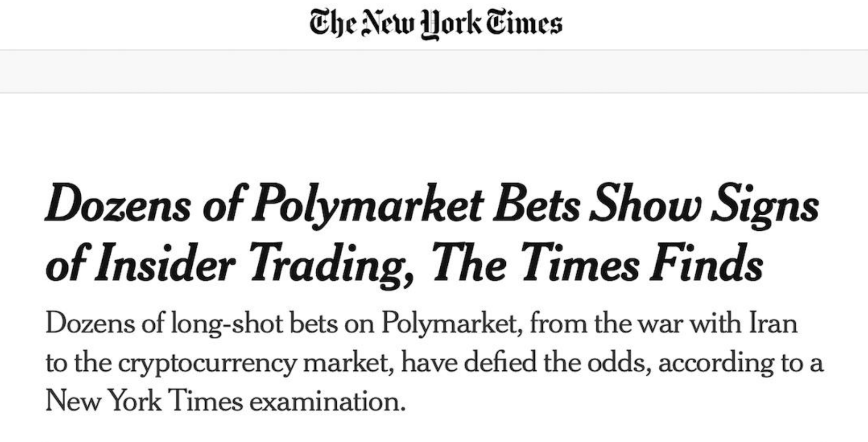
That’s why you’d have noticed news about this pattern flying around…
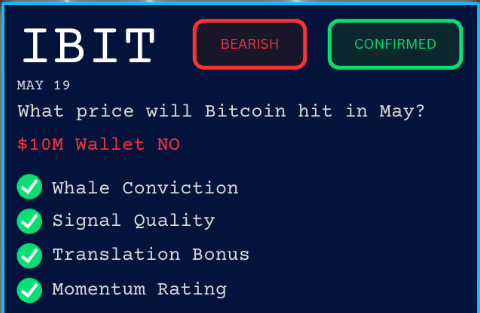
Out of the blue on May 19th this year…
I tracked a large bearish bet on Bitcoin from an account with over $10 million in volume…
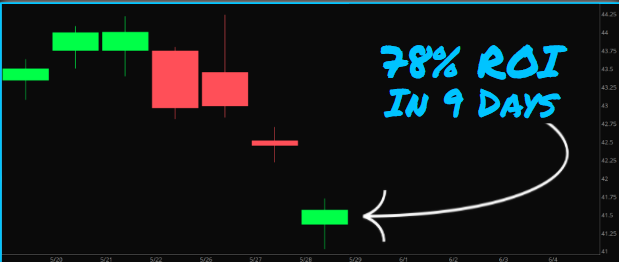
Days later… News came out that the SEC was delaying plans to further crypto innovations, obvious bad news for Bitcoin.
Acting on the bearish bet before the news came out with a quick trade locked in 78% in 9 days.
It doesn’t end there…
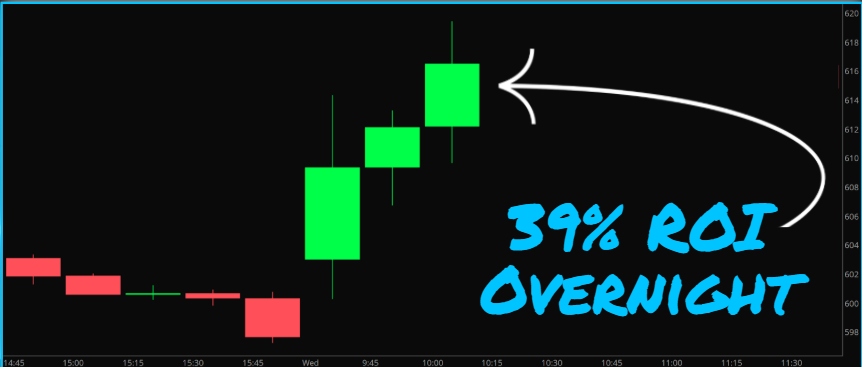
These massive insider bets also tipped off a 39% winner on META overnight.
And even 60% on TSM in 6 days.
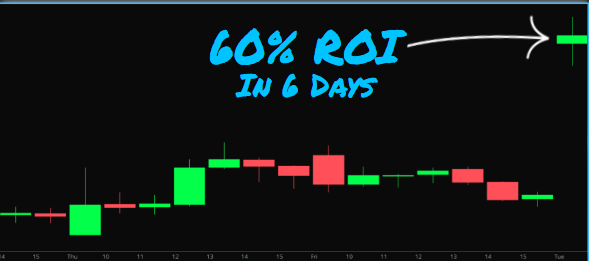
There were smaller wins and those that didn’t work and I won’t make reckless guarantees about the stock market…
But in the next few minutes…
I’ll show you the special secret I use to track these insider bets…
Better yet…
You’ll get FREE access to use this secret for yourself too… with no catch.
All you have to do is tap this link to get instant FREE access and start tracking these insider bets yourself.
To Better Trading,
Alex Reid.
Thor Industries Reports Tuesday. The Consensus Gap Matters.

This is not about whether Thor beats a number. It is about which number it beats, and what management says after. Thor Industries reports Q4 fiscal 2026 earnings Tuesday, September 22, with the consensus EPS centered near $0.95 against $2.36 a year ago, and revenue projected at about $2.15 billion versus $2.52 billion in the prior-year period. That year-over-year EPS compression of roughly 60% is baked in. What is not baked in is guidance, and the unusually wide analyst spread, from $0.90 to $1.35 per share, signals genuine uncertainty about where earnings actually land.
After Q3, Thor cut its full-year diluted EPS guidance to $3.30 to $3.80, down from the $3.75 to $4.25 range it entered the fiscal year with, citing prolonged macroeconomic headwinds. Back out the first three quarters and Q4 implied EPS falls somewhere between $0.55 and $1.05 depending on which scenario plays out. The $0.45 gap between the low and high estimates is what makes this report difficult to fade in either direction ahead of the open.
What the Numbers Show
Wall Street’s consensus calls for $0.95 per share, reflecting a 58.9% decline year over year, with revenue forecast at $2.15 billion, down 14.7%. The consensus EPS forecast has edged up about 0.9% over the past 30 days, a modest revision higher that some read as a signal of potential upside. Do not over-index it. The Zacks beat-probability model noted a constructive posture, but in the most recent quarter Thor produced $1.86 per share against expectations of $1.88, a miss of just under 1%.
North American Towable net sales are projected at about $613 million, implying a 31% year-over-year decline. That segment is the problem. Management said the Towable segment confronted suppressed volumes from strained consumer sentiment and rising material costs tied to tariff and inflationary pressures. Motorized and European operations have partially offset that pressure, but not enough.
The Macro Frame
Every input to RV demand moved the wrong way through the quarter ended July. The national average price of diesel has moved above $6.00 a gallon in September 2026. Diesel is the fuel of freight and of the large motorhome and the pickup that tows a fifth wheel. A gasoline shock lands on commuters. A diesel shock lands on the top end of the RV market. Average RV loan rates sit around 7.5%, according to LendingTree. Consumer RV registrations fell sharply year over year in early 2026, prompting the RV Industry Association to lower its 2026 shipment forecast. Thor itself expects a mid-teens retail decline in North America during fiscal 2026, compared to its previous assumption of a low- to mid-single-digit decline. That guidance revision, issued in June, is what the Q4 report must now confirm or worsen.
Analyst Positioning
Citi lowered its price target to $76 from $79 on September 16, while BMO Capital cut its target to $95 from $110 on September 15. Analysts broadly cluster around low-$90s price targets, implying upside versus where THO has traded recently in the $70s. Revenue estimates have been revised downward over the past three months, a direction that reflects growing analyst pessimism ahead of the release. The majority of the Street is Neutral, not constructive.
Options Market Analysis
THO options are pricing a meaningful binary outcome. For a mid-cap industrial with normally subdued implied volatility, earnings-week positioning in THO reflects elevated uncertainty consistent with the wide EPS spread. Historically, Thor Industries options implied about a 5% move in share price post-earnings in prior comparable quarters. Given the steeper year-over-year decline now in play and genuine guidance ambiguity, the current cycle warrants a wider expected move. With the stock around $73 to $79, a 7% to 9% implied move would place the at-the-money straddle somewhere in the $5.50 to $7.00 range for the nearest weekly expiration. IV rank is elevated relative to THO’s 12-month historical baseline, consistent with pre-earnings positioning across consumer cyclicals this cycle.
Put skew is leaning bearish. Dealer positioning in the $65 to $70 strike range has accumulated notable open interest, suggesting hedgers are protecting against a guidance-cut scenario. Call-side volume above $82 is thin, indicating the market is not pricing a material beat.
Structured Trade Framework
Bull case: If you believe Thor delivers EPS above $1.10 and management signals that Q4 represents trough margins, a defined-risk call spread in the $75/$85 range for the October expiration captures upside without unlimited loss exposure. The thesis requires the Motorized segment to have held volume through the summer.
Bear case: For traders expecting a guidance cut that resets full-year FY2027 expectations lower, a put spread in the $70/$62 range exploits the downside without the cost of naked puts into a vol-elevated environment. The trigger would be any commentary reinforcing that mid-teens retail decline extends into FY2027.
Neutral case: The unusually wide EPS range itself is the trade. A defined-risk short strangle using the October $82 call and $67 put, sized conservatively, collects premium against a stock that has repeatedly stayed range-bound after recent quarters. Max risk is capped by buying wings $5 wide on each side. This structure only wins if the stock settles inside the implied move, which requires guidance to land in-line rather than dramatically above or below.
Risk Analysis
The near-term risk is that profits remain exposed to a soft North American Towable market and cautious dealers, even as nine-month results and cash flow look more resilient. Secondary risks include sector contagion: Winnebago (WGO), LCI Industries (LCII), Patrick Industries (PATK), Camping World (CWH), and Brunswick (BC) all trade on THO’s forward commentary. A surprise in towable shipment guidance moves the entire supply chain.
Forward Outlook and Action Checklist
The second half of 2026 depends primarily on two genuinely uncertain variables: fuel prices and consumer confidence. If fuel moderates, the hesitation among prospective buyers could reverse relatively quickly.
- Note the EPS print versus the $0.95 consensus, and the wider $0.90 to $1.35 analyst range
- Read North American Towable revenue against the roughly $613 million estimate for segment health
- Watch FY2027 guidance language: any mention of retail stabilization changes the options skew immediately
- Monitor WGO, LCII, and PATK for sympathy moves in the first hour of trading
- IV will compress sharply post-open. Options strategies should be in place before Tuesday’s open