October 6, 2026
Bonus Content: China Got Less Than It Wanted From Xi’s US Visit. APEC Is Next.
Dear Reader,
With the Federal Reserve actively rolling out its new “FedNow” program …
A centralized hub designed to track, flag and potentially even freeze your daily transactions …
Millions of Americans are desperately looking for an escape hatch.
But they are making one critical mistake in the process.
You see, most folks assume that to truly protect your money from government surveillance, you need a shady Cayman Islands trust, a complex offshore LLC or a secret Swiss bank account.
Nothing could be further from the truth.
I’ve uncovered a unique financial loophole to store your savings completely outside the control of any digital banking algorithm.
It takes your money completely “off the grid” … but NOT offshore.
Everything is 100% legal, 100% American and there’s absolutely nothing the government can do to stop you from using it.
In fact, with this method, you physically disconnect your wealth from the banking system.
That means when the next financial crisis hits, and unelected officials potentially use Docket No. OP-1670 to instantly freeze accounts and trap citizens inside the burning U.S. banking system … your wealth will be entirely under YOUR control.
I’ve detailed exactly how this works in an urgent briefing.
Click here to see the 4 steps to legally take your savings off the grid today.
Good luck and God bless!

|
| Martin D. Weiss, PhD Weiss Ratings Founder |
China Got Less Than It Wanted From Xi’s US Visit. APEC Is Next.
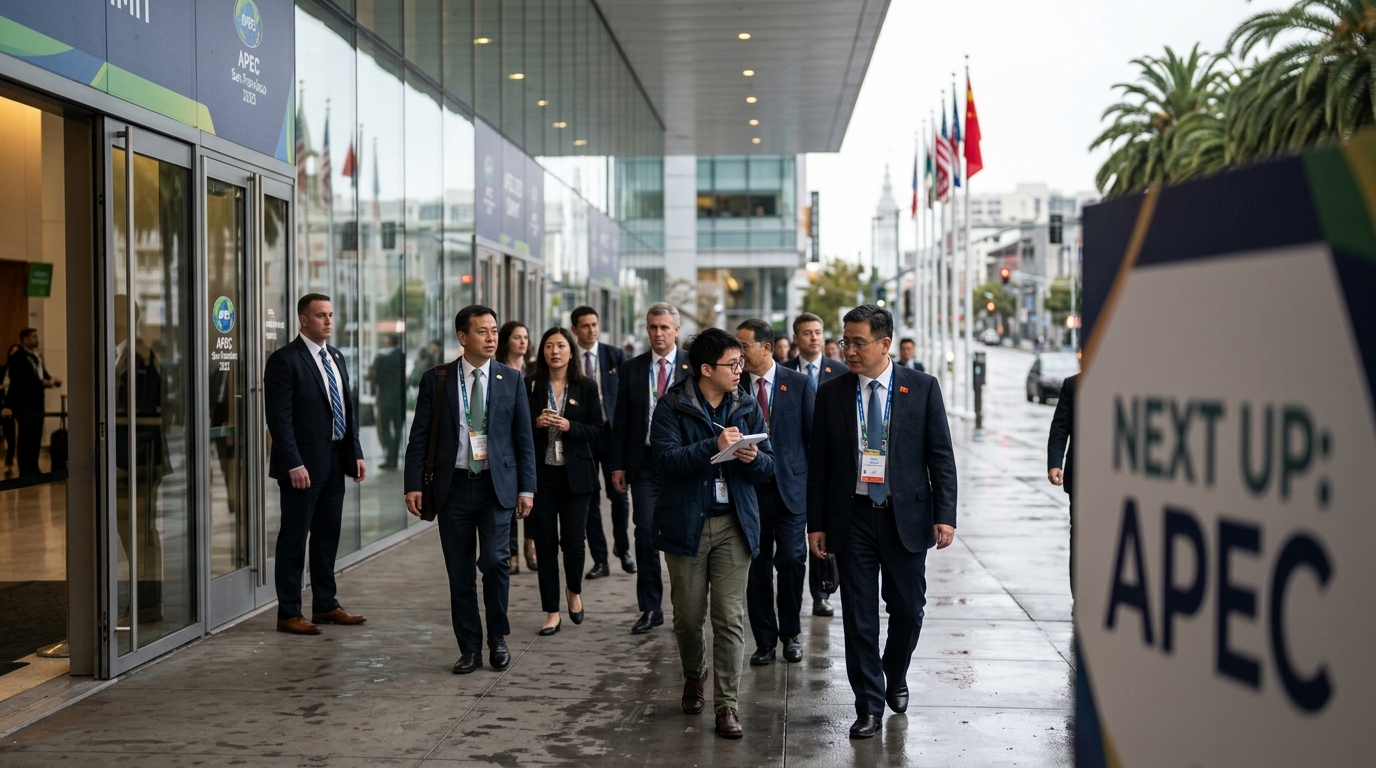
Both leaders called it a triumph. Trump rated his summit with Xi a “12 out of 10.” Xi said, “everything is done to the highest order of perfection.” Markets took the glow at face value. The harder read, published Monday by the South China Morning Post and echoed in follow-on coverage elsewhere, is that the diplomatic architecture between the two countries is considerably thinner than the ceremony suggested.
According to people with knowledge of the matter, Beijing had wanted more from the trip and had pushed for a more ambitious programme for Xi’s first state visit to the United States in more than a decade. Sources say the US knocked back proposals including engagement with the business community and public, and broader talks on AI and security issues. None of those pitches made it to the itinerary of what ended up being a tightly choreographed visit.
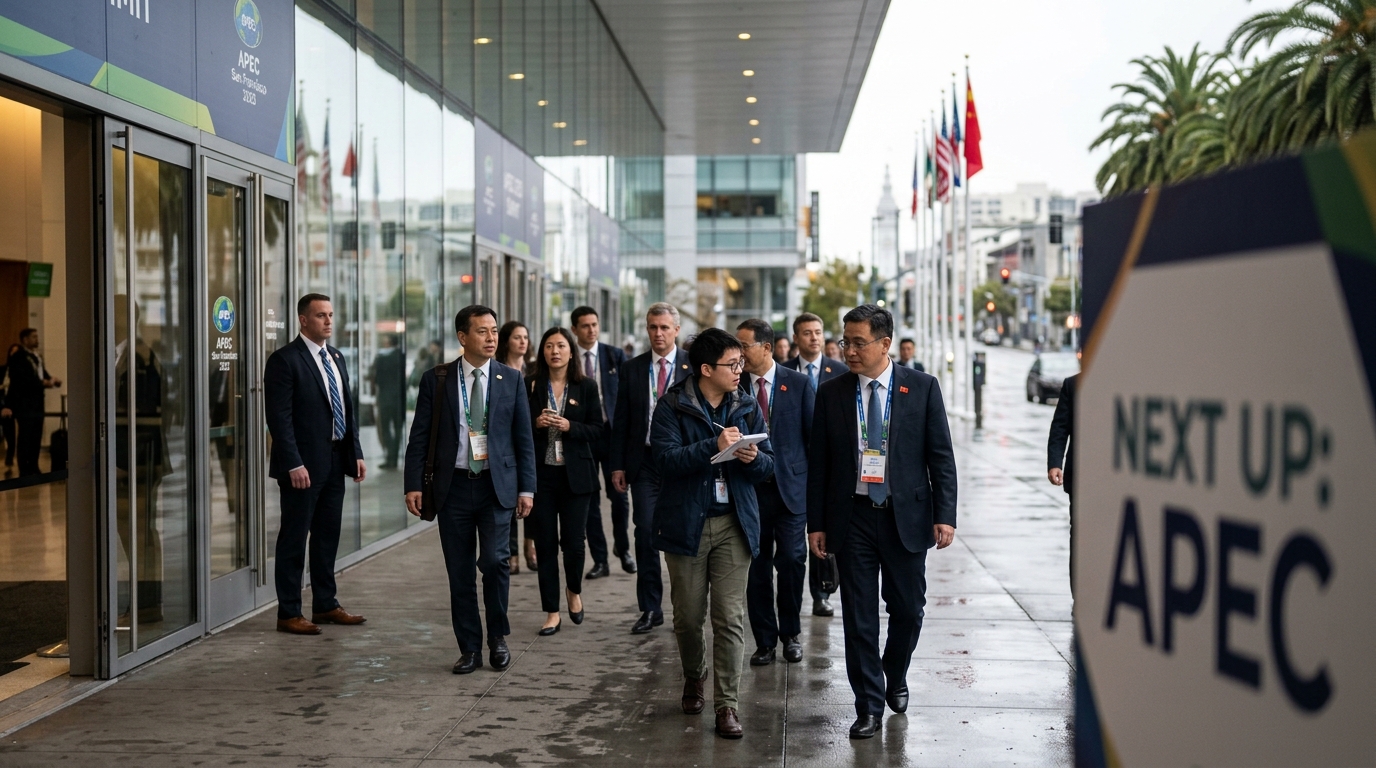
The APEC dimension compounds it. The 33rd APEC Economic Leaders’ Meeting is scheduled for November 18 to 19, 2026, in Shenzhen, alongside the APEC CEO Summit. China is the host. Separately, earlier planning around APEC’s trade track shows that ministerial meetings have been held in person in China during 2026, including the Ministers Responsible for Trade meeting in Suzhou in May. If Beijing is now pushing to move a key late-year foreign and trade ministers’ gathering online rather than in-person, it would signal a real downgrade in tone into leaders’ week.
What the Data Says
FXI closed October 2 at $33.19. KWEB closed October 2 at $23.86, with a trailing 12-month total return near negative 44%. For the year-to-date period through October 2, KWEB has lost about 29.9%. Both funds advanced modestly on Monday, October 5, with KWEB gaining about 3.06% and FXI adding about 1.96%. That one-day bounce does not alter the trend. It reflects short covering, not a structural re-rating.
The business-delegation failure is instructive. Differences between Washington and Beijing over potential investment announcements created roadblocks for a Chinese business delegation expected to accompany Xi on his state visit. Reports on the state dinner guest list suggested a wide gap between the overall room and the size of China’s official delegation. Meanwhile, the trade mechanism that has advanced most cleanly has been the Board of Trade, which U.S. officials have since framed around reciprocal consideration of roughly $30 billion-for-$30 billion in non-sensitive goods for potential reduced-tariff treatment. The parallel “Board of Investment” has been discussed by officials and in outside analysis, but remains less concrete as a deliverable.
Options Market: What the Positioning Reflects
FXI’s options skew remains defensive, with multiple data vendors showing put demand outweighing calls on key snapshots around the October 2 close. That positioning is not neutral. It reflects institutional demand for downside protection, concentrated in a vehicle that has been under pressure into early October.
Implied-volatility descriptors also tell a “managed-risk” story: not cheap enough to call complacent, not high enough to price a crisis. The market is treating the current diplomatic friction as manageable noise rather than a structural deterioration.
For KWEB, options dashboards show millions of contracts of open interest outstanding around early October, consistent with an ETF that draws heavy hedging flow. That hedge demand is rational given KWEB’s higher realized volatility profile versus FXI.
Structured Trade Framework
This is not a story with a dated catalyst. There is no earnings release, no Fed decision, no scheduled announcement that resets the clock. What it has is a rolling sequence of diplomatic events, with the November 18 to 19 leaders’ summit in Shenzhen as the next meaningful inflection point.
Bull case (FXI): If the online-ministerial proposal is walked back and Washington agrees to broader engagement ahead of the Shenzhen summit, the existing framework includes a “30-for-30” pathway that U.S. officials have described as reciprocal consideration of about $30 billion in non-sensitive goods for reduced-tariff treatment. Any credible expansion of that framework would matter more for the SOE-heavy FXI basket than for pure growth proxies. For traders expecting a re-engagement, a defined-risk call spread in the November expiry captures the APEC window without unlimited exposure.
Bear case (KWEB): If the pattern from the Washington visit extends, AI and tech remain the most contested domains. The two sides have discussed AI incident-handling channels, but broader AI governance and security conversations have repeatedly narrowed into “safety” versus “capability” disputes. KWEB’s top holdings, Alibaba, Tencent, PDD, Meituan, and Baidu, carry direct regulatory and export-control risk from that friction. A defined-risk long-put or put spread in KWEB, sized to the November expiry, expresses that view without open-ended loss.
Neutral case: With FXI’s volatility measures sitting well below their recent extremes and KWEB still carrying a higher realized-vol backdrop, a volatility-collecting structure, short strangle or iron condor, could work if the diplomatic picture stays frozen rather than deteriorating sharply. The risk is a binary headline from Shenzhen.
Risk and Forward Outlook
The core risk is mispricing the depth of bilateral friction. Both sides called the Washington summit historic. The behind-the-scenes record shows a more constrained result, fewer deliverables, a business delegation that barely materialized, and the possibility of a key APEC meeting being pushed toward video. That divergence between public framing and process reality has been the defining feature of US-China relations throughout 2026.
Action Checklist:
- Monitor whether China formally confirms any move to put a key APEC foreign and trade ministers’ gathering into online format; a US rejection of that proposal would be a near-term bullish signal for both FXI and KWEB.
- Track FXI put-versus-call positioning as a sentiment gauge into leaders’ week, and sanity-check the ratio across multiple vendors because “put/call” figures often differ by definition.
- For any defined-risk structure on FXI or KWEB, use November or December expiries to span the Shenzhen leaders’ meeting on November 18 to 19.
- Size positions to reflect the absence of a binary catalyst: this is a slow-burn diplomatic story, not an earnings event.
- Watch the Board of Trade timeline and any concrete readouts on a Board of Investment. Progress on either would shift the bull case from speculative to supported.