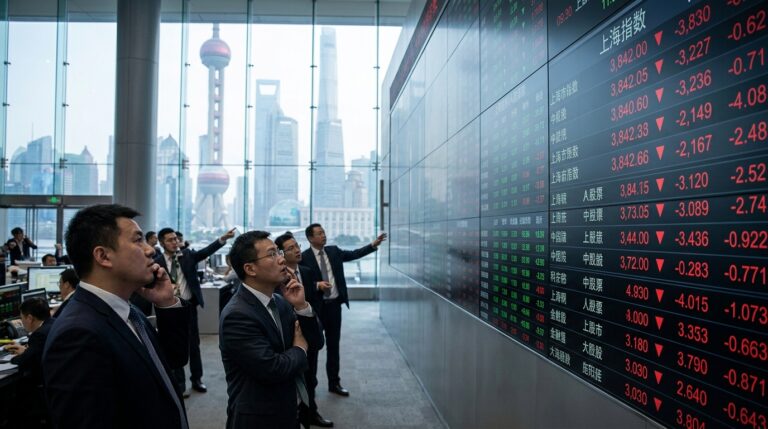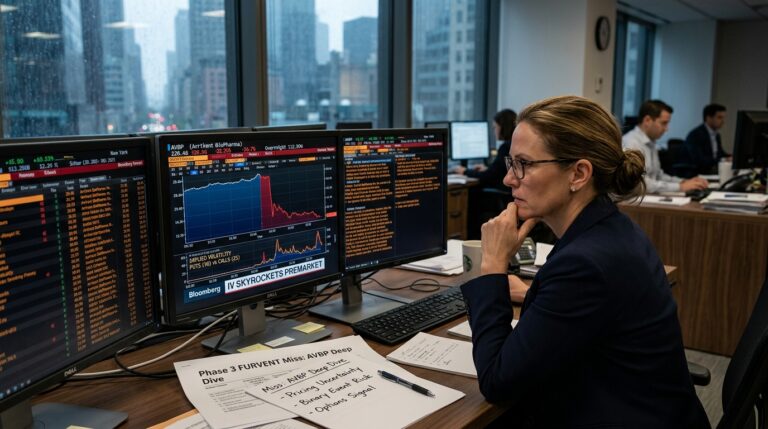
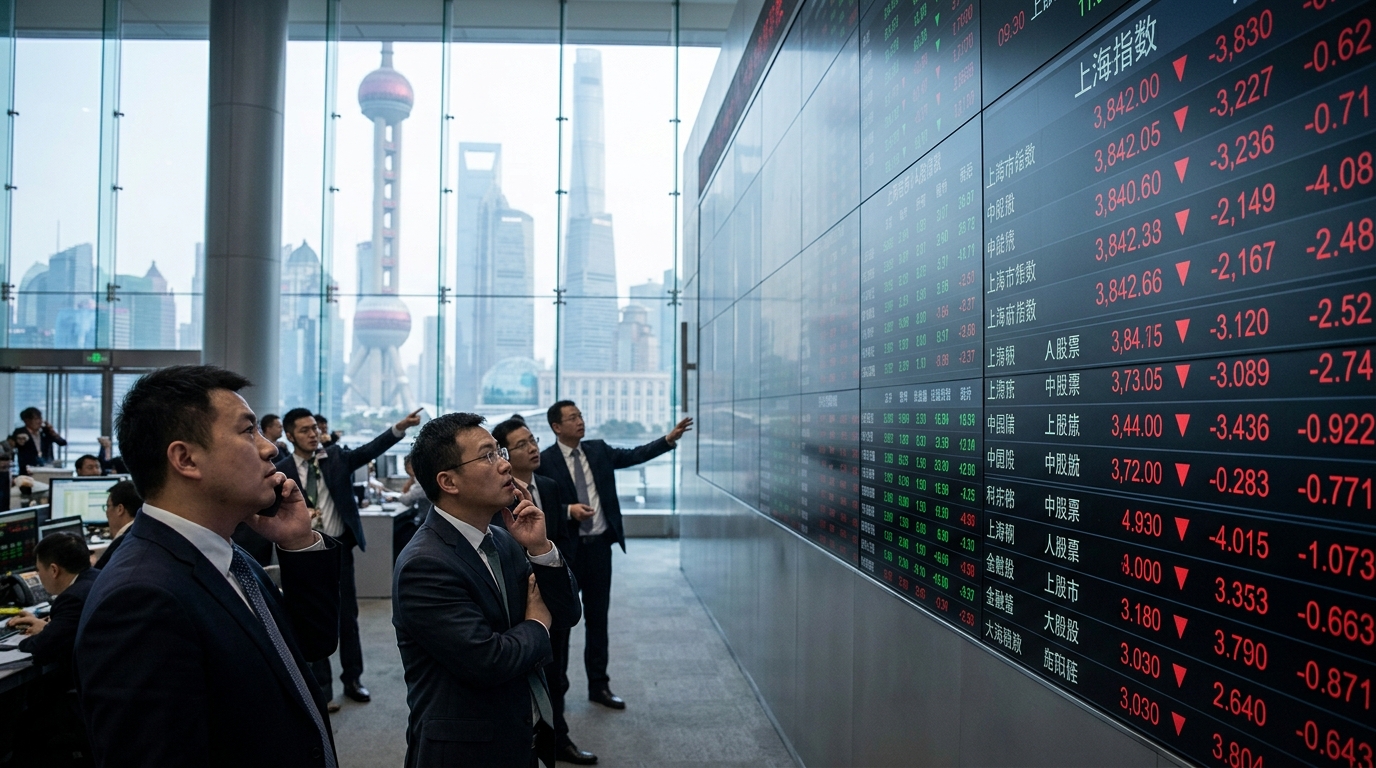
For seven sessions, the Shanghai Composite sat frozen at 3,842.19 while the rest of the world adjusted. U.S. Treasury yields climbed above 5.3%, Hong Kong equities swung sharply, and Beijing introduced a new mortgage interest subsidy. When mainland trading resumed this morning at 09:30 Beijing time, the catch-up was not pretty.
The first trading session after the week-long National Day holiday saw China’s three major A-share indexes open lower on October 8. By midday, the Shanghai Composite was down 0.27%, the Shenzhen Component Index fell 1.24%, and the ChiNext Index dropped 2.13%. The latter matters most: tech and growth stocks are precisely the names most sensitive to the rate backdrop that hardened during the break.
What the Market Walked Back Into
The global bond market did not pause for Golden Week. The yield on the 10-year U.S. Treasury note was around 5.32% on October 8, after rising as high as roughly 5.36% a day earlier. That is the rate environment mainland investors are now pricing for the first time since September 30. Reuters reported in late September that New York Fed President John Williams said another rate hike by year-end was “a reasonable” expectation. Higher-for-longer in the U.S. means tighter global dollar liquidity, which reaches China through capital flows, credit costs, and CNY stability.
Hong Kong did the early damage. The Hang Seng Index closed at 23,972.29 on Friday, October 2, down 640.98 points or 2.60%, its steepest single-day fall since March. High pressure from U.S. Treasuries, the absence of southbound capital, and weak volatility before the holiday made a gradual decline and shakeout almost unavoidable. The partial recovery that followed was modest. The Hang Seng Tech Index fell 2.89% on October 8, while the Hang Seng Index declined 1.43%.
What the Market May Be Missing
The opening gap in Shanghai was smaller than the Hong Kong move implied it would be. China A50 futures were around 13,830 on October 7, less than 1% below their September 30 close of 13,963, despite falling as low as 13,751 during the break. That relative stability in offshore China pricing is worth noting: it suggests foreign investors chose not to hammer the broader index during the holiday, even as Hong Kong’s more internationally exposed names took hits.
But the consumer side is harder to spin positively. Average spending per trip during the holiday reached 911.04 yuan, down 0.55% from the same period last year, the lowest since 2022, when COVID lockdowns were in effect. Citi analysts said early Golden Week data looked underwhelming, with spending per traveller likely softer despite steady visitor numbers.
Travel volumes were strong. Wallets stayed shut. That distinction matters for domestic consumption stocks.
Where It Shows Up
FXI, the iShares China Large-Cap ETF, carries heavy exposure to the same financials and property names that led Hong Kong’s decline on October 2, when the Hang Seng China Enterprises Index fell 2.31% to 8,030.54. KWEB, which tracks Chinese internet names, faces the dual pressure of higher global rates compressing multiples and a Hang Seng Tech Index that has struggled this year. Without southbound buying from mainland investors, Hong Kong has relied on offshore flows, which tend to be more sensitive to global risk sentiment, and those flows are now competing with a roughly 5.3% risk-free rate in the U.S.
Beijing’s policy backstop is real but tested. A new mortgage interest subsidy took effect on October 1, giving property shares a fresh policy catalyst when mainland trading resumes.
The question is whether domestic liquidity support can offset the external rate pressure that has been building all week.
Risks and Counterpoints
The bear case is straightforward: the benchmark sits roughly 9.8% below its 52-week high of 4,258.86 and only about 2.7% above its 52-week low of 3,741.11. A sustained break below 3,800 would put the 52-week low back within range and would visibly test Beijing’s resolve to stabilize markets. The index gave a negative signal from the rectangle formation by breaking through support at 3,857, and further downside to 3,761 or lower is signaled technically.
The bull case rests on the historical pattern. Everbright Securities noted that risk appetite fell in September, with the Shanghai Composite down 3.6% for the month, consistent with the historical pattern of pre-holiday adjustment followed by post-holiday recovery. Trading activity picked up noticeably, with total market turnover around 1.106 trillion yuan in the morning session, up about 196 billion yuan from the comparable prior session, a sign that investors returned with something to say, even if that message opened lower.
What to Watch Next
Three things will define the next few sessions. First, whether the Shanghai Composite holds 3,800 by the close; a failure there reopens the 52-week low debate immediately. Second, the scale and direction of Stock Connect flows now that the northbound and southbound channels are both open again, southbound flows from mainland investors into Hong Kong will signal whether domestic confidence has recovered enough to chase H-shares. Third, any detail from Beijing on the size and timeline of fiscal support beyond the September 29 State Council pledge. Without that, the policy floor feels thinner than the market needs it to be against a roughly 5.3% U.S. ten-year.