At 10:00 ET this morning, the University of Michigan releases its final November consumer sentiment reading. The consensus sits at 51.0, unchanged from the preliminary survey. If it holds, that number will still land near the bottom of the series’ history, a figure that describes conditions typically associated with recessions, not an economy where people are still showing up to shop.
That is precisely the tension investors need to resolve before allocating capital to the holiday quarter.
What the Survey Actually Shows
The preliminary November reading came in at 51.0, a 6.3% increase from October. On the surface that looks like a recovery. It is not.
Cost-of-living concerns dwarf everything else. About 57% of respondents spontaneously mentioned that their living standards have been eroded by high prices, the highest share since May and up from 46% in February, just before the Iran conflict. Year-ahead inflation expectations did ease, falling to 4.3% in November from 4.7% in October, but they remain above the 3.4% recorded in February.
One new wrinkle: consumers’ comments revealed growing anxiety over a possible AI bubble. That concern surfaced in the same week the AI trade showed visible cracks in public markets, a coincidence worth watching in the final reading today.
The Spending Signal That Contradicts the Survey
Here is where the conventional read on sentiment breaks down. If 51.0 on the Michigan index accurately described consumer behavior, the retail sector should be in retreat. It is not, at least not uniformly.
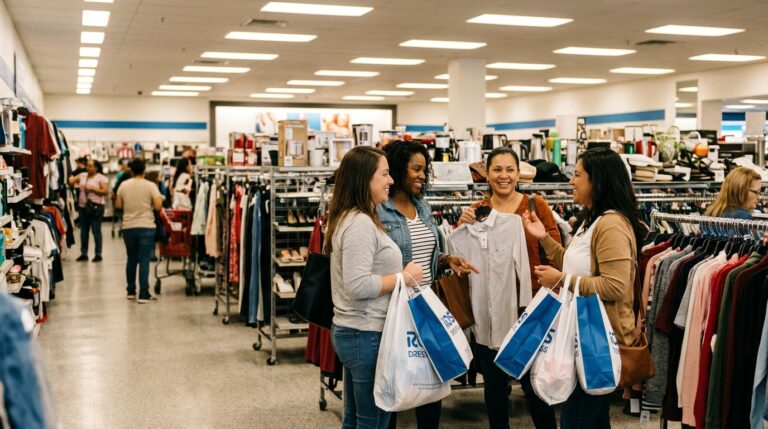
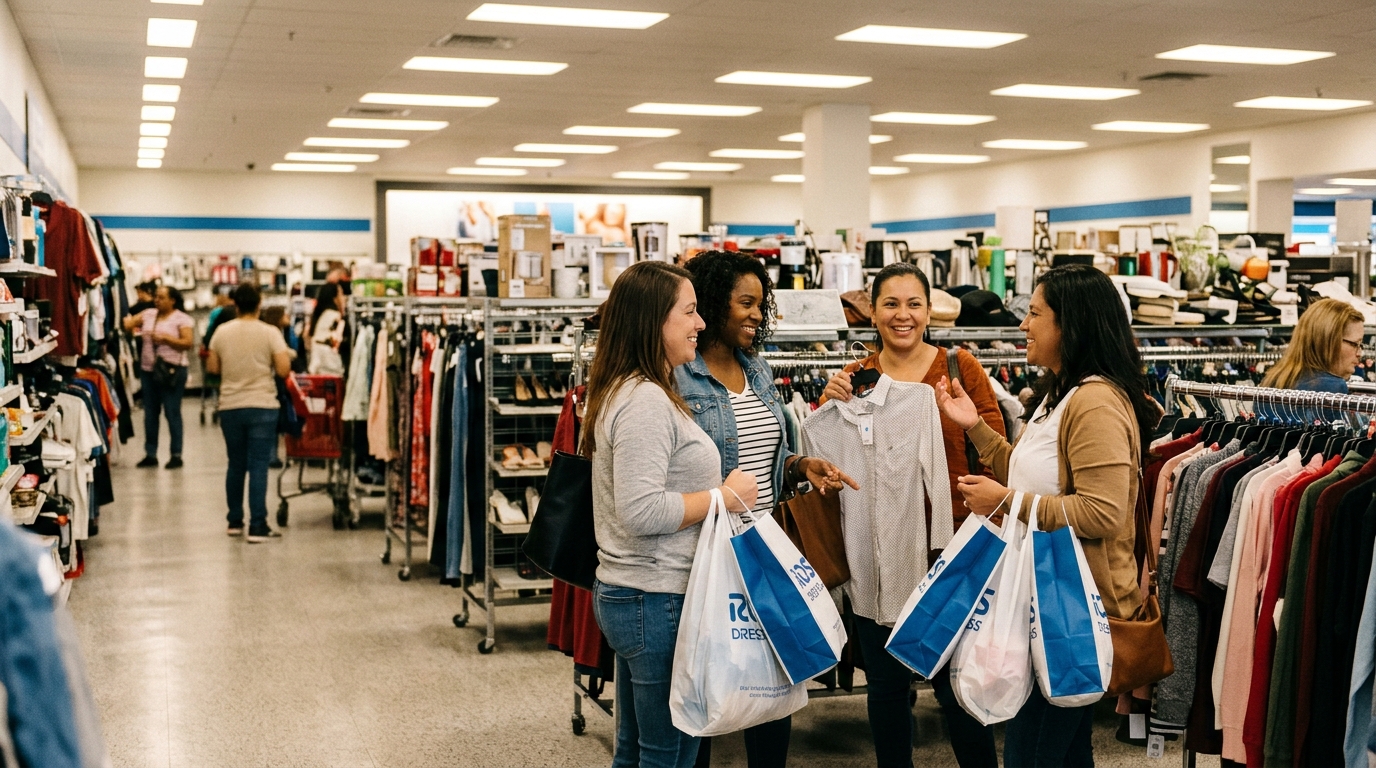
Ross Stores reported Q3 results on Wednesday evening. Total sales increased 12% versus last year, with comparable store sales up a strong 8%, primarily driven by customer traffic. The company also said its two-year stacked comp accelerated to 15% from 12% in Q2. Earnings per share of $1.91 exceeded the company’s own guidance of $1.75 to $1.83.
The mechanism is not complicated. Management attributed the acceleration primarily to customer traffic, saying its formula of well-known brands at sharp discounts paired with upgraded store interiors is still landing with customers. When households feel squeezed, they do not stop spending, they redirect it. Off-price is where that redirection lands.
Walmart provided the same underlying message from a different vantage point. The company topped Wall Street’s profit and sales projections and raised its annual guidance for the third time this year. Walmart said U.S. comparable sales rose 2.9% in the third quarter. Target, by contrast, just posted growth: net sales rose 7.1% year over year in its most recent quarter, and comparable traffic increased 5.0%.
Building Wealth Around This Idea
The divergence is the opportunity. A broad consumer sentiment reading at 51.0 tells you Americans are anxious. It does not tell you they have stopped buying, it tells you where they are buying. The winners in this environment share a common trait: they offer perceived value. The losers are priced for a confident consumer who no longer exists in large numbers.
Ross guided Q4 comparable store sales up 4% to 5%, a deliberate step-down from Q3’s 8% that reflects a tough prior-year comparison. That conservatism, against a backdrop of still-depressed sentiment, is the kind of guidance that tends to get beaten rather than missed. For investors building positions ahead of the holiday quarter, the entry point after Wednesday’s modest after-hours decline deserves attention.
The final Michigan number at 10:00 ET will generate headlines. The more durable question is whether the reading changes how people actually spend. Ross’s traffic data, Walmart’s unit growth, and the NRF’s forecast of 4.2% holiday retail sales growth year over year all suggest it does not, not for retailers positioned on value.
Risks to Monitor
Sentiment this depressed can become self-fulfilling if labor markets crack. Ross’s own Q4 guidance acknowledges a harder comparison ahead. Higher fuel costs linked to the U.S. conflict with Iran also remain a swing factor for freight and logistics costs, which can pressure retail margins.
Daily Wealth Takeaway
Consumer surveys measure anxiety. Retail traffic measures decisions. When the two diverge this sharply, the cash-register data is the more reliable guide to where wealth-building opportunities sit. Shoppers who feel terrible are still shopping, they have simply become more deliberate about where.