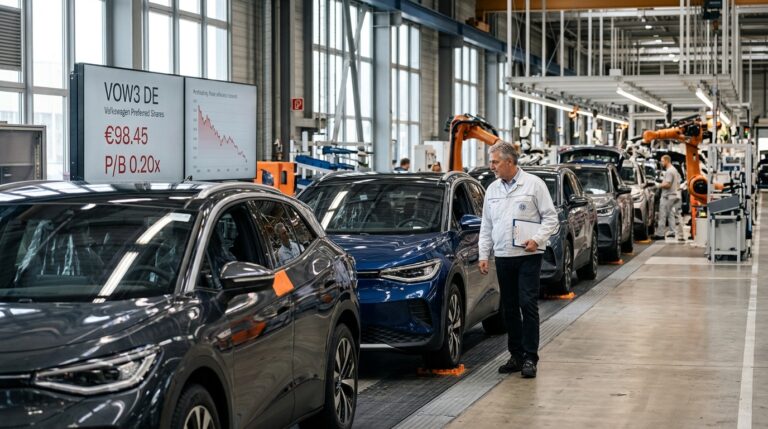

A week ago, the dominant investor position in European defence was defensive. Peace-talk headlines out of Abu Dhabi had pushed Rheinmetall down more than 17% in early November, and the sector trailed almost every other part of the European market as funds trimmed exposure to what traders were calling the “peace trade” derating. By Monday morning, that position looked badly misjudged.
European Union countries accused Russia of trying to drag out talks on ending the war in Ukraine while it bombs power plants and other infrastructure to make life harder for civilians as winter closes in. Ahead of Monday’s EU Foreign Affairs Council meeting, Kallas dismissed Moscow’s negotiating demands as a pretext to prolong the war, calling them “absurd” and insisting a ceasefire must come first.
Zelensky confirmed online talks with U.S. envoys Steve Witkoff and Jared Kushner and European representatives on the prospects of a resolution, part of a wider push to give Europe a formal role in U.S.-led efforts. Simultaneously, Russia said it had shot down more than a thousand Ukrainian drones in a single night, with Moscow’s mayor claiming roughly 600 were aimed at the capital region. The diplomatic language and the military reality arrived on the same news cycle.
European shares edged higher on Monday, near record highs, with aerospace and defence stocks leading sectoral gains with a 1.3% rise, as Rheinmetall, Renk and CSG attempted a rebound following sharp losses earlier in the month. That is the reverse of how investors had been positioned. The question for the investment committee now is whether Monday’s move reflects a genuine reassessment of the geopolitical outlook, or simply a short squeeze in names that had fallen too far, too fast.
The bear argument has not disappeared. The sector has lagged this year on concerns that defence contractors are struggling to convert orders into strong revenue and cash generation, even as governments are expected to increase spending on new equipment. Rheinmetall booked €8.4 billion in revenue in the first nine months of 2026, and said sales were up 38% year on year, but it lowered its 2026 revenue forecast to approximately €13.2 billion, citing delays in military contracts and approvals. Order backlogs are enormous. The bottleneck is production capacity, not demand.
The bull case is structural, not diplomatic. Analysts at J.P. Morgan argued that even a U.S.-imposed peace plan would amount to a “de facto victory for Russia,” which would prompt Europe to accelerate defence spending beyond already planned increases to avoid depending on U.S. security guarantees. In their view, markets have been overly fixated on near-term geopolitical gyrations rather than the longer-term structural forces reshaping the European defence industry. A communiqué from Brussels changes none of that calculus. Order books at Thales and Saab were not going to move on a foreign ministers’ press conference, and they did not.
What Kallas’s statement actually tells institutional investors is narrower than the share price move implies. It confirms the EU’s negotiating position is hardening, not softening, and that Moscow’s maximalist demands give European diplomats very little room to concede. Kallas said Europe should insist on a ceasefire before any wider talks, and noted the EU’s leverage in the form of roughly €200 billion in frozen Russian assets. That is not the language of imminent peace.
Stocks to Watch
Rheinmetall remains the highest-volatility expression of this debate. Its backlog reached about €78 billion, including signed framework agreements, but every peace headline moves the stock disproportionately. BofA Securities downgraded Rheinmetall in early November from “Buy” to “Neutral,” cutting its target from €1,300 to €900, citing weaker expected growth in armoured vehicles and artillery. The gap between that target and the consensus view tells you exactly how divided the street is.
Thales and Saab are where the more patient money has been moving. Leonardo, Thales, and Saab each show stronger order momentum or backlog visibility than Rheinmetall, suggesting the sector sell-off is not a broad demand problem. Saab’s electronics and air defence capabilities are directly tied to NATO’s eastern flank spending. BAE Systems offers the most diversified exposure, with the Type 26 frigate and GCAP fighter programs insulating it from single-contract risk. Leonardo raised its 2026 order guidance after reporting its first nine months on November 5, with management pointing to record backlog supporting stronger delivery targets.
The investment committee question is not whether peace is coming. It is whether the market spent two weeks pricing in a scenario that Kallas just told it, plainly, is not on offer.