By Andrew Chung and David Shepardson
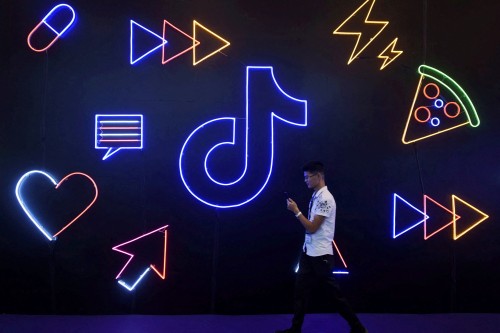
WASHINGTON (Reuters) – TikTok made a last-ditch effort on Monday to continue operating in the United States, asking the Supreme Court to temporarily block a law intended to force ByteDance, its China-based parent company, to divest the short-video app by Jan. 19 or face a ban.
TikTok and ByteDance filed an emergency request to the justices for an injunction to halt the looming ban on the social media app used by about 170 million Americans while they appeal a lower court’s ruling that upheld the law.
Congress passed the law in April amid national security concerns. The Justice Department has said that as a Chinese company, TikTok poses “a national-security threat of immense depth and scale” because of its access to vast amounts of data on American users, from locations to private messages, and its ability to secretly manipulate content that Americans view on the app.
The U.S. Court of Appeals for the District of Columbia Circuit in Washington on Dec. 6 rejected arguments by the companies and some TikTok users that the law violates their free speech rights under the U.S. Constitution’s First Amendment. Free speech advocates, including the American Civil Liberties Union, criticized the D.C. Circuit’s ruling.
The D.C. Circuit on Dec. 13 denied an emergency request by TikTok and ByteDance to temporarily halt the law.
Without an injunction, the ban on TikTok would make the company far less valuable to ByteDance and its investors, and hurt businesses that depend on TikTok to drive their sales.
Calling itself one of the “most important speech platforms” used in the United States, TikTok has said in legal filings that there is no imminent threat to national security and that delaying enforcement of the law would allow the Supreme Court to consider the legality of the ban and the incoming administration of President-elect Donald Trump to evaluate the law as well.
Trump, who unsuccessfully tried to ban TikTok during his first term in 2020, has reversed his stance and promised during the presidential race this year that he would try to save TikTok. Trump takes office on Jan. 20, the day after the TikTok deadline under the law.
In its decision, the D.C. Circuit wrote, “The First Amendment exists to protect free speech in the United States. Here the government acted solely to protect that freedom from a foreign adversary nation and to limit that adversary’s ability to gather data on people in the United States.”
TikTok has denied that it has or ever would share U.S. user data, accusing American lawmakers in the lawsuit of advancing speculative concerns, and has characterized the ban as a “radical departure from this country’s tradition of championing an open Internet.”
TikTok said that being shuttered even temporarily would destroy its user base, its ability to attract advertisers and to recruit and retain content creators and employee talent.
The D.C. Circuit’s decision came at a time of growing trade tensions between the world’s two biggest economies after President Joe Biden’s administration placed new restrictions on the Chinese chip industry and China responded with a ban on exports of gallium, germanium and antimony to the United States.
The U.S. law would bar providing certain services to TikTok and other foreign adversary-controlled apps including offering it through app stores such as Apple and Alphabet’s Google, effectively preventing its continued U.S. use unless ByteDance divests TikTok by the deadline.
An unimpeded ban could open the door to a future crackdown on other foreign-owned apps. In 2020, Trump tried to ban WeChat, owned by Chinese company Tencent, but was blocked by the courts.
(Reporting by Andrew Chung and David Shepardson; Editing by Will Dunham)
About the Author