May 25, 2026
’21 Banks’ Are Brokering SpaceX. Here’s the Other Side.
Featured: Futures Are Jumping Tonight
Dear Reader,
JPMorgan. Goldman. Morgan Stanley. In total, 21 banks are brokering the SpaceX IPO.
They will collect billions in fees on a deal that was done before you heard about it.
By the time you can buy a single share, the people who built the system will have already made 30 times their money.
That’s not a surprise. That’s the plan.
But here’s what they’re not telling you…
While every financial newsletter in America is hyping SpaceX, the world’s central banks have been buying gold, 850 tonnes last year alone.
Not shares. Not funds. Not pie in the sky. Actual physical gold. The one asset that exists entirely outside the system.
Ask yourself why the institutions that created the paper money system keep moving their own reserves into the one thing that doesn’t depend on it.
Then ask yourself why your retirement is still 100% inside the system they’re quietly stepping away from.
We put together a free 2026 Gold Guide on exactly what they know and what you can do about it.
It costs nothing. Takes 30 seconds to request.
The insiders already made their move.
Now it’s your turn.


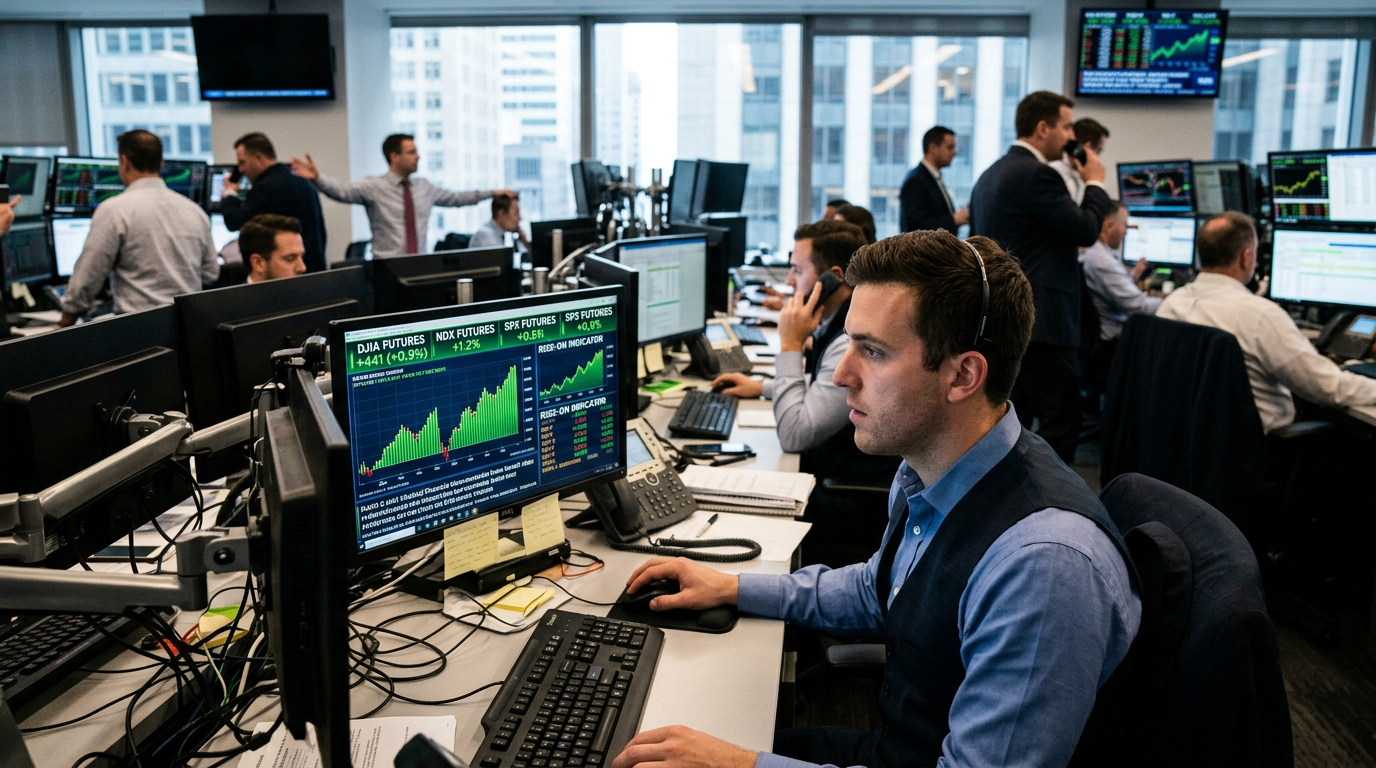
Futures Are Jumping Tonight
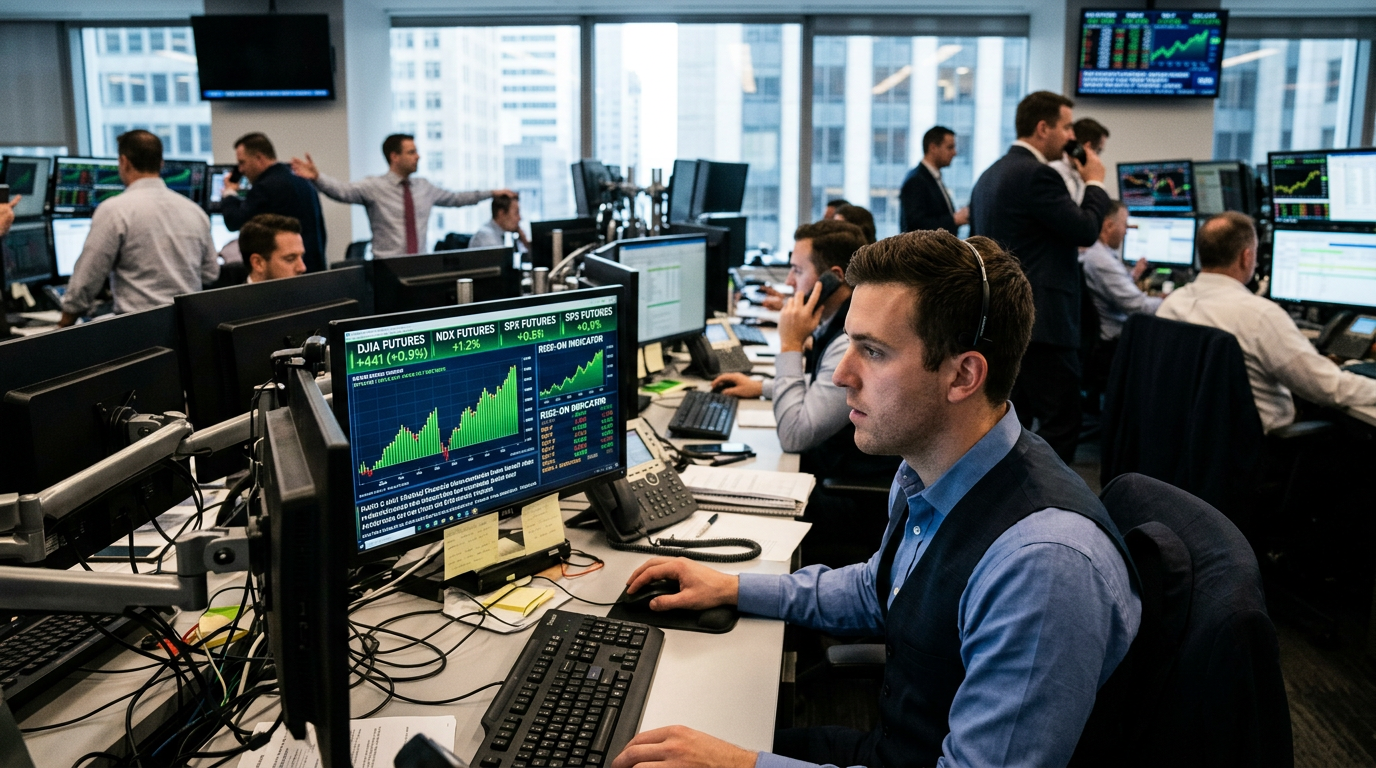
Dow Jones futures are up 441 points tonight, roughly +0.9%. S&P 500 futures are matching that, also +0.9%. And Nasdaq-100 futures are out in front at +1.2%. That’s not a small move for a Sunday night session heading into a holiday-shortened week with U.S. markets closed Monday for Memorial Day.
When growth leads in overnight trading, it typically signals that risk appetite has genuinely shifted. Traders are buying duration, buying beta, buying the assets that suffer most when fear is running the show. That distinction matters. A lot.
What Is Driving This
The bid is geopolitical. Reports have been building all weekend that the U.S. and Iran are closing in on a memorandum of understanding that would extend the ceasefire by 60 days, gradually reopen the Strait of Hormuz to commercial shipping, and establish a framework for nuclear negotiations. President Trump said Saturday the deal was “largely negotiated” and would be announced soon. On the same day, Trump’s team confirmed a first-phase MOU structure before broader talks within 30 to 60 days.
The oil market responded immediately. WTI crude tumbled nearly 6% to below $91 a barrel as optimism grew that Iranian supply could soon flow again through the Strait of Hormuz, which carries roughly one-fifth of global oil and LNG shipments. That matters enormously for equities. Oil had been acting as a slow-moving tax on this rally, feeding inflation expectations, pressuring Treasury yields, and quietly compressing equity valuations in the background. A credible drop in crude changes that equation.
Lower oil. Cooler yield pressure. Risk assets move.
Worth noting here: the deal is not done. Iran’s Foreign Ministry stated that “a consensus was reached on many topics but no one can claim that the signing of an agreement is imminent.” Key sticking points remain, specifically Iran’s nuclear program, control over Hormuz maritime traffic, and the release of frozen Iranian assets. The U.S. military also conducted strikes on Iranian positions as recently as Monday, even as negotiations continued. Markets are trading the direction of travel, not a signed agreement.
The Earnings Floor Underneath All of This
The geopolitical move is landing on top of fundamentally strong corporate results. Q1 2026 earnings season has been exceptional by any reasonable measure. With roughly two-thirds of S&P 500 companies having reported, 84% have beaten EPS estimates, well above the five-year average of 78%. The blended earnings growth rate stands at 27.1%, up sharply from the 13.1% estimated at the end of March. That kind of revision magnitude, from estimate to actuality, reflects genuine operating leverage, not accounting creativity.
For Q2 through Q4 2026, analysts are projecting earnings growth of 21.3%, 23%, and 20.6%, respectively. Those are aggressive numbers. They require execution. But the base case heading into Tuesday’s open is that the earnings backdrop is providing real structural support for what would otherwise be a purely sentiment-driven move.
There is also a new variable worth tracking: Kevin Warsh was officially sworn in as Federal Reserve Chair on May 22. His first policy decisions will be watched closely for any shift in tone relative to Jerome Powell. The Fed is currently on hold, and Warsh has said he wants to hold rates steady while watching for either inflation decreasing or labor market deterioration. A hotter PCE reading, which drops later this week along with GDP and personal income data, could complicate that posture quickly.
The S&P 500 just logged its eighth consecutive weekly gain, the longest such streak since December 2023. The Dow closed last week up 2.13%, hitting an intraday record high. That is the context in which tonight’s move is occurring. Not a market clawing back from losses. A market that has already run, now getting an additional catalyst.
Which is exactly when it pays to stay disciplined about what you actually know versus what you think is coming. The direction tonight is clear. Whether it holds through Tuesday’s open depends on whether the Iran situation looks more or less resolved by then, and whether Salesforce, Dell, and Zscaler, all reporting this week, add to or subtract from the earnings picture that has been holding this market up.