
August 4, 2026
Snap Beat Q2. The North America Problem Is Still Real.
Featured: Snap Beat Q2. The North America Problem Is Still Real.
If you sat down with a laptop and a cup of coffee 10 years ago as a regular person…
You’d probably be stuck trying to write a “Hello World” webpage.
But with today’s AI tools…
A regular person can develop a trading engine that’s able to flag one of the market’s most reliable bullish signals every single day.
That’s exactly what a Virginia dad did, and he went on to crush Wall Street’s finest hedge funds by the end of 2025.
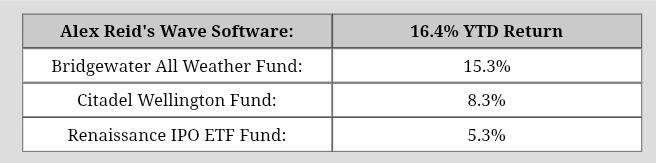
This Virginia dad is none other than me!
I recently went live to spill my guts on the inner workings of this AI breakthrough.
I can’t make guarantees on the market, of course, but if you’re yet to see exactly how this powerful tool works…
You should hurry over here now to get the full details.
To Better Trading,
Alex Reid.
Snap Beat Q2. The North America Problem Is Still Real.

Here is what the market saw last night: Snap beat revenue estimates by roughly $60 million, raised Q3 guidance above expectations, and watched the stock jump somewhere between 8% and 10% in after-hours trading. A clean win on paper.
Here is what the market chose to overlook: North American daily active users fell about 6% year over year to 92 million. Europe dropped about 2% as well. The regions where ad dollars are most valuable are shrinking, not growing.
That tension is the actual story.
The Numbers That Moved the Stock
Revenue came in at $1.6 billion against the $1.54 billion consensus, with global daily active users reaching 493 million against a 487 million estimate, and average revenue per user of $3.25 versus the $3.16 expected. The beat was real across every top-line metric.
Net loss narrowed to $164 million, while adjusted EBITDA reached $250 million, both beating forecasts. To put the EBITDA figure in context: adjusted EBITDA jumped to $250 million from $41 million a year ago. That is a more-than-six-fold improvement in a single year, and it is not noise. It reflects a genuine operating leverage story that most investors were not pricing in.
Gross margin expanded to 58%, up 7 percentage points year over year, and free cash flow reached $121 million in Q2, marking the eighth consecutive quarter of positive free cash flow.
The World Cup tailwind was real and the company said so directly. CEO Evan Spiegel noted on the earnings call that the company saw better momentum with large advertisers in North America and stronger revenue growth internationally, adding that World Cup-related spending contributed during the quarter alongside continued strength among small and medium-sized businesses.
The Part Nobody Is Talking About
Advertising revenue, the primary revenue engine, grew only 9% year over year to $1.28 billion. That is a solid number in isolation. But it also means that the company’s other revenue category, which includes the Snapchat+ subscription service, rose 85% year over year to $316 million in the second quarter.
That is the number worth sitting with. The subscription business is growing at nearly ten times the pace of the advertising business right now. Snap’s direct revenue business has achieved a $1 billion annualized run rate, driven by Snapchat+ surpassing 25 million subscribers. Less than three percent of monthly active users are paying subscribers, which means the headroom here is enormous relative to where the product sits today.
Slight tangent, but it matters: most social platforms have tried and failed to build meaningful subscription revenue. Meta has not cracked it at scale. X’s subscription business is a rounding error compared to its ad revenue. Snap is quietly becoming one of the few social platforms with a real diversification story underneath the ad headline.
The Ad Platform Is Getting Smarter
Spiegel said app advertisers saw cost per install decline 8% year over year and cost per purchase fall 18%, while app purchase volume rose 128%. Dynamic product ads revenue increased 43%, supported by greater adoption from retailers.
Those are not branding metrics. Those are direct response numbers. When ad budgets shift from reaching the biggest audience to getting a measurable outcome, a platform can grow sales even if its user base in high-spending regions is flat or shrinking. If Snap’s automation helps advertisers attribute conversions and improves return on ad spend, marketers can scale spending because each additional dollar is easier to justify.
The Snapchat parent provides Smart Campaign Solutions, its AI-powered suite of ad tools that automate bidding, budgeting and audience targeting, allowing advertisers to improve results more efficiently. This is the tool that is increasingly competing against Meta’s equivalent offering for the same large North American advertiser budgets.
Buffett’s Final Warning: “The Dollar Is Going to Hell”
On May 3rd, 2025, Warren Buffett looked at his shareholders for the last time and said: “The dollar is going to hell.”
The man who defended the US dollar for 60 years just told you it’s done. Ray Dalio agrees.
The founder of Bridgewater Associates ($150 billion AUM) calls it a “debt death spiral.” $38.4 trillion in debt. Adding a trillion every 60 days.
The math doesn’t work anymore.
If the dollar falls, most people will get hurt badly. But there’s a specific asset class and investment system that actually thrives when the dollar collapses.
Watch how to protect yourself from what Dalio and Buffett see coming (free training)
Engagement Is Moving in One Direction
Management highlighted that Snapchat is approaching 1 billion monthly users. The number of people posting to Spotlight, an algorithmic video feed within Snapchat, grew more than 115% year over year, while Spotlight daily active users grew more than 20%.
Spotlight is Snap’s answer to TikTok and Reels. The fact that posting activity is growing at 115% while viewing DAUs are only up 20% suggests the creator side is accelerating faster than the consumption side. That is usually an early signal that a short-video product has genuine momentum rather than just passive consumption.
Q3 Guidance and the Post-World Cup Question
Snap guided for third-quarter revenue of $1.70 billion to $1.74 billion and adjusted EBITDA of $300 million to $350 million, while continuing to invest in AI infrastructure and its Spectacles platform.
The midpoint of that revenue range clears consensus estimates. The EBITDA range straddles consensus at roughly $330 million. That is a guide that is fine but not spectacular, and management was honest about why. Management expects direct revenue to outpace overall growth, but warned that regulatory scrutiny and the normalization of World Cup-related advertising could affect results.
That last phrase is worth flagging. The World Cup boost is a one-time event. Major global sporting tournaments create genuine advertising demand that gets pulled forward from other periods. The question heading into Q3 is whether the performance marketing improvements and subscription growth can sustain 19% revenue growth without the tournament tailwind. That is a harder ask than the Q2 report implied.
The Spectacles Wildcard
Snap revealed in June its first augmented reality glasses tailored for the broader public instead of developers. The AR glasses, dubbed Specs, will cost $2,195 with a $200 refundable deposit and are expected to ship this fall in the U.S., the U.K., and France.
Snap also raised its full-year infrastructure cost guidance to invest in AI, and will share further details on its Specs AR glasses in September. At $2,195, this is not a mass-market product. It is a developer and early-adopter bet. But Snap’s AR platform already has real ecosystem depth: the company has over 400,000 creators from nearly every country building more than 4 million lenses, and Snapchatters engage with AR lenses more than 8 billion times daily. That distribution advantage matters if Specs ever finds product-market fit.
The Balance Sheet and What Changed
The company ended the quarter with approximately $2.7 billion in cash and marketable securities. Snap has repaid more than $2 billion of convertible notes due in 2027 and 2028, along with $47 million of notes due in August 2026. That is a materially different balance sheet than what Snap carried two years ago, and it reduces the dilution and refinancing risk that has historically overhung the stock.
The company also said it is shifting its primary financial objective toward free cash flow per share while continuing to invest in its Spectacles computing platform. That is a subtle but important shift in how management is framing capital allocation. Free cash flow per share as a primary objective implies that dilution management is now a board-level priority. Following completion of the current repurchase program in Q4, a new multi-year dilution management program is planned for 2027.
The Options Market Framework
SNAP implied volatility typically ranges from 45% to 120%, with normal conditions seeing IV between 60% and 80%, and significant spikes before earnings. SNAP is known for large earnings moves, typically 15% to 25%. The stock has already moved within that historical range after hours.
After a significant earnings move, IV typically collapses sharply. That crush changes the calculus for options strategies in the days following the report. For traders who believe the Q3 guide is achievable and that the subscription story is durable, a defined-risk structure that takes advantage of post-earnings IV compression may be worth examining. For those who think the World Cup boost inflated Q2 and Q3 will disappoint, the IV collapse creates a different entry point.
Bull case: The direct response improvements are structural, not event-driven. Snapchat+ at 25 million subscribers with less than 3% of monthly actives paying means the subscription ceiling is far above where it sits now. If Q3 revenue hits the top end of the $1.70 billion to $1.74 billion range, the stock has room to close some of its 37% year-to-date gap.
Bear case: North America DAU erosion is the slow leak that ad revenue growth cannot indefinitely paper over. Snap’s near-term outlook is more tied to measurement and ad-tech execution than to headline user growth, and that puts the company in more direct competition with Meta Platforms, which has been pitching similar AI-driven tools to the same large North American advertisers. Meta is larger, richer, and more entrenched.
Neutral case: The stock is still down roughly 37% year to date. Q3 guidance places revenue at $1.70 billion to $1.74 billion with adjusted EBITDA of $300 million to $350 million. If those numbers get hit and subscription revenue keeps compounding at 85%, the multiple expansion thesis starts to have math behind it. But the North America user trend needs to stabilize before that thesis has structural legs.
What to Watch From Here
The real test is not this quarter’s beat. It is whether Snap can sustain 19% revenue growth when there is no World Cup in Q3 and when Meta continues to compete aggressively for the same advertiser dollars. The ad platform improvements are real. The subscription diversification is real. The North America user erosion is also real.
This Stock has So Much Potential… it’s MYTHICAL
It’s not dainty… or girly… or colorful.
And it doesn’t smell nice.
But this stock has such one-of-a-kind profit potential…
It’s so key to our economy, Trump once publicly went to bat for it.
This report answered whether Snap could deliver a clean quarter. It did not answer the harder question of whether the company can compound from here without a structural fix to its user trends in its two most valuable markets.
September will be interesting. That is when Snap said it will share more on Specs, and when Q3 will be about halfway through with no tournament tailwind in the data.