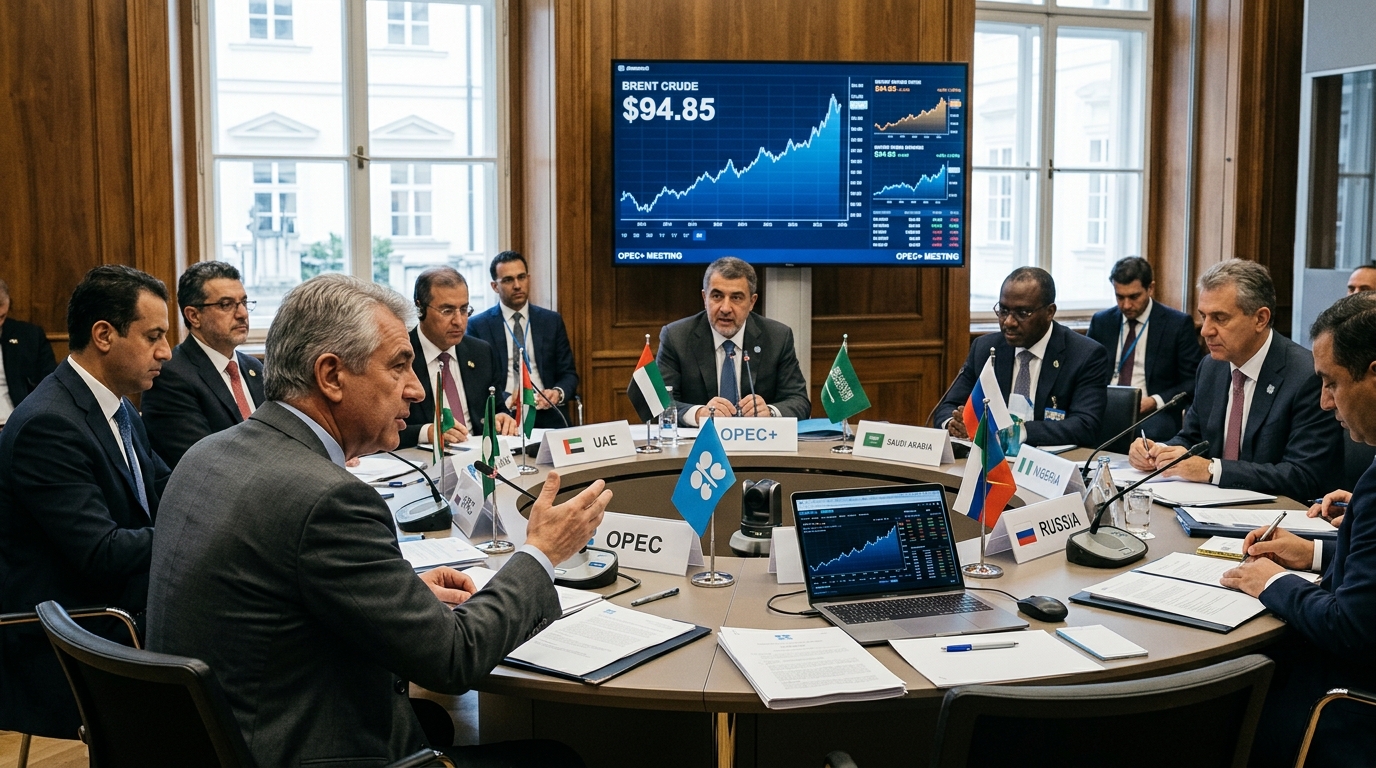
Sunday’s OPEC+ meeting, scheduled for September 6, is the first since the group closed the books on its 2023 voluntary cuts. The seven core members completed the phased rollback of the voluntary supply cuts introduced in 2023 with a final 188,000-barrel-per-day September increase. That chapter is over. What comes next is the question energy traders need to answer before U.S. markets reopen Tuesday.
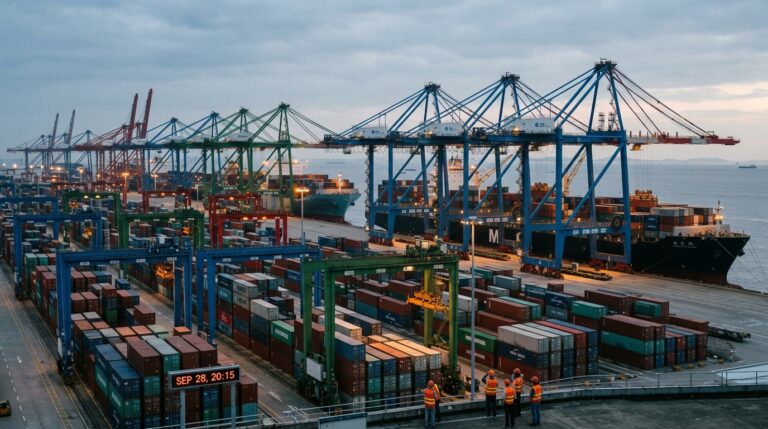
Brent settled around $95 on September 4. Damage to refining capacity tied to the Middle East conflict and constraints in the global product market are expected to keep fuel prices elevated into next year. U.S. diesel prices hit a record high on September 4, and European diesel markets have been unusually tight. The physical market is tighter than the headline quota numbers suggest.
Why the Pause Scenario Is the Base Case
Delegates told Bloomberg the group currently expects to hold production quotas steady for the remainder of 2026 following the September increase, though those plans could change depending on market conditions.
That pause, if confirmed Sunday, removes a near-term supply overhang from oil’s forward curve. Brent’s futures curve is already deeply backwardated, with the November 2026 contract near $95 and Jan 2027 around $88, while April 2027 is closer to $80 than $82. Backwardation that steep signals physical tightness, not paper speculation, and it favors energy equity longs heading into Q4.
Iran has targeted commercial vessels passing through the Strait of Hormuz, creating uncertain production and shipping losses that complicate OPEC+’s decisions on supply levels and amplify price volatility. Nominal quota decisions matter less than geopolitical reality right now. OPEC+ can hold quotas flat and still lose barrels.
The 2027 Baseline Fight Starts Now
Sunday’s meeting also lands as a capacity review nears its deadline. OPEC+ is carrying out a review of its members’ oil production capacity that will be used for the 2027 output baselines from which quotas are set, and it faces potentially difficult talks over new production quotas, with some members, including Iraq, pushing for higher individual quotas to reflect their higher capacity. The assessment, running January through September 2026, covers maximum sustainable production capacity, defined as output that can be brought online within 90 days and sustained for a full year. Iraq’s posture alone could fracture group discipline before 2027 quotas are even set.
How to Position Before Tuesday
The U.S. energy sector has outperformed in 2026, driven by geopolitical supply fears, elevated oil prices, and a product-market squeeze. XLE is up roughly 39% over the past year, and both majors have kept pace. Exxon reported Q2 adjusted EPS of $3.52, and total production averaged about 4.5 million oil-equivalent barrels per day. A confirmed Q4 quota freeze, combined with Hormuz risk staying elevated, supports the refiner and producer thesis into year-end.
The primary risk is a surprise: any signal from Sunday’s meeting that October quotas increase, or that the group splinters over 2027 baseline positioning, would pressure Brent toward the low $90s and drag XLE with it. Piper Sandler keeps an Overweight rating on CVX, but its price target was raised to $243 from $207 on September 3. That call holds if Sunday delivers the pause the market is pricing.
Watch the statement language closely. A freeze confirmed without caveats is a green light for energy longs. Ambiguity, or worse, a surprise increase, flips the trade.